


Dietary Management of Skin Health: The Role of Genistein
- PMID: 28629129
- PMCID: PMC5490601
- DOI: 10.3390/nu9060622
Dietary Management of Skin Health: The Role of Genistein
Abstract
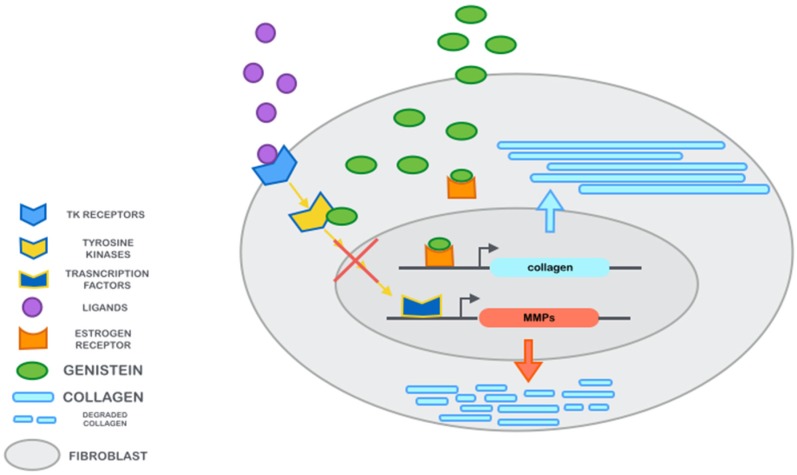
In women, aging and declining estrogen levels are associated with several cutaneous changes, many of which can be reversed or improved by estrogen supplementation. Two estrogen receptors-α and β-have been cloned and found in various tissue types. Epidermal thinning, declining dermal collagen content, diminished skin moisture, decreased laxity, and impaired wound healing have been reported in postmenopausal women. Experimental and clinical studies in postmenopausal conditions indicate that estrogen deprivation is associated with dryness, atrophy, fine wrinkling, and poor wound healing. The isoflavone genistein binds to estrogen receptor β and has been reported to improve skin changes. This review article will focus on the effects of genistein on skin health.
Keywords: estrogen receptor beta; genistein; skin.
Conflict of interest statement
The authors declare no conflict of interest.
Figures
References
-
- Younes M., Honma N. Estrogen receptor β. Arch. Pathol. Lab. Med. 2011;135:63–66. - PubMed
Publication types
MeSH terms
Substances
LinkOut - more resources
Full Text Sources
Other Literature Sources
