


Inequities in utilization of reproductive and maternal health services in Ethiopia
- PMID: 28629358
- PMCID: PMC5477250
- DOI: 10.1186/s12939-017-0602-2
Inequities in utilization of reproductive and maternal health services in Ethiopia
Abstract
Background: Disparities in health services utilization within and between regional states of countries with diverse socio-cultural and economic conditions such as Ethiopia is a frequent encounter. Understanding and taking measures to address unnecessary and avoidable differences in the use of reproductive and maternal health services is a key concern in Ethiopia. The aim of the study was to examine degree of equity in reproductive and maternal health services utilization in Ethiopia.
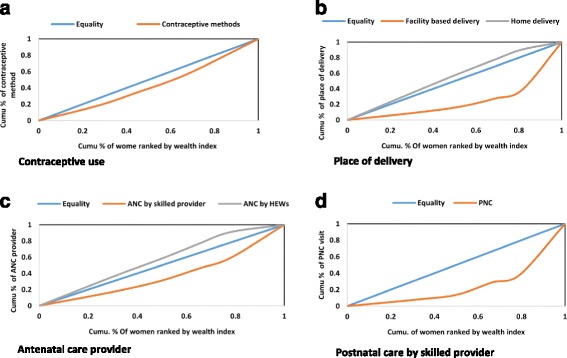
Method: Data from Ethiopia demographic health survey 2014 was analyzed. We assessed inequities in utilization of modern contraceptive methods, antenatal care, facility based delivery and postnatal checkup. Four standard equity measurement methods were used; equity gaps, rate-ratios, concertation curve and concentration index.
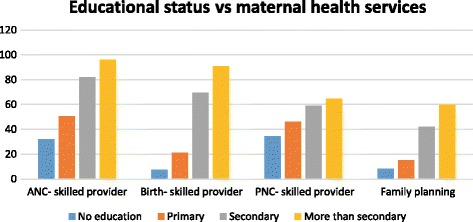
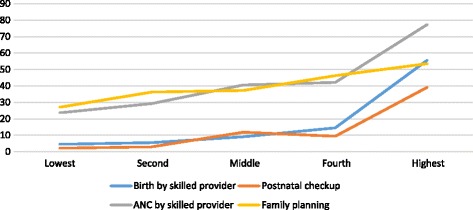
Results: Inequities in service utilization were exhibited favoring women in developed regions, urban residents, most educated and the wealthy. Antenatal care by skilled provider was three times higher among women with post-secondary education than mothers with no education. Women in the highest wealth quantile had about 12 times higher skilled birth attendance than those in lowest wealth quantile. The rate of postnatal care use among urban resident was about 6 times that of women in rural area. Use of modern contraceptive methods was more equitably utilized service while, birth at health facility was less equitable across all economic levels, favoring the wealthy.
Conclusion: Considerable inequity between and within regions of Ethiopia in the use of maternal health services was demonstrated. Strategically targeting social determinants of health with special emphasis to women education and economic empowerment will substantially contribute for altering the current situation favorably.
Keywords: Antenatal care; Birth in the facility; Ethiopia; Inequity; Modern contraceptive; Postnatal care.
Figures
References
Publication types
MeSH terms
LinkOut - more resources
Full Text Sources
Other Literature Sources
Medical
