


Policy lessons from health taxes: a systematic review of empirical studies
- PMID: 28629470
- PMCID: PMC5477308
- DOI: 10.1186/s12889-017-4497-z
Policy lessons from health taxes: a systematic review of empirical studies
Abstract
Background: Taxes on alcohol and tobacco have long been an important means of raising revenues for public spending in many countries but there is increasing interest in using taxes on these, and other unhealthy products, to achieve public health goals. We present a systematic review of the research on health taxes, and aim to generate insights into how such taxes can: (i) reduce consumption of targeted products and related harms; (ii) generate revenues for health objectives and distribute the tax burden across income groups in an efficient and equitable manner; and (iii) be made politically sustainable.
Methods: Six scientific and four grey-literature databases were searched for empirical studies of 'health taxes' - defined as those intended to increase the costs of manufacturing, distributing, retailing and/or consuming health-damaging products. Since reviews already exist of the evidence relating to traditional alcohol and tobacco excise taxes, we focus on other taxes such as taxes on retailers and manufacturers of unhealthy products, and consumer taxes targeting unhealthy foods, such as sugar-sweetened beverages.
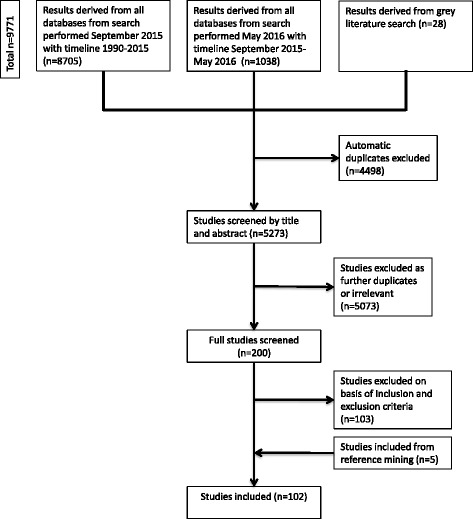
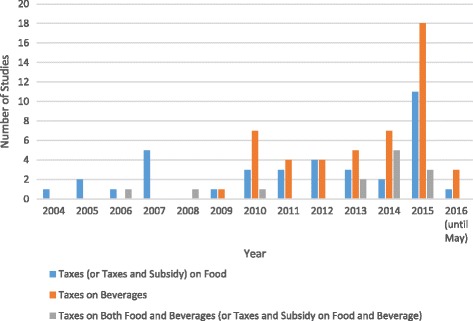
Results: Ninety-one peer-reviewed and 11 grey-literature studies met our inclusion criteria. The review highlights a recent, rapid rise in research in this area, most of which focuses on high-income countries and on taxes on food products or nutrients. Findings demonstrate that high tax rates on sugar-sweetened beverages are likely to have a positive impact on health behaviours and outcomes, and, while taxes on products reduce demand, they add to fiscal revenues. Common concerns about health taxes are also discussed.
Conclusions: If the primary policy goal of a health tax is to reduce consumption of unhealthy products, then evidence supports the implementation of taxes that increase the price of products by 20% or more. However, where taxes are effective in changing health behaviours, the predictability of the revenue stream is reduced. Hence, policy actors need to be clear about the primary goal of any health tax and frame the tax accordingly - not doing so leaves taxes vulnerable to hostile lobbying. Conversely, earmarking health taxes for health spending tends to increase public support so long as policymakers follow through on specified spending commitments.
Systematic review registration number: CRD42016048603.
Keywords: Alcohol; Fat tax; Hypothecation/earmarking; Public health; Sin taxes; Soda tax; Sugar tax; Systematic review; Tobacco.
Figures
References
-
- Sassi F, Belloni A, Capobianco C. The role of fiscal policies in health promotion [Internet] Paris: Organisation for Economic Co-operation and Development; 2013.
-
- International Agency for Research on Cancer . IARC handbooks of cancer prevention volume 14: tobacco control: effectiveness of tax and price policies for tobacco control. Lyon: World Health Organization; 2011.
-
- Barroy H, Sparkles S, Dale E. Assessing fiscal space for health expansion in low-and-middle income countries: a review of the evidence [Internet] Geneva: World Health Organization; 2016.
Publication types
MeSH terms
Substances
Grants and funding
LinkOut - more resources
Full Text Sources
Other Literature Sources
Miscellaneous
