


What happens after treatment? A systematic review of relapse, remission, and recovery in anorexia nervosa
- PMID: 28630708
- PMCID: PMC5470198
- DOI: 10.1186/s40337-017-0145-3
What happens after treatment? A systematic review of relapse, remission, and recovery in anorexia nervosa
Abstract
Background: Relapse after treatment for anorexia nervosa (AN) is a significant clinical problem. Given the level of chronicity, morbidity, and mortality experienced by this population, it is imperative to understand the driving forces behind apparently high relapse rates. However, there is a lack of consensus in the field on an operational definition of relapse, which hinders precise and reliable estimates of the severity of this issue. The primary goal of this paper was to review prior studies of AN addressing definitions of relapse, as well as relapse rates.
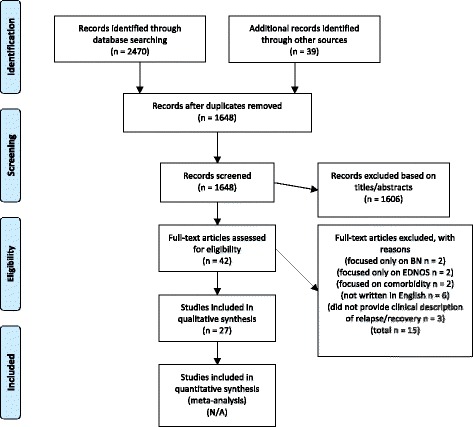
Methods: Data sources included PubMed and PsychINFO through March 19th, 2016. A systematic review was performed following the PRISMA guidelines. A total of (N = 27) peer-reviewed English language studies addressing relapse, remission, and recovery in AN were included.
Results: Definitions of relapse in AN as well as definitions of remission or recovery, on which relapse is predicated, varied substantially in the literature. Reported relapse rates ranged between 9 and 52%, and tended to increase with increasing duration of follow-up. There was consensus that risk for relapse in persons with AN is especially high within the first year following treatment.
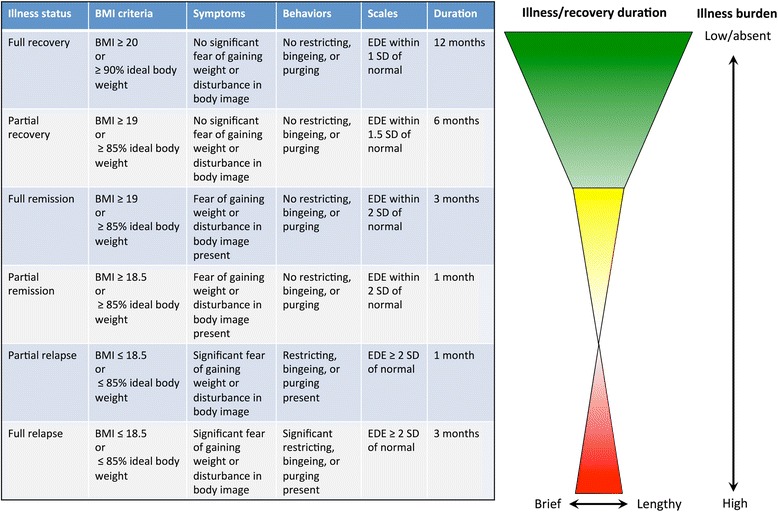
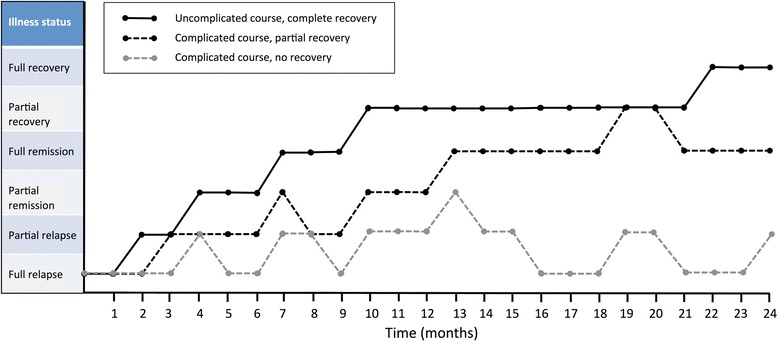
Discussion: Standardized definitions of relapse, as well as remission and recovery, are needed in AN to accelerate clinical and research progress. This should improve the ability of future longitudinal studies to identify clinical, demographic, and biological characteristics in AN that predict relapse versus resilience, and to comparatively evaluate relapse prevention strategies. We propose standardized criteria for relapse, remission, and recovery, for further consideration.
Keywords: Anorexia nervosa; Bulimia nervosa; Eating disorder; Outcome; Prevention; Recovery; Relapse; Remission; Treatment.
Figures
References
-
- Strober M, Freeman R, Morrell W. The long-term course of severe anorexia nervosa in adolescents: survival analysis of recovery, relapse, and outcome predictors over 10-15 years in a prospective study. Int J Eat Disord. 1997;22(4):339–60. doi: 10.1002/(SICI)1098-108X(199712)22:4<339::AID-EAT1>3.0.CO;2-N. - DOI - PubMed
Publication types
Grants and funding
LinkOut - more resources
Full Text Sources
Other Literature Sources
Medical
