


Acquisition and Generalization of Complex Empathetic Responses Among Children with Autism
- PMID: 28630815
- PMCID: PMC5459767
- DOI: 10.1007/s40617-016-0171-7
Acquisition and Generalization of Complex Empathetic Responses Among Children with Autism
Abstract
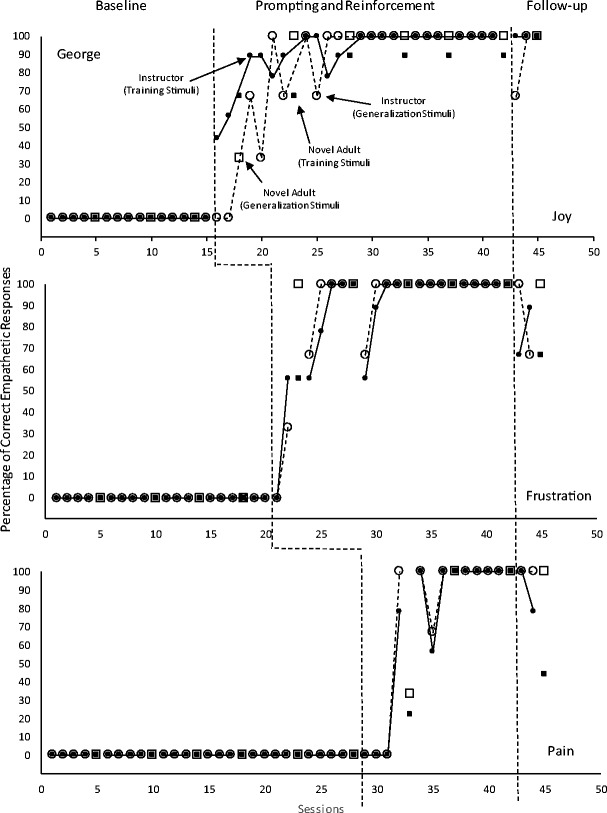
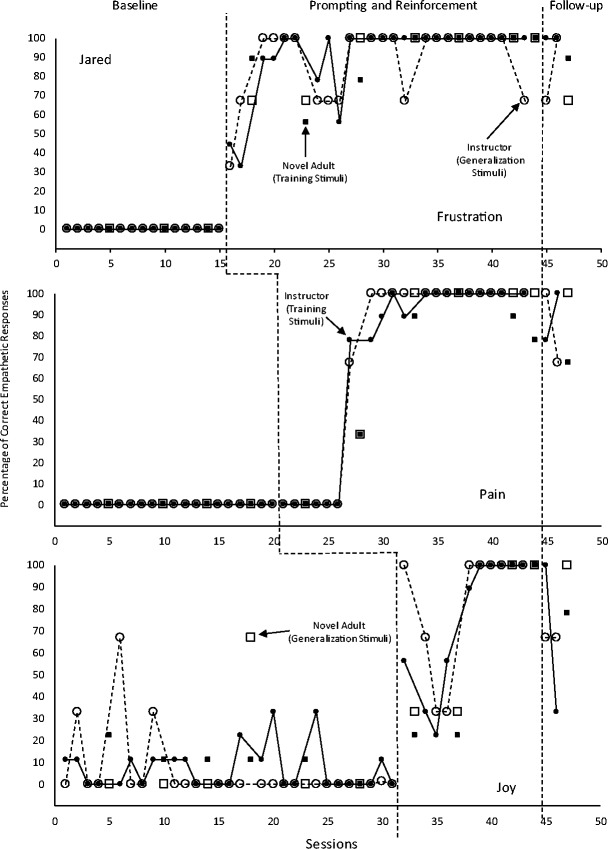
Empathy can be defined as a social interaction skill that consists of four components: (1) a statement voiced in the (2) appropriate intonation, accompanied by a (3) facial expression and (4) gesture that correspond to the affect of another individual. A multiple-baseline across response categories experimental design was used to evaluate the effectiveness of a prompt sequence (video modeling, in vivo modeling, manual and verbal prompting) and reinforcement to increase the frequency of complex empathetic responding by four children with autism. The number of complex empathetic responses increased systematically with the successive introduction of the treatment package. Additionally, generalization was demonstrated to untaught stimuli and a novel adult. Responding maintained over time to varying degrees for all participants. The data illustrate that children with autism can be taught using modeling, prompting, and reinforcement to discriminate between categories of affective stimuli and differentially respond with complex empathetic responses.
Keywords: Adolescents; Autism; Complex responding; Discrimination; Empathy; Social skills.
Conflict of interest statement
Statement of Human Rights
ᅟ
Ethical Approval
All procedures performed in studies involving human participants were in accordance with the ethical standards of the institutional and/or national research committee and with the 1964 Helsinki declaration and its later amendments or comparable ethical standards.
Informed Consent
Informed consent was obtained from all individual participants or their guardians included in this study.
Figures


References
-
- Argott PJ, Townsend DB, Sturmey P, Poulson CL. Increasing the use of empathetic statements in the presence of a non-verbal affective stimulus in adolescents with autism. Research in Autism Spectrum Disorders. 2008;2:341–352. doi: 10.1016/j.rasd.2007.08.004. - DOI
-
- Daou N, Vener SM, Poulson CL. Analysis of three components of affective behavior in children with autism. Research in Autism Spectrum Disorders. 2014;8:480–501. doi: 10.1016/j.rasd.2014.01.005. - DOI
LinkOut - more resources
Full Text Sources
Other Literature Sources
