Antimalarial drugs and the prevalence of mental and neurological manifestations: A systematic review and meta-analysis
- PMID: 28630942
- PMCID: PMC5473418
- DOI: 10.12688/wellcomeopenres.10658.2
Antimalarial drugs and the prevalence of mental and neurological manifestations: A systematic review and meta-analysis
Abstract
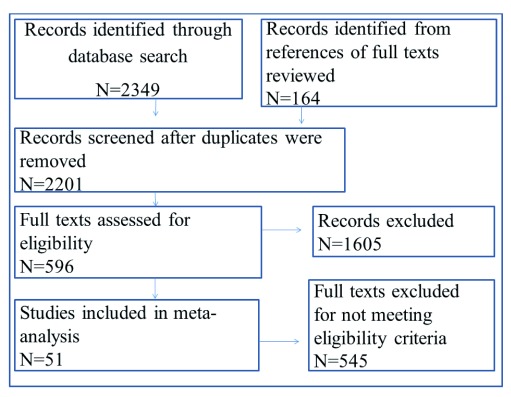
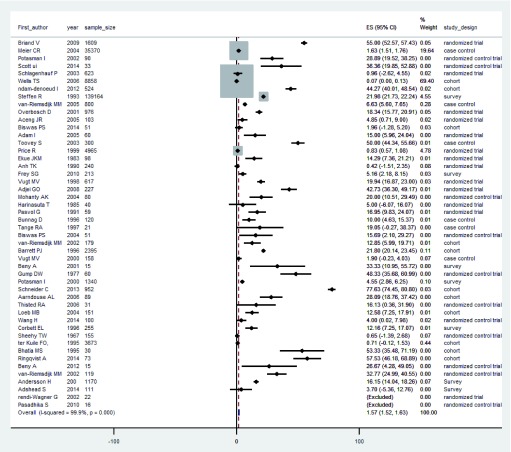
Background: Antimalarial drugs affect the central nervous system, but it is difficult to differentiate the effect of these drugs from that of the malaria illness. We conducted a systematic review to determine the association between anti-malarial drugs and mental and neurological impairment in humans. Methods: We systematically searched online databases, including Medline/PubMed, PsychoInfo, and Embase, for articles published up to 14th July 2016. Pooled prevalence, heterogeneity and factors associated with prevalence of mental and neurological manifestations were determined using meta-analytic techniques. Results: Of the 2,349 records identified in the initial search, 51 human studies met the eligibility criteria. The median pooled prevalence range of mental and neurological manifestations associated with antimalarial drugs ranged from 0.7% (dapsone) to 48.3% (minocycline) across all studies, while it ranged from 0.6% (pyrimethamine) to 42.7% (amodiaquine) during treatment of acute malaria, and 0.7% (primaquine/dapsone) to 55.0% (sulfadoxine) during prophylaxis. Pooled prevalence of mental and neurological manifestations across all studies was associated with an increased number of antimalarial drugs (prevalence ratio= 5.51 (95%CI, 1.05-29.04); P=0.045) in a meta-regression analysis. Headaches (15%) and dizziness (14%) were the most common mental and neurological manifestations across all studies. Of individual antimalarial drugs still on the market, mental and neurological manifestations were most common with the use of sulphadoxine (55%) for prophylaxis studies and amodiaquine (42.7%) for acute malaria studies. Mefloquine affected more domains of mental and neurological manifestations than any other antimalarial drug. Conclusions: Antimalarial drugs, particularly those used for prophylaxis, may be associated with mental and neurological manifestations, and the number of antimalarial drugs taken determines the association. Mental and neurological manifestations should be assessed following the use of antimalarial drugs.
Keywords: Antimalarial drugs; Mental and neurological manifestations; Meta-Analysis; Systematic review; Toxicity.
Conflict of interest statement
Competing interests: The authors declare that they have no competing interests.
Figures
References
Grants and funding
LinkOut - more resources
Full Text Sources
Other Literature Sources
Miscellaneous