


Interventions for the prevention of recurrent erysipelas and cellulitis
- PMID: 28631307
- PMCID: PMC6481501
- DOI: 10.1002/14651858.CD009758.pub2
Interventions for the prevention of recurrent erysipelas and cellulitis
Abstract
Background: Erysipelas and cellulitis (hereafter referred to as 'cellulitis') are common bacterial skin infections usually affecting the lower extremities. Despite their burden of morbidity, the evidence for different prevention strategies is unclear.
Objectives: To assess the beneficial and adverse effects of antibiotic prophylaxis or other prophylactic interventions for the prevention of recurrent episodes of cellulitis in adults aged over 16.
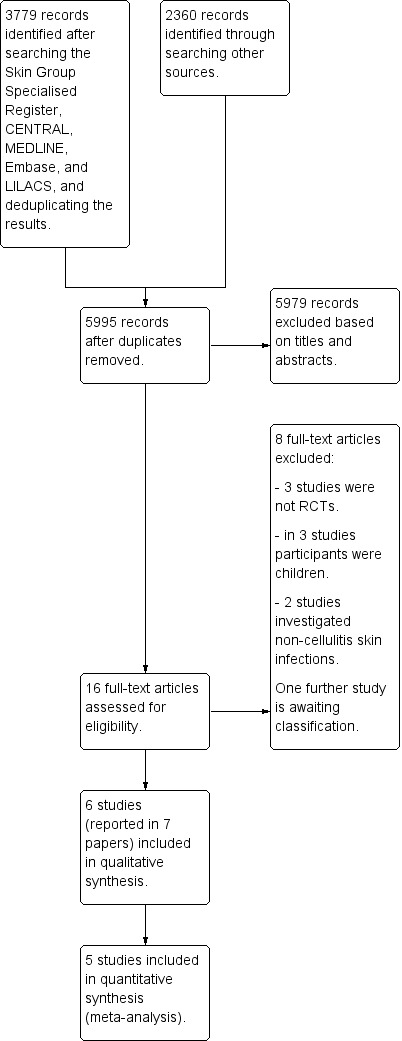
Search methods: We searched the following databases up to June 2016: the Cochrane Skin Group Specialised Register, the Cochrane Central Register of Controlled Trials (CENTRAL), MEDLINE, Embase, and LILACS. We also searched five trials registry databases, and checked reference lists of included studies and reviews for further references to relevant randomised controlled trials (RCTs). We searched two sets of dermatology conference proceedings, and BIOSIS Previews.
Selection criteria: Randomised controlled trials evaluating any therapy for the prevention of recurrent cellulitis.
Data collection and analysis: Two authors independently carried out study selection, data extraction, assessment of risks of bias, and analyses. Our primary prespecified outcome was recurrence of cellulitis when on treatment and after treatment. Our secondary outcomes included incidence rate, time to next episode, hospitalisation, quality of life, development of resistance to antibiotics, adverse reactions and mortality.
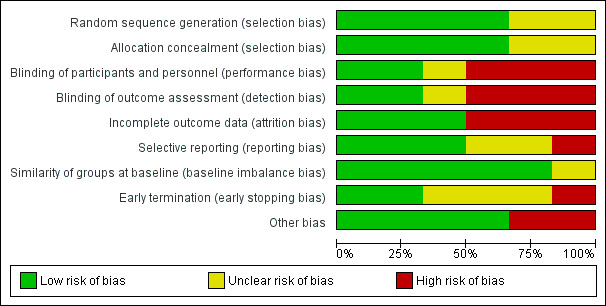
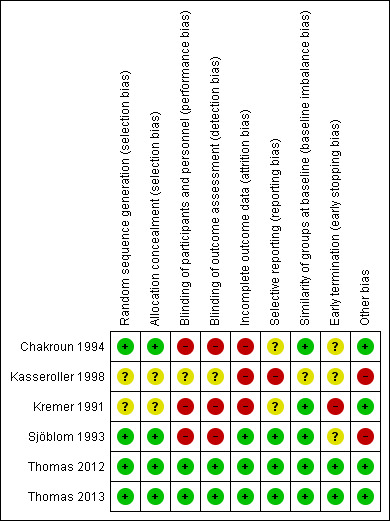
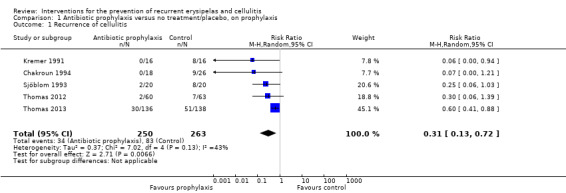
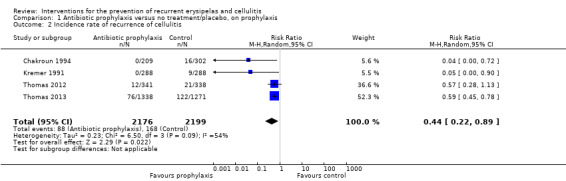
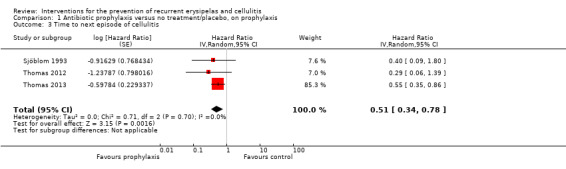
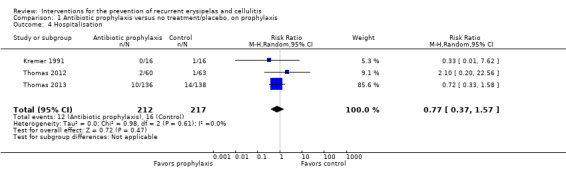
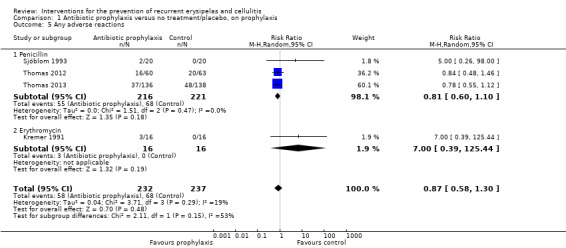
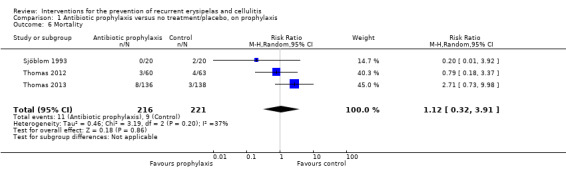
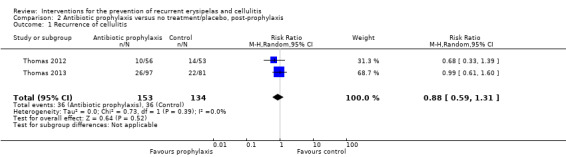
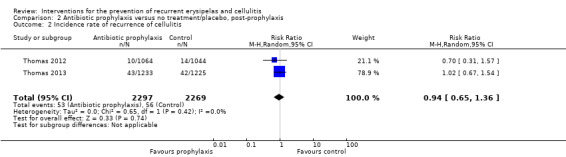
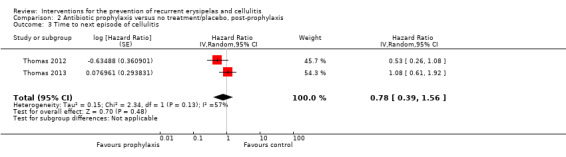
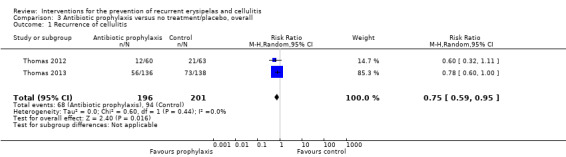
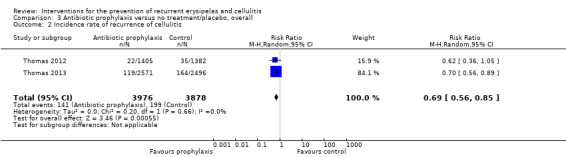
Main results: We included six trials, with a total of 573 evaluable participants, who were aged on average between 50 and 70. There were few previous episodes of cellulitis in those recruited to the trials, ranging between one and four episodes per study.Five of the six included trials assessed prevention with antibiotics in participants with cellulitis of the legs, and one assessed selenium in participants with cellulitis of the arms. Among the studies assessing antibiotics, one study evaluated oral erythromycin (n = 32) and four studies assessed penicillin (n = 481). Treatment duration varied from six to 18 months, and two studies continued to follow up participants after discontinuation of prophylaxis, with a follow-up period of up to one and a half to two years. Four studies were single-centre, and two were multicentre; they were conducted in five countries: the UK, Sweden, Tunisia, Israel, and Austria.Based on five trials, antibiotic prophylaxis (at the end of the treatment phase ('on prophylaxis')) decreased the risk of cellulitis recurrence by 69%, compared to no treatment or placebo (risk ratio (RR) 0.31, 95% confidence interval (CI) 0.13 to 0.72; n = 513; P = 0.007), number needed to treat for an additional beneficial outcome (NNTB) six, (95% CI 5 to 15), and we rated the certainty of evidence for this outcome as moderate.Under prophylactic treatment and compared to no treatment or placebo, antibiotic prophylaxis reduced the incidence rate of cellulitis by 56% (RR 0.44, 95% CI 0.22 to 0.89; four studies; n = 473; P value = 0.02; moderate-certainty evidence) and significantly decreased the rate until the next episode of cellulitis (hazard ratio (HR) 0.51, 95% CI 0.34 to 0.78; three studies; n = 437; P = 0.002; moderate-certainty evidence).The protective effects of antibiotic did not last after prophylaxis had been stopped ('post-prophylaxis') for risk of cellulitis recurrence (RR 0.88, 95% CI 0.59 to 1.31; two studies; n = 287; P = 0.52), incidence rate of cellulitis (RR 0.94, 95% CI 0.65 to 1.36; two studies; n = 287; P = 0.74), and rate until next episode of cellulitis (HR 0.78, 95% CI 0.39 to 1.56; two studies; n = 287). Evidence was of low certainty.Effects are relevant mainly for people after at least two episodes of leg cellulitis occurring within a period up to three years.We found no significant differences in adverse effects or hospitalisation between antibiotic and no treatment or placebo; for adverse effects: RR 0.87, 95% CI 0.58 to 1.30; four studies; n = 469; P = 0.48; for hospitalisation: RR 0.77, 95% CI 0.37 to 1.57; three studies; n = 429; P = 0.47, with certainty of evidence rated low for these outcomes. The existing data did not allow us to fully explore its impact on length of hospital stay.The common adverse reactions were gastrointestinal symptoms, mainly nausea and diarrhoea; rash (severe cutaneous adverse reactions were not reported); and thrush. Three studies reported adverse effects that led to discontinuation of the assigned therapy. In one study (erythromycin), three participants reported abdominal pain and nausea, so their treatment was changed to penicillin. In another study, two participants treated with penicillin withdrew from treatment due to diarrhoea or nausea. In one study, around 10% of participants stopped treatment due to pain at the injection site (the active treatment group was given intramuscular injections of benzathine penicillin).None of the included studies assessed the development of antimicrobial resistance or quality-of-life measures.With regard to the risks of bias, two included studies were at low risk of bias and we judged three others as being at high risk of bias, mainly due to lack of blinding.
Authors' conclusions: In terms of recurrence, incidence, and time to next episode, antibiotic is probably an effective preventive treatment for recurrent cellulitis of the lower limbs in those under prophylactic treatment, compared with placebo or no treatment (moderate-certainty evidence). However, these preventive effects of antibiotics appear to diminish after they are discontinued (low-certainty evidence). Treatment with antibiotic does not trigger any serious adverse events, and those associated are minor, such as nausea and rash (low-certainty evidence). The evidence is limited to people with at least two past episodes of leg cellulitis within a time frame of up to three years, and none of the studies investigated other common interventions such as lymphoedema reduction methods or proper skin care. Larger, high-quality studies are warranted, including long-term follow-up and other prophylactic measures.
Conflict of interest statement
Adam Dalal: nothing to declare. Marina Eskin‐Shwartz: nothing to declare. Daniel Mimouni: nothing to declare. Sujoy Ray: nothing to declare. Walford Days: nothing to declare. Emmilia Hodak: nothing to declare. Leonard Leibovici: nothing to declare. Mical Paul: nothing to declare. Oh Choon Chiat, who refereed this review, is the author/co‐author of two papers (Oh 2014; Tay 2015) cited in this review.
Figures
Update of
References
References to studies included in this review
Chakroun 1994 {published and unpublished data}
-
- Chakroun M, Ben‐Romdhane F, Battikh R, Souki A, Bouzouaia N. Benzathine penicillin prophylaxis in recurrent erysipelas [Intérêt de la benzathine pénicilline dans la prévention des récidives d'érysipèle]. Médecine et Maladies Infectieuses 1994;24(10):894‐7. [CENTRAL: CN‐00169390; EMBASE: 1994338740]
Kasseroller 1998 {published data only (unpublished sought but not used)}
-
- Kasseroller R. Prophylaxis of erysipelas in secondary lymphedema with selenium [Erysipelprophylaxe beim sekundären Lymphödem mit Selen]. Der Allgemeinarzt 1996;18(3):244‐7.
-
- Kasseroller R. Sodium selenite as prophylaxis against erysipelas in secondary lymphedema. Anticancer Research 1998;18(3C):2227‐30. [CENTRAL: CN‐00153878; EMBASE: 1998283262] - PubMed
Kremer 1991 {published data only (unpublished sought but not used)}
-
- Kremer M, Zuckerman R, Avraham Z, Raz R. Long‐term antimicrobial therapy in the prevention of recurrent soft‐tissue infections. Journal of Infection 1991;22(1):37‐40. [CENTRAL: CN‐00073794; PUBMED: 2002231] - PubMed
Sjöblom 1993 {published and unpublished data}
-
- Sjöblom AC, Eriksson B, Jorup‐Rönström C, Karkkonen K, Lindqvist M. Antibiotic prophylaxis in recurrent erysipelas. Infection 1993;21(6):390‐3. [CENTRAL: CN‐00099842; PUBMED: 8132369] - PubMed
Thomas 2012 {published and unpublished data}
-
- Centre of Evidence Based Dermatology. Prophylactic Antibiotics for the Treatment of Cellulitis at Home (PATCH). www.nottingham.ac.uk/research/groups/cebd/projects/patch.aspx (accessed 6th June 2017).
-
- UK Dermatology Clinical Trials Network’s PATCH Trial Team, Thomas K, Crook A, Foster K, Mason J, Chalmers J, Bourke J, et al. Prophylactic antibiotics for the prevention of cellulitis (erysipelas) of the leg: results of the UK Dermatology Clinical Trials Network's PATCH II trial. British Journal of Dermatology 2012;166(1):169‐78. [CENTRAL: CN‐00836571; PUBMED: 21910701] - PMC - PubMed
Thomas 2013 {published and unpublished data}
-
- Centre of Evidence Based Dermatology. Prophylactic Antibiotics for the Treatment of Cellulitis at Home (PATCH). www.nottingham.ac.uk/research/groups/cebd/projects/patch.aspx (accessed 6th June 2017).
-
- Thomas KS, Crook AM, Nunn AJ, Foster KA, Mason JM, Chalmers JR, et al. Penicillin to prevent recurrent leg cellulitis. New England Journal of Medicine 2013;368(18):1695‐703. [CENTRAL: CN‐00859316; PUBMED: 23635049] - PubMed
References to studies excluded from this review
Duvanel 1986 {published data only (unpublished sought but not used)}
-
- Duvanel T, Harms M, Merot Y, Saurat JH. Les récidives d’érysipèle et leur prévention par la benzathine‐penicilline. Annales de Dermatologie et de Vénéréologie 1986;113:174‐6.
Ferrieri 1973 {published data only}
-
- Ferrieri P, Dajani AS, Wannamaker LW. Benzathine penicillin in the prophylaxis of streptococcal skin infections: a pilot study. Journal of Pediatrics 1973;83(4):572‐7. [CENTRAL: CN‐00009022; PUBMED: 4581016] - PubMed
Fritz 2011 {published and unpublished data}
-
- Fritz SA, Camins BC, Eisenstein KA, Fritz JM, Epplin EK, Burnham CA, et al. Effectiveness of measures to eradicate Staphylococcus aureus carriage in patients with community‐associated skin and soft‐tissue infections: a randomized trial. Infection Control and Hospital Epidemiology 2011;32(9):872‐80. [CENTRAL: CN‐00804495; PUBMED: 21828967] - PMC - PubMed
Haustein 1989 {published data only}
-
- Haustein UF, Biella U, Tausch I, Knöll H. Treatment of chronic recurrent erysipelas with streptococcal vaccine [Die behandlung des chronisch rezidivierenden erysipels mit Streptokokkenvakzine]. Hautarzt 1989;40(4):215‐21. [PUBMED: 2659550] - PubMed
Klempner 1988 {published data only}
-
- Klempner MS, Styrt B. Prevention of recurrent staphylococcal skin infections with low‐dose oral clindamycin therapy. JAMA 1988;260(18):2682‐5. [CENTRAL: CN‐00056409; PUBMED: 3184334] - PubMed
Maddox 1985 {published data only}
-
- Maddox JS, Ware JC, Dillon HC. The natural history of streptococcal skin infection: prevention with topical antibiotics. Journal of the American Academy of Dermatology 1985;13(2 Pt 1):207‐12. [CENTRAL: CN‐00039750; PUBMED: 2995463] - PubMed
Raz 1996 {published data only}
-
- Raz R, Miron D, Colodner R, Staler Z, Samara Z, Keness Y. A 1‐year trial of nasal mupirocin in the prevention of recurrent staphylococcal nasal colonization and skin infection. Archives of Internal Medicine 1996;156(10):1109‐12. [CENTRAL: CN‐00124903; PUBMED: 8638999] - PubMed
Wang 1997 {published data only}
-
- Wang JH, Liu YC, Cheng DL, Yen MY, Chen YS, Wang JH, et al. Role of benzathine penicillin G in prophylaxis for recurrent streptococcal cellulitis of the lower legs. Clinical Infectious Diseases 1997;25(3):685‐9. [CENTRAL: CN‐00143909; PUBMED: 9314462] - PubMed
References to studies awaiting assessment
Ratnikova 1991 {published data only}
-
- Ratnikova LI. Effectiveness of bemitil in recurrent erysipelas [Эффективность бемитила при рецидивирующей роже]. Klinicheskaia Meditsina 1991;69(7):89‐90. [CENTRAL: CN‐00079309; EMBASE: 1942990] - PubMed
Additional references
Addis 2011
-
- Addiss DG, Michel MC, Michelus A, Radday J, Billhimer W, Louis‐Charles J, et al. Evaluation of antibacterial soap in the management of lymphoedema in Leogane, Haiti. Transactions of the Royal Society of Tropical Medicine and Hygiene 2011;105(1):58‐60. - PubMed
ALA 2015
-
- Australasian Lymphology Association (ALA). Consensus Guideline: Management of Cellulitis in Lymphoedema. www.lymphoedema.org.au/public/7/files/ALA%20CELLULITIS%20IN%20LYMPHOEDEM... (accessed May 2017).
Allard 1999
-
- Allard P, Stücker M, Kobyletzki G, Gammal S, Altmeyer P. Cyclical intravenous antibiosis as an effective therapy concept in chronic recurrent erysipelas [Zyklische intravenöse Antibiose als effizientes Therapiekonzept des chronisch‐rezidivierenden Erysipels]. Hautarzt 1999;50(1):34‐8. [PUBMED: 10068929] - PubMed
Arakaki 2014
-
- Arakaki RY, Strazzula L, Woo E, Kroshinsky D. The impact of dermatology consultation on diagnostic accuracy and antibiotic use among patients with suspected cellulitis seen at outpatient internal medicine offices: a randomized clinical trial. JAMA Dermatology 2014;150(10):1056‐61. [PUBMED: 25143179] - PubMed
Arasaratnam 2013
Arsenault 2011
-
- Arsenault K, Rielly L, Wise H. Effects of complete decongestive therapy on the incidence rate of hospitalization for the management of recurrent cellulitis in adults with lymphedema. Rehabilitation Oncology 2011;29(3):14‐20. [EMBASE: 2011656495]
Arumugam 2012
-
- Arumugam D, Atherton JJ, Martin PT. A lethal injection?. Lancet 2012;379(9814):492. [PUBMED: 22305227] - PubMed
Babb 1966
-
- Babb RR, Spittell JA Jr, Martin WJ, Schirger A. Prophylaxis of recurrent lymphangitis complicating lymphedema. JAMA 1966;195(10):871‐3. [PUBMED: 12608187] - PubMed
Baddour 2000
-
- Baddour LM. Cellulitis syndromes: an update. International Journal of Antimicrobial Agents 2000;14(2):113‐6. [PUBMED: 10720800] - PubMed
Bartholomeeusen 2007
-
- Bartholomeeusen S, Vandenbroucke J, Truyers C, Buntinx F. Epidemiology and comorbidity of erysipelas in primary care. Dermatology 2007;215(2):118‐22. [PUBMED: 17684373] - PubMed
Bernard 1987
-
- Bernard P, Toty L, Mounier M, Denis F, Bonnetblanc JM. Early detection of streptococcal group antigens in skin samples by latex particle agglutination. Archives of Dermatology 1987;123(4):468‐70. [PUBMED: 3827278] - PubMed
Biosyn 2015
-
- Biosyn Selenase®. Selenium as a beacon of hope [Selen als Hoffnungsträge]. www.biosyn.de/innovation/selen‐als‐hoffnungstraeger (accessed January 2015).
Bisno 1996
-
- Bisno AL, Stevens DL. Streptococcal infections of skin and soft tissues. New England Journal of Medicine 1996;334(4):240‐5. [PUBMED: 8532002] - PubMed
Bitnun 1985
-
- Bitnun S. Prophylactic antibiotics in recurrent erysipelas. Lancet 1985;1(8424):345. [PUBMED: 2857399] - PubMed
Bjornsdottir 2005
-
- Bjornsdottir S, Gottfredsson M, Thorisdottir AS, Gunnarsson GB, Rikardsdottir H, Kristjansson M, et al. Risk factors for acute cellulitis of the lower limb: a prospective case‐control study. Clinical Infectious Diseases 2005;41(10):1416‐22. [PUBMED: 16231251] - PubMed
BLS 2016
-
- British Lymphology Society (BLS). Consensus Document on the Management of Cellulitis in Lymphoedema. Revised Cellulitis Guidelines 2016. www.lymphoedema.org/images/pdf/CellulitisConsensus.pdf (accessed May 2017).
Bowler 2001
Brook 1995
-
- Brook I, Frazier EH. Clinical features and aerobic and anaerobic microbiological characteristics of cellulitis. Archives of Surgery 1995;130(7):786‐92. [PUBMED: 7611872] - PubMed
Brorson 2000
-
- Brorson H. Liposuction gives complete reduction of chronic large arm lymphedema after breast cancer. Acta Oncologica 2000;39(3):407‐20. [PUBMED: 10987239] - PubMed
Bruun 2015
Campisi 2015
-
- Campisi CC, Ryan M, Boccardo F, Campisi C. A single‐site technique of multiple lymphatic‐venous anastomoses for the treatment of peripheral lymphedema: long‐term clinical outcome. Journal of Reconstructive Microsurgery 2016;32(1):42‐9. [PUBMED: 26029991] - PubMed
Carratala 2003
-
- Carratala J, Roson B, Fernandez‐Sabe N, Shaw E, Rio O, Rivera A, et al. Factors associated with complications and mortality in adult patients hospitalized for infectious cellulitis. European Journal of Clinical Microbiology & Infectious Diseases 2003;22(3):151‐7. [PUBMED: 12649712] - PubMed
Chaniotakis 2016
-
- Chaniotakis I, Gartzonika CG, Gaitanis G, Levidiotou‐Stefanou S, Bassukas ID. Causality evaluation of bacterial species isolated from patients with community‐acquired lower leg cellulitis. Journal of the European Academy of Dermatology and Venereology 2016;30(9):1583‐9. [PUBMED: 27400752] - PubMed
Chen 2015
-
- Chen HM, Li YL, Liu YM, Liu CE, Cheng YR, Chen CH, et al. The experience of intramuscular benzathine penicillin for prophylaxis of recurrent cellulitis: A cohort study. Journal of Microbiology, Immunology, & Infection 2015;S1684‐1182(15):00831‐2. [PUBMED: 26475200] - PubMed
Chira 2010
-
- Chira S, Miller LG. Staphylococcus aureus is the most common identified cause of cellulitis: a systematic review. Epidemiology and Infection 2010;138(3):313‐7. [PUBMED: 19646308] - PubMed
Corey 2014
-
- Corey GR, Kabler H, Mehra P, Gupta S, Overcash JS, Porwal A, et al. Single‐dose oritavancin in the treatment of acute bacterial skin infections. New England Journal of Medicine 2014;370(23):2180‐90. [PUBMED: 24897083] - PubMed
Cox 1998
Cox 2006
-
- Cox NH. Oedema as a risk factor for multiple episodes of cellulitis/erysipelas of the lower leg: a series with community follow‐up. British Journal of Dermatology 2006;155(5):947‐50. [PUBMED: 17034523 ] - PubMed
CREST 2005
-
- CREST. Clinical Resource Efficiency Support Team (CREST). Guidelines on the management of cellulitis in adults. www.acutemed.co.uk/docs/Cellulitis%20guidelines,%20CREST,%2005.pdf 2005 (accessed 6th June 2017).
Crisp 2015
-
- Crisp JG, Takhar SS, Moran GJ, Krishnadasan A, Dowd SE, Finegold SM, et al. Inability of polymerase chain reaction, pyrosequencing, and culture of infected and uninfected site skin biopsy specimens to identify the cause of cellulitis. Clinical Infectious Diseases 2015;61(11):1679‐87. [PUBMED: 26240200] - PubMed
Damstra 2008
-
- Damstra RJ, Steensel MA, Boomsma JH, Nelemans P, Veraart JC. Erysipelas as a sign of subclinical primary lymphoedema: a prospective quantitative scintigraphic study of 40 patients with unilateral erysipelas of the leg. British Journal of Dermatology 2008;158(6):1210‐5. [PUBMED: 18363756] - PubMed
Damstra 2009
-
- Damstra RJ, Voesten HG, Schelven WD, Lei B. Lymphatic venous anastomosis (LVA) for treatment of secondary arm lymphedema. A prospective study of11 LVA procedures in 10 patients with breast cancer related lymphedema and a critical review of the literature. Breast Cancer Research & Treatment 2009;113(2):199‐206. [PUBMED: 18270813] - PubMed
David 2011
-
- David CV, Chira S, Eells SJ, Ladrigan M, Papier A, Miller LG, et al. Diagnostic accuracy in patients admitted to hospitals with cellulitis. Dermatology Online Journal 2011;17(3):1. [PUBMED: 21426867] - PubMed
De Godoy 2000
-
- Godoy JM, Godoy MF, Valente A, Camacho EL, Paiva EV. Lymphoscintigraphic evaluation in patients after erysipelas. Lymphology 2000;33(4):177‐80. [PUBMED: 11191659] - PubMed
Didem 2005
-
- Didem K, Ufuk YS, Serdar S, Zümre A. The comparison of two different physiotherapy methods in treatment of lymphedema after breast surgery. Breast Cancer Research & Treatment 2005;93(1):49‐54. [PUBMED: 16184458] - PubMed
Draijer 2008
-
- Draijer LW, Koning S, Wielink G, Boukes FS, Goudswaard AN. Summary of the practice guideline 'Bacterial skin infections' (first revision) from the Dutch College of General Practitioners [Samenvatting van de standaard ‘Bacteriële huidinfecties’(eerste herziening) van het Nederlands Huisartsen Genootschap]. Nederlands Tijdschrift voor Geneeskunde 2008;152(29):1619‐25. [PUBMED: 18998269] - PubMed
Duodecim 1999
-
- Finnish Medical Society Duodecim and the Finnish Dermatological Society. Bacterial skin infections (online). Current care guideline. October 1999 [updated November 2010] [Ihon bakteeri‐infektiot]. www.kaypahoito.fi (accessed 11 February 2016):1‐3 (accessed December 2013).
Dupuy 1999
Durand 2013
Duvanel 1985
-
- Duvanel T, Merot Y, Harms M, Saurat JH. Prophylactic antibiotics in erysipelas. Lancet 1985;1(8442):1401. [PUBMED: 2861358] - PubMed
Duvanel 1989
-
- Duvanel T, Auckenthaler R, Rohner P, Harms M, Saurat JH. Quantitative cultures of biopsy specimens from cutaneous cellulitis. Archives of Internal Medicine 1989;149(2):293‐6. [PUBMED: 2644902] - PubMed
Egger 1997
Ellis 2006
Eriksson 1996
-
- Eriksson B, Jorup‐Rönström C, Karkkonen K, Sjöblom AC, Holm SE. Erysipelas: clinical and bacteriologic spectrum and serological aspects. Clinical Infectious Diseases 1996;23(5):1091‐8. [PUBMED: 8922808] - PubMed
Eron 2003
-
- Eron LJ, Lipsky BA, Low DE, Nathwani D, Tice AD, Volturo GA. Managing skin and soft tissue infections: expert panel recommendations on key decision points. Journal of Antimicrobial Chemotherapy 2003;52(Suppl 1):i3‐17. [PUBMED: 14662806] - PubMed
Esposito 2011
-
- Esposito S, Bassetti M, Borre S, Bouza E, Dryden M, Fantoni M, et al. Diagnosis and management of skin and soft‐tissue infections (SSTI): a literature review and consensus statement on behalf of the Italian Society of Infectious Diseases and International Society of Chemotherapy. Journal of Chemotherapy 2011;23(5):251‐62. [PUBMED: 22005055] - PubMed
Ezzo 2015
Finlay 1994
-
- Finlay AY, Khan GK. Dermatology Life Quality Index (DLQI)‐‐a simple practical measure for routine clinical use. Clinical & Experimental Dermatology 1994;19(3):210‐6. [PUBMED: 8033378] - PubMed
Garau 2015
Gerber 1995
-
- Gerber MA. Antibiotic resistance in group A streptococci. Pediatric Clinics of North America 1995;42(3):539‐51. [PUBMED: 7761140] - PubMed
Goettsch 2006
-
- Goettsch WG, Bouwes Bavinck JN, Herings RM. Burden of illness of bacterial cellulitis and erysipelas of the leg in the Netherlands. Journal of the European Academy of Dermatology and Venereology 2006;20(7):834‐9. [PUBMED: 16898907] - PubMed
Goscinski 2006
-
- Goscinski G, Tano E, Thulin P, Norrby‐Teglund A, Sjölin J. Release of SpeA from Streptococcus pyogenes after exposure to penicillin: dependency on dose and inhibition by clindamycin. Scandinavian Journal of Infectious Diseases 2006;38(11‐12):983‐7. [PUBMED: 17148065] - PubMed
Granzow 2014
-
- Granzow JW, Soderberg JM, Kaji AH, Dauphine C. Review of current surgical treatments for lymphedema. Annals of Surgical Oncology 2014;21(4):1195‐201. [PUBMED: 24558061] - PubMed
Guillemot 1998
-
- Guillemot D, Carbon C, Balkau B, Geslin P, Lecoeur H, Vauzelle‐Kervroëdan F, et al. Low dosage and long treatment duration of beta‐lactam: risk factors for carriage of penicillin‐resistant Streptococcus pneumoniae. JAMA 1998;279(5):365‐70. [PUBMED: 9459469] - PubMed
Halpern 2008
-
- Halpern J, Holder R, Langford NJ. Ethnicity and other risk factors for acute lower limb cellulitis: a UK‐based prospective case‐control study. British Journal of Dermatology 2008;158(6):1288‐92. [PUBMED: 18341662] - PubMed
Harris 2001
Higgins 2011
-
- Higgins JPT, Green S, editor(s). Cochrane Handbook for Systematic Reviews of Interventions Version 5.1.0 (updated March 2011). The Cochrane Collaboration, 2011. Available from www.handbook.cochrane.org.
Hook 1986
-
- Hook EW 3rd, Hooton TM, Horton CA, Coyle MB, Ramsey PG, Turck M. Microbiologic evaluation of cutaneous cellulitis in adults. Archives of Internal Medicine 1986;146(2):295‐7. [PUBMED: 3947189] - PubMed
Horn 1998
-
- Horn DL, Zabriskie JB, Austrian R, Cleary PP, Ferretti JJ, Fischetti VA. Why have group A streptococci remained susceptible to penicillin? Report on a symposium. Clinical Infectious Diseases 1998;26(6):1341‐5. [PUBMED: 9636860] - PubMed
ILF 2006
-
- International Lymphoedema Framework (ILF). Best Practice for the Management of Lymphoedema. International consensus 2006. http://www.lympho.org/portfolio/best‐practice‐for‐the‐management‐of‐lymp... (accessed 6th June 2017):1‐60.
Inghammar 2014
ISL 2013
-
- International Society of Lymphology (ISL). The diagnosis and treatment of peripheral lymphedema: Consensus document. Lymphology 2013;46(1):1‐11. [PUBMED: 23930436] - PubMed
Israeli Ministry of Health 2015
-
- Israeli Ministry of Health. Safety warning over the use of intramuscular Benzathine benzylpenicillin February 2015 [הנחיות המשך להפחתת הסיכון לתופעות לוואי במתן תוך שרירי של תכשירים המכילים בנזתין בנזילפניצלין]. www.health.gov.il/newsandevents/recall_drugs/doclib1/benzathine_benzylpe... (accessed August 2015).
Jeng 2010
-
- Jeng A, Beheshti M, Li J, Nathan R. The role of beta‐hemolytic streptococci in causing diffuse, nonculturable cellulitis: a prospective investigation. Medicine (Baltimore) 2010;89(4):217‐26. [PUBMED: 20616661] - PubMed
Jorup‐Rönström 1986
-
- Jorup‐Rönström C. Epidemiological, bacteriological and complicating features of erysipelas. Scandinavian Journal of Infectious Diseases 1986;18(6):519‐24. [PUBMED: 3810046] - PubMed
Jorup‐Rönström 1987
-
- Jorup‐Rönström C, Britton S. Recurrent erysipelas: predisposing factors and costs of prophylaxis. Infection 1987;15(2):105‐6. [PUBMED: 3110071] - PubMed
Jüni 2001
Karimkhani 2014a
Karimkhani 2014b
-
- Karimkhani C, Boyers LN, Prescott L, Welch V, Delamere FM, Nasser M, et al. Global burden of skin disease as reflected in Cochrane Database of Systematic Reviews. JAMA Dermatology 2014;150(9):945. [PUBMED: 24807687] - PubMed
Karppelin 2010
-
- Karppelin M, Siljander T, Vuopio‐Varkila J, Kere J, Huhtala H, Vuento R, et al. Factors predisposing to acute and recurrent bacterial non‐necrotizing cellulitis in hospitalized patients: a prospective case‐control study. Clinical Microbiology & Infection 2010;16(6):729‐34. [PUBMED: 19694769] - PubMed
Karppelin 2013
-
- Karppelin M, Siljander T, Huhtala H, Aroma A, Vuopio J, Hannula‐Jouppi K, et al. Recurrent cellulitis with benzathine penicillin prophylaxis associated with diabetes and psoriasis. European Journal of Clinical Microbiology & Infectious Diseases 2013;32(3):369‐72. [PUBMED: 23007460] - PubMed
Karppelin 2014
Kasseroller 1996
-
- Kasseroller R. Erysipelprophylaxe beim sekundären Lymphödem mit Selen. Der Allgemeinartzt 1996;3:244‐7.
Kilburn 2010
Ko 1998
-
- Ko DS, Lerner R, Klose G, Cosimi AB. Effective treatment of lymphedema of the extremities. Archives of Surgery 1998;133(4):452‐8. [PUBMED: 9565129] - PubMed
Kotloff 2004
-
- Kotloff KL, Corretti M, Palmer K, Campbell JD, Reddish MA, Hu MC, et al. Safety and immunogenicity of a recombinant multivalent group a streptococcal vaccine in healthy adults: phase 1 trial. JAMA 2004;292(6):709‐15. [PUBMED: 15304468] - PubMed
Koutkia 1999
-
- Koutkia P, Mylonakis E, Boyce J. Cellulitis: evaluation of possible predisposing factors in hospitalized patients. Diagnostic Microbiology & Infectious Disease 1999;34(4):325‐7. [PUBMED: 10459485] - PubMed
Kouyos 2014
Kunkel 2015
Lazzarini 2005
-
- Lazzarini L, Conti E, Tositti G, Lalla F. Erysipelas and cellulitis: clinical and microbiological spectrum in an Italian tertiary care hospital. Journal of Infection 2005;51(5):383‐9. [PUBMED: 16321649] - PubMed
Levell 2011
-
- Levell NJ, Wingfield CG, Garioch JJ. Severe lower limb cellulitis is best diagnosed by dermatologists and managed with shared care between primary and secondary care. British Journal of Dermatology 2011;164(6):1326‐8. [PUBMED: 21564054] - PubMed
Lewis 2006
-
- Lewis SD, Peter GS, Gomez‐Marin O, Bisno AL. Risk factors for recurrent lower extremity cellulitis in a U.S. Veterans Medical Center population. American Journal of the Medical Sciences 2006;332(6):304‐7. [PUBMED: 17170620] - PubMed
Lum 2002
-
- Lum GR. Cellulitis among active duty service members, US Armed Forces, 1998‐2001. Medical Surveillance Monthly Report (MSMR) 2002;8:6‐9.
Mallon 1997
-
- Mallon E, Powell S, Mortimer P, Ryan TJ. Evidence for altered cell‐mediated immunity in postmastectomy lymphoedema. British Journal of Dermatology 1997;137(6):928‐33. [PUBMED: 9470909] - PubMed
Mandell 2010
-
- Mandell GL, Bennett JE, Dolin R. Mandell, Douglas, and Bennett's Principles and Practice of Infectious Diseases. 7. Vol. 1, Philadelphia: Churchill Livingstone, 2010.
Mason 2014
Massell 1969
-
- Massell BF, Honikman LH, Amezcua J. Rheumatic fever following streptococcal vaccination. Report of three cases. JAMA 1969;207(6):1115‐9. [PUBMED: 5818242 ] - PubMed
McNamara 2007
-
- McNamara DR, Tleyjeh IM, Berbari EF, Lahr BD, Martinez J, Mirzoyev SA, et al. A predictive model of recurrent lower extremity cellulitis in a population‐based cohort. Archives of Internal Medicine 2007;167(7):709‐15. [PUBMED: 17420430] - PubMed
McNeil 2005
-
- McNeil SA, Halperin SA, Langley JM, Smith B, Warren A, Sharratt GP, et al. Safety and immunogenicity of 26‐valent group a streptococcus vaccine in healthy adult volunteers. Clinical Infectious Diseases 2005;41(8):1114‐22. [PUBMED: 16163629] - PubMed
Mertz 1998
-
- Mertz KR, Baddour LM, Bell JL, Gwin JL. Breast cellulitis following breast conservation therapy: a novel complication of medical progress. Clinical Infectious Diseases 1998;26(2):481‐6. [PUBMED: 9502474] - PubMed
Miller 1998
-
- Miller SR, Mondry T, Reed JS, Findley A, Johnstone PA. Delayed cellulitis associated with conservative therapy for breast cancer. Journal of Surgical Oncology 1998;67(4):242‐5. [PUBMED: 9579371] - PubMed
Mokni 2006
-
- Mokni M, Dupuy A, Denguezli M, Dhaoui R, Bouassida S, Amri M, et al. Risk factors for erysipelas of the leg in Tunisia: a multicenter case‐control study. Dermatology 2006;212(2):108‐12. [PUBMED: 16484815] - PubMed
Moreland 2014
-
- Moreland NJ, Waddington CS, Williamson DA, Sriskandan S, Smeesters PR, Proft T, et al. Working towards a group A streptococcal vaccine: report of a collaborative Trans‐Tasman workshop. Vaccine 2014;32(30):3713‐20. [PUBMED: 24837510] - PubMed
Morris 2008
Mortimer 2014
Nathwani 2001
-
- Nathwani D. The management of skin and soft tissue infections: outpatient parenteral antibiotic therapy in the United Kingdom. Chemotherapy 2001;47(Suppl 1):17‐23. [PUBMED: 11096185] - PubMed
NICE 2005
-
- National Institute for Health and Care Excellence (NICE). Cellulitis ‐ acute 2005. //cks.nice.org.uk/cellulitis‐acute#!topicsummary (accessed March 2015).
Oh 2014
Ostermann 2014
-
- Ostermann H, Blasi F, Medina J, Pascual E, McBride K, Garau J, REACH study group. Resource use in patients hospitalized with complicated skin and soft tissue infections in Europe and analysis of vulnerable groups: the REACH study. Journal of Medical Economics 2014;17(10):719‐29. [PUBMED: 24983206] - PubMed
Parmar 1998
-
- Parmar MK, Torri V, Stewart L. Extracting summary statistics to perform meta‐analyses of the published literature for survival endpoints. Statistics in Medicine 1998;17(24):2815‐34. [PUBMED: 9921604] - PubMed
Pauszek 1991
-
- Pauszek ME. Prophylaxis for recurrent cellulitis complicating venous and lymphatic insufficiency. Indiana Medicine 1991;84(4):252‐3. [PUBMED: 2037773] - PubMed
Pavlotsky 2004
-
- Pavlotsky F, Amrani S, Trau H. Recurrent erysipelas: risk factors. Journal Der Deutschen Dermatologischen Gesellschaft 2004;2(2):89‐95. [PUBMED: 16279242] - PubMed
Pierce 1992
-
- Pierce RP, Daugird AJ. Recurrent leg cellulitis: pathogenesis, treatment, and prevention. Journal of the American Board of Family Medicine 1992;5(1):85‐7. [PUBMED: 1561927] - PubMed
Quirke 2016
Raff 2016
-
- Raff AB, Kroshinsky D. Cellulitis: a review. JAMA 2016;316(3):325‐37. [PUBMED: 27434444] - PubMed
Read 2011
Roldan 2000
-
- Roldan YB, Mata‐Essayag S, Hartung C. Erysipelas and tinea pedis. Mycoses 2000;43(5):181‐3. [PUBMED: 10948816] - PubMed
Roujeau 2004
-
- Roujeau JC, Sigurgeirsson B, Korting HC, Kerl H, Paul C. Chronic dermatomycoses of the foot as risk factors for acute bacterial cellulitis of the leg: a case‐control study. Dermatology 2004;209(4):301‐7. [PUBMED: 15539893] - PubMed
Sawai 2007
Schünemann 2013
-
- Schünemann H, Brożek J, Guyatt G, Oxman A. GRADE handbook for grading quality of evidence and strength of recommendation. The GRADE Working Group, 2013. Available from:http://gdt.guidelinedevelopment.org/app/handbook/handbook.html.
Semel 1996
-
- Semel JD, Goldin H. Association of athlete's foot with cellulitis of the lower extremities: diagnostic value of bacterial cultures of ipsilateral interdigital space samples. Clinical Infectious Diseases 1996;23(5):1162‐4. [PUBMED: 8922818] - PubMed
SFD 2000
-
- French Society of Dermatology [Société Française de Dermatologie]. Management of erysipelas and necrotizing fasciitis [Erysipèle et fasciite nécrosante:prise en charge]. Annales de Dermatologie et de Vénéréologie 2000;127(12):1118‐37. [PUBMED: 11173699] - PubMed
Shenoy 1999
-
- Shenoy RK, Kumaraswami V, Suma TK, Rajan K, Radhakuttyamma G. A double‐blind, placebo‐controlled study of the efficacy of oral penicillin, diethylcarbamazine or local treatment of the affected limb in preventing acute adenolymphangitis in lymphoedema caused by brugian filariasis. Annals of Tropical Medicine & Parasitology 1999;93(4):367‐77. [PUBMED: 10656038] - PubMed
Siljander 2008
-
- Siljander T, Karppelin M, Vahakuopus S, Syrjanen J, Toropainen M, Kere J, et al. Acute bacterial, nonnecrotizing cellulitis in Finland: microbiological findings. Clinical Infectious Diseases 2008;46(6):855‐61. [PUBMED: 18260753] - PubMed
Simon 1992
-
- Simon MS, Cody RL. Cellulitis after axillary lymph node dissection for carcinoma of the breast. American Journal of Medicine 1992;93(5):543‐8. [PUBMED: 1364813] - PubMed
Soo 2008
-
- Soo JK, Bicanic TA, Heenan S, Mortimer PS. Lymphatic abnormalities demonstrated by lymphoscintigraphy after lower limb cellulitis. British Journal of Dermatology 2008;158(6):1350‐3. [PUBMED: 18241266] - PubMed
Stalbow 2004
-
- Stalbow J. Preventing cellulitis in older people with persistent lower limb oedema. British Journal of Nursing 2004;13(12):725‐32. [PUBMED: 15284636] - PubMed
Stevens 2005
-
- Stevens DL, Bisno AL, Chambers HF, Everett ED, Dellinger P, Goldstein EJ, et al. Practice guidelines for the diagnosis and management of skin and soft‐tissue infections. Clinical Infectious Diseases 2005;41(10):1373‐406. [PUBMED: 16231249] - PubMed
Stevens 2014
-
- Stevens DL, Bisno AL, Chambers HF, Dellinger EP, Goldstein EJ, Gorbach SL, et al. Practice guidelines for the diagnosis and management of skin and soft tissue infections: 2014 update by the Infectious Diseases Society of America. Clinical Infectious Diseases 2014;59(2):e10‐52. [DOI: 10.1093/cid/ciu444; PUBMED: 24973422] - DOI - PubMed
Stoberl 1987
-
- Stoberl C, Partsch H. Erysipelas and lymphedema‐‐egg or hen?. Zeitschrift für Hautkrankheiten 1987;62(1):56‐62. [PUBMED: 3577282] - PubMed
Strazzula 2015
-
- Strazzula L, Cotliar J, Fox LP, Hughey L, Shinkai K, Gee SN, et al. Inpatient dermatology consultation aids diagnosis of cellulitis among hospitalized patients: A multi‐institutional analysis. Journal of the American Academy of Dermatology 2015;73(1):70‐5. [PUBMED: 26089048] - PubMed
Swartz 2004
-
- Swartz MN. Clinical practice. Cellulitis. New England Journal of Medicine 2004;350(9):904‐12. [PUBMED: 14985488] - PubMed
Szolnoky 2014
-
- Szolnoky G, Dobozy A, Kemény L. Towards an effective management of chronic lymphedema. Clinics in Dermatology 2014 Sep‐Oct;32(5):685‐91. [PUBMED: 25160111] - PubMed
Tay 2015
Thind 1985
-
- Thind P. Prophylactic antibiotics in recurrent erysipelas. Lancet 1985;1(8435):986. [PUBMED: 2859444] - PubMed
Thomas 2010
Tierney 2007
Van Zuuren 2014
Vinh 2005
-
- Vinh DC, Embil JM. Rapidly progressive soft tissue infections. Lancet Infectious Diseases 2005;5(8):501‐13. [PUBMED: 16048719] - PubMed
Weng 2016
WHO 2000
-
- World Health Organization. Benzathine penicillin: three fatal reports following mega unit injections. Drug Information Bulletin 2000;4(2):1.
Woo 2000
-
- Woo PC, Lum PN, Wong SS, Cheng VC, Yuen KY. Cellulitis complicating lymphoedema. European Journal of Clinical Microbiology & Infectious Diseases 2000;19(4):294‐7. [PUBMED: 10834819] - PubMed
Yamamoto 2015
-
- Yamamoto T, Koshima I. Supermicrosurgical anastomosis of superficial lymphatic vessel to deep lymphatic vessel for a patient with cellulitis‐induced chronic localized leg lymphedema. Microsurgery 2015;35(1):68‐71. [PUBMED: 25197031] - PubMed
Young 1960
-
- Young JR, Dewolfe VG. Recurrent lymphangitis of the leg associated with dermatophytosis. Report of 25 consecutive cases. Cleveland Clinic quarterly 1960;27:19‐24. [PUBMED: 13846637] - PubMed
References to other published versions of this review
Publication types
MeSH terms
Substances
LinkOut - more resources
Full Text Sources
Other Literature Sources
Medical
Miscellaneous
