


Long term oncological outcome of thymoma and thymic carcinoma - an analysis of 235 cases from a single institution
- PMID: 28632791
- PMCID: PMC5478134
- DOI: 10.1371/journal.pone.0179527
Long term oncological outcome of thymoma and thymic carcinoma - an analysis of 235 cases from a single institution
Erratum in
-
Correction: Long term oncological outcome of thymoma and thymic carcinoma - an analysis of 235 cases from a single institution.PLoS One. 2017 Sep 20;12(9):e0185399. doi: 10.1371/journal.pone.0185399. eCollection 2017. PLoS One. 2017. PMID: 28931090 Free PMC article.
Abstract
Background and objectives: Thymoma has a variable long-term oncological outcome after surgical resection. Survival and tumor recurrence were analyzed to determine the predisposing factors for tumor recurrence.
Methods: A total of 235 patients who underwent surgery for thymoma or thymic carcinoma from December 1997 to March 2013 were analyzed using Masaoka staging system and World Health Organization (WHO) histological classification. Surgical intervention included extended thymothymectomy via median sternotomy and thymomectomy via thoracotomy/ video-assisted thoracoscopic surgery (VATS).
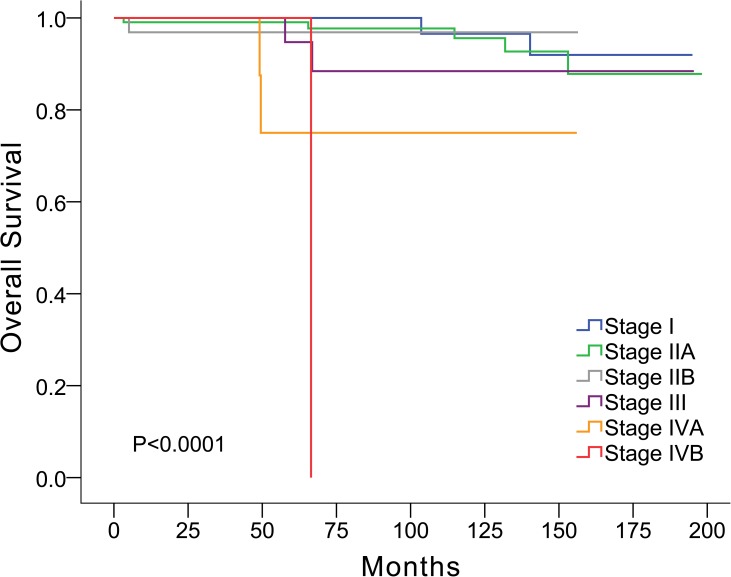
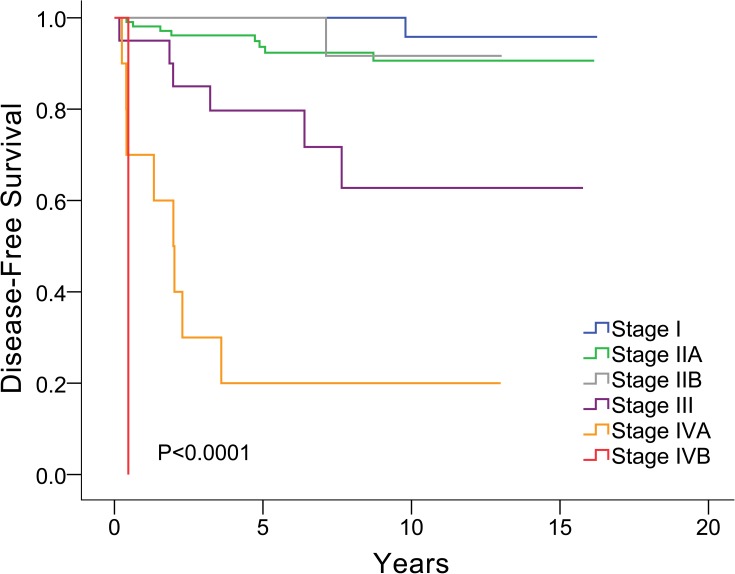
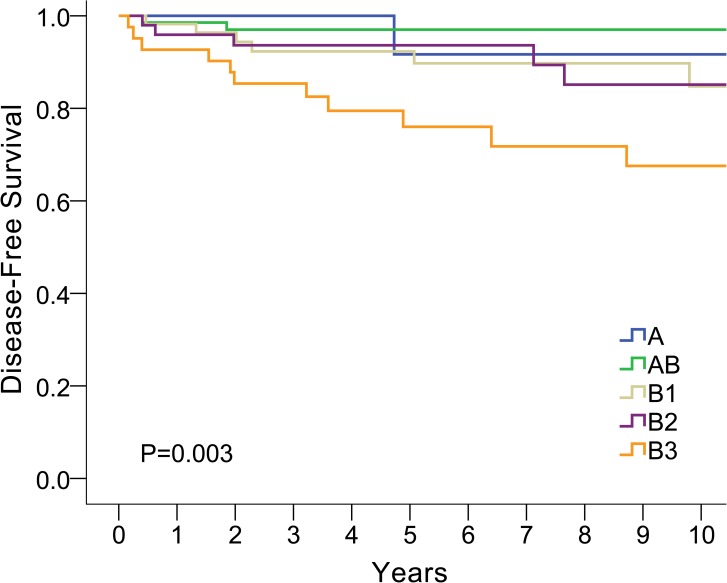
Results: The median duration of follow-up was 105 months (12-198 months). Among these 235 patients, recurrence was observed in 25 patients (10.7%). according to Masaoka stage I, IIA, IIB, III, IVA, IVB, recurrence rates were 1/65(1.5%), 8/106(7.5%), 1/32(3.1%), 6/20(30.0%), 8/10(80.0%), 1/1(100.0%), respectively. Disease or treatment-related mortality was observed in 13 patients. Overall survival rate was 94.4%. After univariate analysis, predisposing factors for tumor recurrence included Masaoka stage, WHO histologic type, tumor size, adjuvant therapy and margin status.
Conclusions: Due to the indolent behavior of thymoma, tumor recurrence appears to be a better assessment of oncological outcome rather than survival. Factors associated with tumor recurrence include Masaoka stage, WHO histologic type, tumor size, adjuvant therapy and margin status.
Conflict of interest statement
Figures
References
-
- Detterbeck FC. Evaluation and treatment of stage I and II thymoma. J Thorac Oncol. 2010;5(10 Suppl 4):S318–S322. - PubMed
-
- Engels EA, Pfeiffer RM. Malignant thymoma in the United States: demographic patterns in incidence and associations with subsequent malignancies. Int J Cancer. 2003;105(4):546–551. doi: 10.1002/ijc.11099 - DOI - PubMed
-
- Hung YS, Chang CL, Chang H, Lu CH, Chen PT, Chou WC. Thymoma. J Intern Med Taiwan 2009;20:344–351.
-
- Masaoka A, Monden Y, Nakahara K, Tanioka T. Follow-up study of thymomas with special reference to their clinical stages. Cancer. 1981;48(11):2485–2492. - PubMed
-
- Koga K, Matsuno Y, Noguchi M, Mukai K, Asamura H, Goya T, et al. A review of 79 thymomas: modification of staging system and reappraisal of conventional division into invasive and non-invasive thymoma. Pathol Int. 1994;44(5):1984–1987. - PubMed
MeSH terms
LinkOut - more resources
Full Text Sources
Other Literature Sources
Medical
