


Natural canopy bridges effectively mitigate tropical forest fragmentation for arboreal mammals
- PMID: 28634342
- PMCID: PMC5478646
- DOI: 10.1038/s41598-017-04112-x
Natural canopy bridges effectively mitigate tropical forest fragmentation for arboreal mammals
Abstract
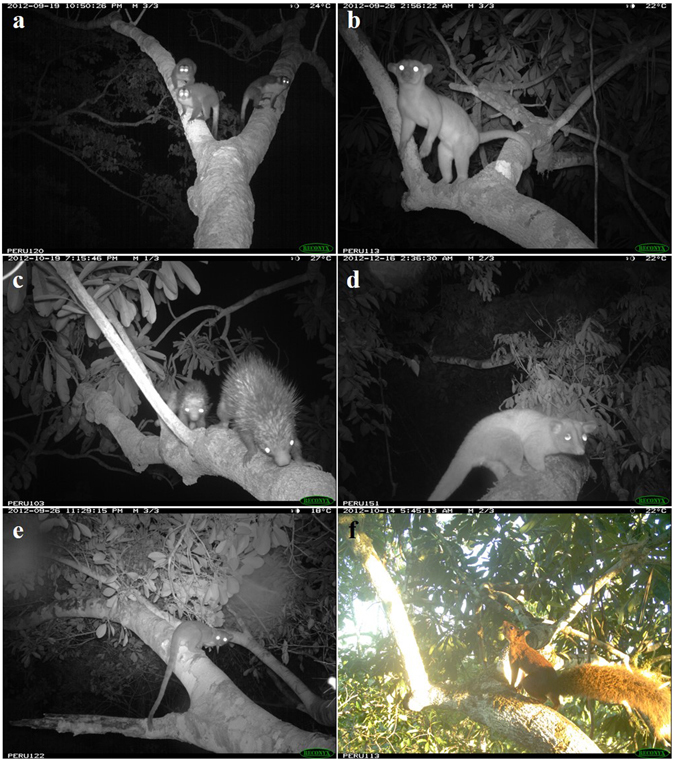
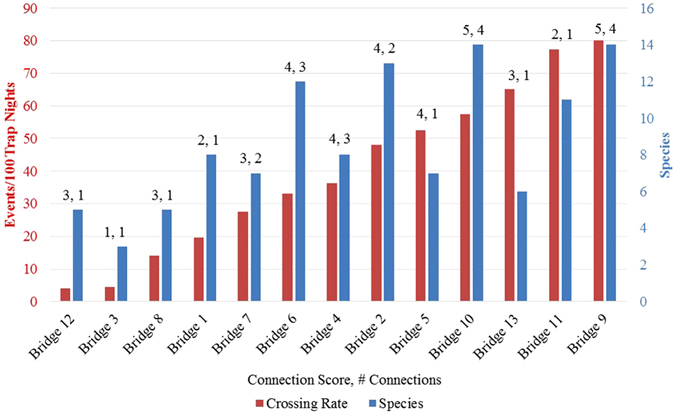
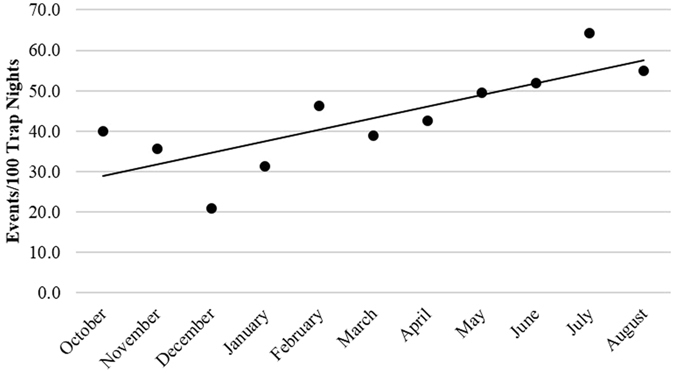
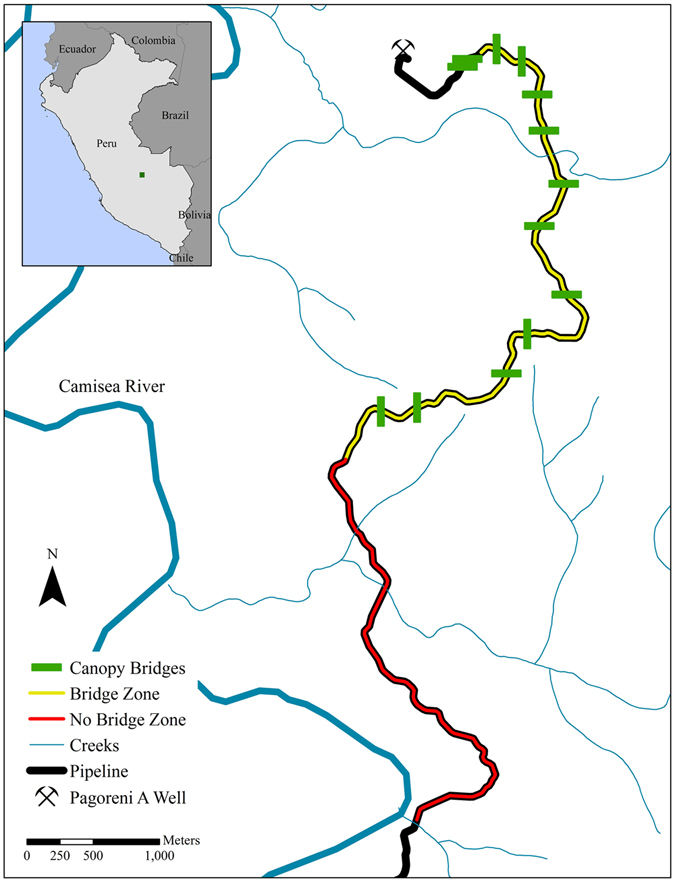
Linear infrastructure development and resulting habitat fragmentation are expanding in Neotropical forests, and arboreal mammals may be disproportionately impacted by these linear habitat clearings. Maintaining canopy connectivity through preservation of connecting branches (i.e. natural canopy bridges) may help mitigate that impact. Using camera traps, we evaluated crossing rates of a pipeline right-of-way in a control area with no bridges and in a test area where 13 bridges were left by the pipeline construction company. Monitoring all canopy crossing points for a year (7,102 canopy camera nights), we confirmed bridge use by 25 mammal species from 12 families. With bridge use beginning immediately after exposure and increasing over time, use rates were over two orders of magnitude higher than on the ground. We also found a positive relationship between a bridge's use rate and the number of species that used it, suggesting well-used bridges benefit multiple species. Data suggest bridge use may be related to a combination of bridge branch connectivity, multiple connections, connectivity to adjacent forest, and foliage cover. Given the high use rate and minimal cost, we recommend all linear infrastructure projects in forests with arboreal mammal populations include canopy bridges.
Conflict of interest statement
The authors declare that they have no competing interests.
Figures
References
-
- Benítez-López A, Alkemade R, Verweij PA. The impacts of roads and other infrastructure on mammal and bird populations: A meta-analysis. Biological Conservation. 2010;143:1307–1316. doi: 10.1016/j.biocon.2010.02.009. - DOI
-
- Jenkins AR, Smallie JJ, Diamond M. Avian collisions with power lines: a global review of causes and mitigation with a South African perspective. Bird Conservation International. 2010;20:263–278. doi: 10.1017/S0959270910000122. - DOI
-
- van der Ree, R., Gulle, N., Holland, K., Grift Evd Mata, C. & Suarez, F. Overcoming the Barrier Effect of Roads-How Effective Are Mitigation Strategies? (2007).
-
- Laurance WF, et al. Ecosystem decay of Amazonian forest fragments: A 22-year investigation. Conserv Biol. 2002;16:605–618. doi: 10.1046/j.1523-1739.2002.01025.x. - DOI
Publication types
MeSH terms
LinkOut - more resources
Full Text Sources
Other Literature Sources
