


How are socio-demographic and psycho-social factors associated with the prevalence and chronicity of severe pain in 14 different body sites? A cross-sectional population-based survey
- PMID: 28634778
- PMCID: PMC5772122
- DOI: 10.1007/s00508-017-1223-x
How are socio-demographic and psycho-social factors associated with the prevalence and chronicity of severe pain in 14 different body sites? A cross-sectional population-based survey
Abstract
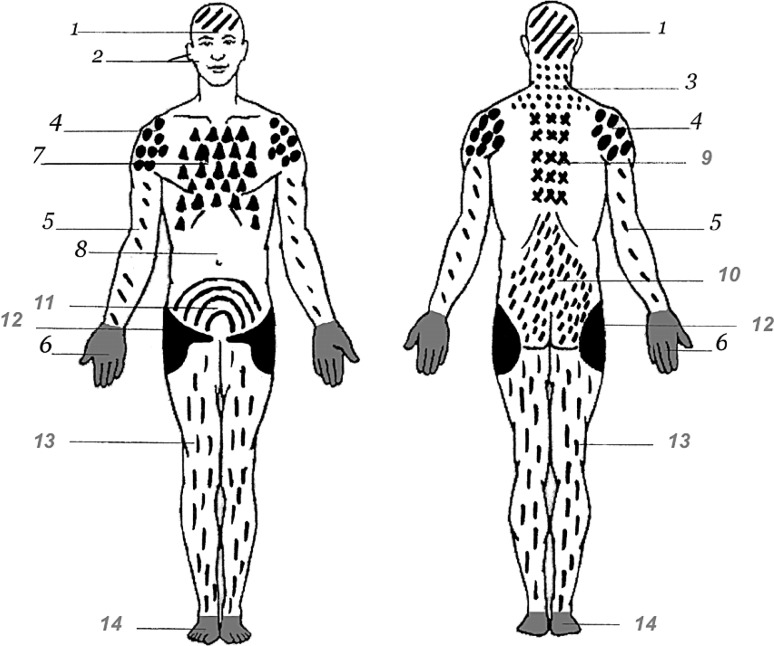
Background: Severe pain and chronic pain have a high impact on individuals and society. Body location of pain is important with regard to perception, articulation, and underlying biological, mental or social causes of pain.
Methods: A cross-sectional survey was performed in the general Austrian population with 15,474 personally interviewed subjects aged 15 years and older.
Results: The 1‑year period prevalence of severe pain in any body site was 38.6% and of chronic pain 24.9%. In all, 8.1% had pain in at least three body sites. Subjects aged 65 years and older (52.2%), those with low education (43.4%), unemployed subjects (50.4%), retired subjects (52.4%), those with anxiety/depression (67.7%), and subjects with lack of social support (49.6%) were sub-populations with high pain prevalence. In multivariate analyses, depression/anxiety was associated with prevalence and chronicity of severe pain in all body sites (range of ORs 1.89-5.01), while such associations were found for lack of social support (range of ORs 1.33-1.65), female sex (range of ORs 1.38-2.34), higher age (range of ORs 1.09-1.18 for 5 year intervals), as well as low educational (range of ORs 1.47-2.06 primary vs. tertiary education) and unemployment status (range of ORs 1.50-2.62) in most body sites. Being born in non-EU or EFTA states was associated with pain in many body sites (range of ORs 1.38-2.10).
Conclusions: Psychosocial factors are associated with pain presence in similar ways irrespective of location. Regarding socio-demographic factors, differences towards the magnitude and the direction in the association with pain frequency and chronicity in different body sites emerged.
Keywords: Body location; Chronic pain; Depression; Epidemiology; Socio-economic.
Conflict of interest statement
T.E. Dorner, K.V. Stein, J. Hahne, F. Wepner, M. Friedrich, and E. Mittendorfer-Rutz declare that they have no competing interests.
Figures
References
-
- Gerdle B, Bjork J, Henriksson C, Bengtsson A. Prevalence of current and chronic pain and their influences upon work and healthcare-seeking: a population study. J Rheumatol. 2004;31(7):1399–1406. - PubMed
-
- Stamm TA, Pieber K, Blasche G, Dorner TE. Health care utilisation in subjects with osteoarthritis, chronic back pain and osteoporosis aged 65 years and more: mediating effects of limitations in activities of daily living, pain intensity and mental diseases. Wien Med Wochenschr. 2014;164(7–8):160–166. doi: 10.1007/s10354-014-0262-4. - DOI - PubMed
MeSH terms
LinkOut - more resources
Full Text Sources
Other Literature Sources
Medical
