


Therapeutic effect of increased openness: Investigating mechanism of action in MDMA-assisted psychotherapy
- PMID: 28635375
- PMCID: PMC5544120
- DOI: 10.1177/0269881117711712
Therapeutic effect of increased openness: Investigating mechanism of action in MDMA-assisted psychotherapy
Abstract
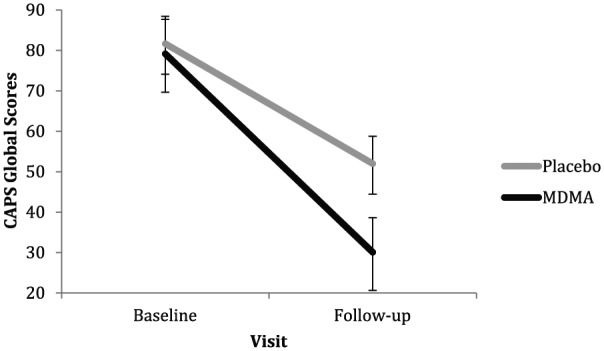
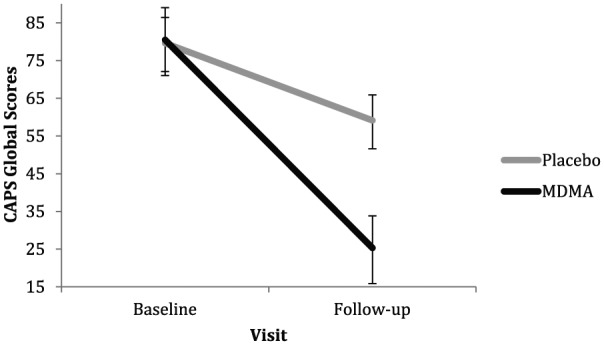
A growing body of research suggests that traumatic events lead to persisting personality change characterized by increased neuroticism. Relevantly, enduring improvements in Post-Traumatic Stress Disorder (PTSD) symptoms have been found in response to 3,4-methylenedioxymethamphetamine (MDMA)-assisted psychotherapy. There is evidence that lasting changes in the personality feature of "openness" occur in response to hallucinogens, and that this may potentially act as a therapeutic mechanism of change. The present study investigated whether heightened Openness and decreased Neuroticism served as a mechanism of change within a randomized trial of MDMA-assisted psychotherapy for chronic, treatment-resistant PTSD. The Clinician-Administered PTSD Scale (CAPS) Global Scores and NEO PI-R Personality Inventory (NEO) Openness and Neuroticism Scales served as outcome measures. Results indicated that changes in Openness but not Neuroticism played a moderating role in the relationship between reduced PTSD symptoms and MDMA treatment. Following MDMA-assisted psychotherapy, increased Openness and decreased Neuroticism when comparing baseline personality traits with long-term follow-up traits also were found. These preliminary findings suggest that the effect of MDMA-assisted psychotherapy extends beyond specific PTSD symptomatology and fundamentally alters personality structure, resulting in long-term persisting personality change. Results are discussed in terms of possible mechanisms of psychotherapeutic change.
Keywords: MDMA; NEO personality; openness; pharmacotherapy; posttraumatic stress disorder (PTSD); psychotherapy; treatment outcome.
Conflict of interest statement
Figures
References
-
- American Psychiatric Association (2000) Diagnostic and Statistical Manual of Mental Disorders, 4th ed. Arlington, VA: American Psychiatric Association.
-
- Beltran RO, Silove D. (1999) Expert opinions about the ICD-10 category of enduring personality change after catastrophic experience. Comprehensive Psychiatry 40: 396–403. - PubMed
-
- Beltran RO, Llewellyn GM, Silove D. (2008) Clinicians’ understanding of International Statistical Classification of Diseases and Related Health Problems, 10th Revision diagnostic criteria: F62.0 enduring personality change after catastrophic experience. Comprehensive Psychiatry 49: 593–602. - PubMed
Publication types
MeSH terms
Substances
LinkOut - more resources
Full Text Sources
Other Literature Sources
Medical
Research Materials
Miscellaneous
