


Unmanned aircraft systems as a new source of disturbance for wildlife: A systematic review
- PMID: 28636611
- PMCID: PMC5479521
- DOI: 10.1371/journal.pone.0178448
Unmanned aircraft systems as a new source of disturbance for wildlife: A systematic review
Abstract
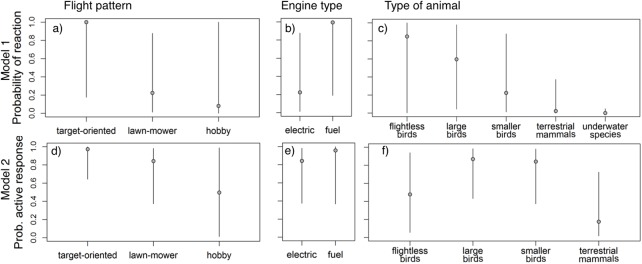
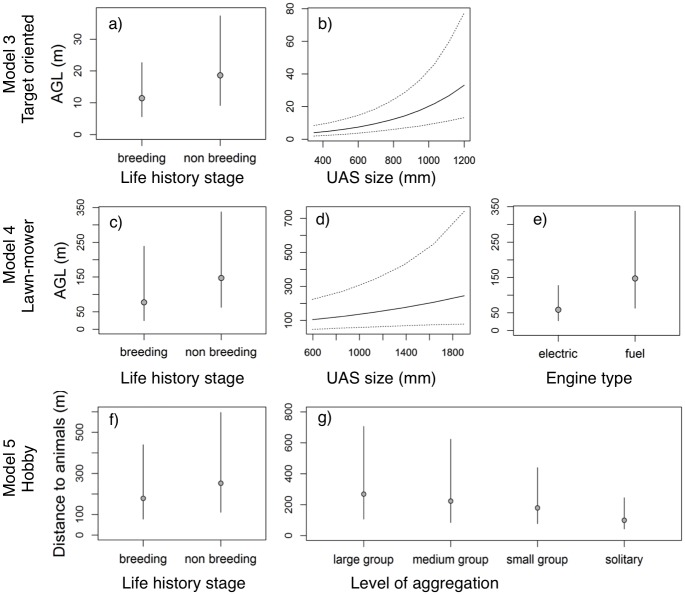
The use of small Unmanned Aircraft Systems (UAS; also known as "drones") for professional and personal-leisure use is increasing enormously. UAS operate at low altitudes (<500 m) and in any terrain, thus they are susceptible to interact with local fauna, generating a new type of anthropogenic disturbance that has not been systematically evaluated. To address this gap, we performed a review of the existent literature about animals' responses to UAS flights and conducted a pooled analysis of the data to determine the probability and intensity of the disturbance, and to identify the factors influencing animals' reactions towards the small aircraft. We found that wildlife reactions depended on both the UAS attributes (flight pattern, engine type and size of aircraft) and the characteristics of animals themselves (type of animal, life-history stage and level of aggregation). Target-oriented flight patterns, larger UAS sizes, and fuel-powered (noisier) engines evoked the strongest reactions in wildlife. Animals during the non-breeding period and in large groups were more likely to show behavioral reactions to UAS, and birds are more prone to react than other taxa. We discuss the implications of these results in the context of wildlife disturbance and suggest guidelines for conservationists, users and manufacturers to minimize the impact of UAS. In addition, we propose that the legal framework needs to be adapted so that appropriate actions can be undertaken when wildlife is negatively affected by these emergent practices.
Conflict of interest statement
Figures
References
-
- Cox TH, Nagy CJ, Skoog MA, Somers IA. Civil UAV capability assessment. Houston, TX, US; 2004.
-
- Guillot C. Commercial Drones [Internet]. 2016. http://businessresearcher.sagepub.com/sbr-1775-98070-2712846/20160118/co...
-
- Getzin S, Wiegand K, Schöning I. Assessing biodiversity in forests using very high-resolution images and unmanned aerial vehicles. Methods Ecol Evol. 2012;3: 397–404. 10.1111/j.2041-210X.2011.00158.x - DOI
-
- Anderson K, Gaston KJ. Lightweight unmanned aerial vehicles will revolutionize spatial ecology. Front Ecol Environ. 2013;11: 138–146. 10.1890/120150 - DOI
Publication types
MeSH terms
LinkOut - more resources
Full Text Sources
Other Literature Sources
Miscellaneous
