


Microbiota in anorexia nervosa: The triangle between bacterial species, metabolites and psychological tests
- PMID: 28636668
- PMCID: PMC5479564
- DOI: 10.1371/journal.pone.0179739
Microbiota in anorexia nervosa: The triangle between bacterial species, metabolites and psychological tests
Abstract
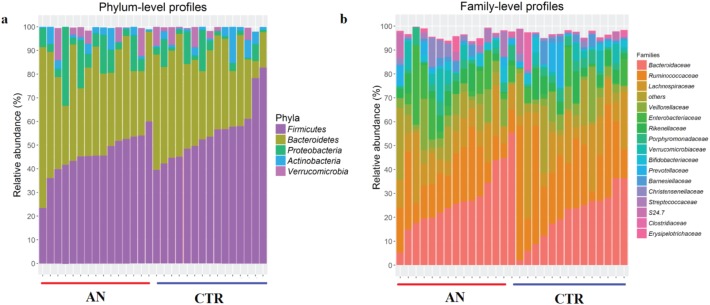
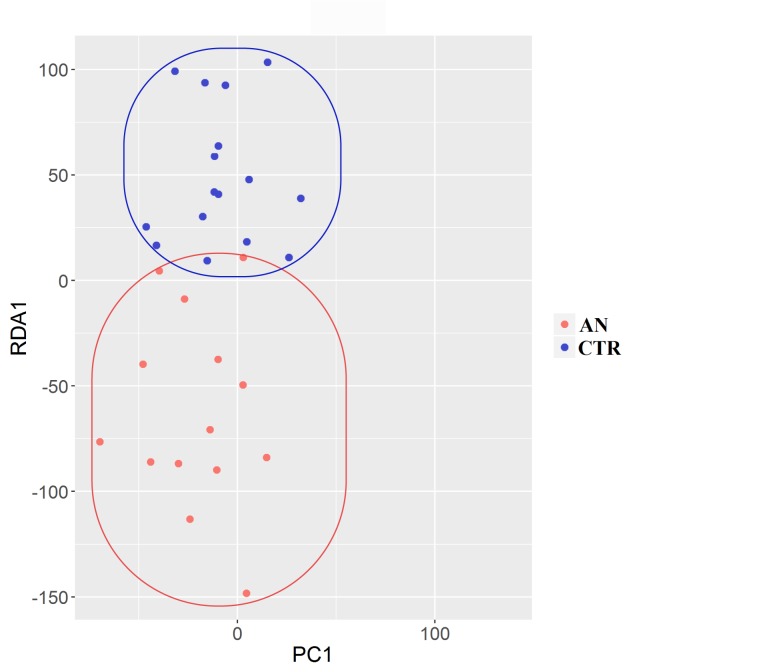
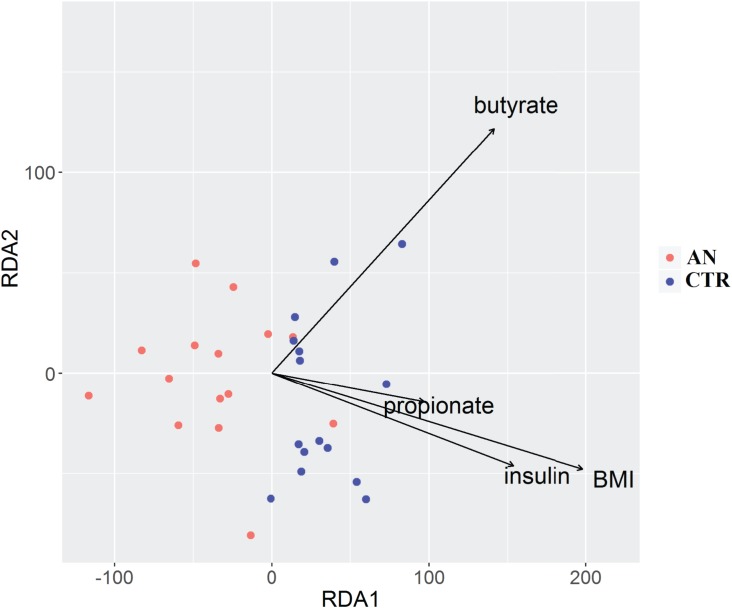
Anorexia nervosa (AN) is a psychiatric disease with devastating physical consequences, with a pathophysiological mechanism still to be elucidated. Metagenomic studies on anorexia nervosa have revealed profound gut microbiome perturbations as a possible environmental factor involved in the disease. In this study we performed a comprehensive analysis integrating data on gut microbiota with clinical, anthropometric and psychological traits to gain new insight in the pathophysiology of AN. Fifteen AN women were compared with fifteen age-, sex- and ethnicity-matched healthy controls. AN diet was characterized by a significant lower energy intake, but macronutrient analysis highlighted a restriction only in fats and carbohydrates consumption. Next generation sequencing showed that AN intestinal microbiota was significantly affected at every taxonomic level, showing a significant increase of Enterobacteriaceae, and of the archeon Methanobrevibacter smithii compared with healthy controls. On the contrary, the genera Roseburia, Ruminococcus and Clostridium, were depleted, in line with the observed reduction in AN of total short chain fatty acids, butyrate, and propionate. Butyrate concentrations inversely correlated with anxiety levels, whereas propionate directly correlated with insulin levels and with the relative abundance of Roseburia inulinivorans, a known propionate producer. BMI represented the best predictive value for gut dysbiosis and metabolic alterations, showing a negative correlation with Bacteroides uniformis (microbiota), with alanine aminotransferase (liver function), and with psychopathological scores (obsession-compulsion, anxiety, and depression), and a positive correlation with white blood cells count. In conclusion, our findings corroborate the hypothesis that the gut dysbiosis could take part in the AN neurobiology, in particular in sustaining the persistence of alterations that eventually result in relapses after renourishment and psychological therapy, but causality still needs to be proven.
Conflict of interest statement
Figures
References
-
- Morita C, Tsuji H, Hata T, Gondo M, Takakura S, Kawai K, et al. Gut Dysbiosis in Patients with Anorexia Nervosa. PLoS One. 2015; 10(12):e0145274 doi: 10.1371/journal.pone.0145274 - DOI - PMC - PubMed
-
- Klump KL, Bulik CM, Kaye WH, Treasure J, Tyson E. Academy for eating disorders position paper: Eating disorders are serious mental illnesses. International Journal of Eating Disorders. 2009; 42(2):97–103. doi: 10.1002/eat.20589 - DOI - PubMed
-
- Hoek HW. Incidence, prevalence and mortality of anorexia nervosa and other eating disorders. Curr Opin Psychiatry. 2006;19(4):389–394. doi: 10.1097/01.yco.0000228759.95237.78 - DOI - PubMed
-
- Sullivan PF. Mortality in anorexia nervosa. Am J Psychiatry. 1995;152(7):1073–1074. doi: 10.1176/ajp.152.7.1073 - DOI - PubMed
MeSH terms
Substances
LinkOut - more resources
Full Text Sources
Other Literature Sources
Molecular Biology Databases
