


Thrombocytopenia in pregnancy
- PMID: 28637667
- PMCID: PMC5701522
- DOI: 10.1182/blood-2017-05-781971
Thrombocytopenia in pregnancy
Abstract
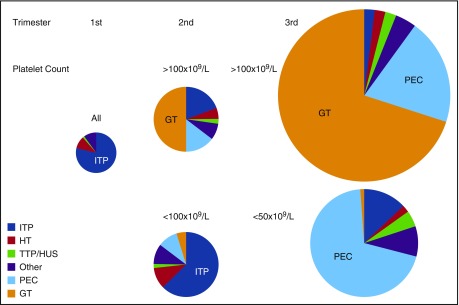
Thrombocytopenia develops in 5% to 10% of women during pregnancy or in the immediate postpartum period. A low platelet count is often an incidental feature, but it might also provide a biomarker of a coexisting systemic or gestational disorder and a potential reason for a maternal intervention or treatment that might pose harm to the fetus. This chapter reflects our approach to these issues with an emphasis on advances made over the past 5 to 10 years in understanding and managing the more common causes of thrombocytopenia in pregnancy. Recent trends in the management of immune thrombocytopenia translate into more women contemplating pregnancy while on treatment with thrombopoietin receptor agonists, rituximab, or mycophenylate, which pose known or unknown risks to the fetus. New criteria to diagnose preeclampsia, judicious reliance on measurement of ADAMTS13 to make management decisions in suspected thrombotic thrombocytopenic purpura, new evidence supporting the efficacy and safety of anticomplement therapy for atypical hemolytic uremic syndrome during pregnancy, and implications of thrombotic microangiopathies for subsequent pregnancies are evolving rapidly. The goals of the chapter are to help the hematology consultant work through the differential diagnosis of thrombocytopenia in pregnancy based on trimester of presentation, severity of thrombocytopenia, and coincident clinical and laboratory manifestations, and to provide guidance for dealing with some of the more common and difficult diagnostic and management decisions.
© 2017 by The American Society of Hematology.
Figures
References
-
- McCrae KR. Thrombocytopenia in pregnancy. Hematology Am Soc Hematol Educ Program. 2010;2010:397-402. - PubMed
-
- Gernsheimer T, James AH, Stasi R. How I treat thrombocytopenia in pregnancy. Blood. 2013;121(1):38-47. - PubMed
-
- Rajasekhar A, Gernsheimer T, Stasi R, James AH. 2013. Clinical Practice Guide on Thrombocytopenia in Pregnancy. Washington, DC: American Society of Hematology; 2013.
-
- American College of Obstetricians and Gynecologists’ Committee on Practice Bulletins—Obstetrics. Practice bulletin no. 166: thrombocytopenia in pregnancy. Obstet Gynecol. 2016;128(3):e43-e53. - PubMed
-
- Noris P, Schlegel N, Klersy C, et al. ; European Hematology Association – Scientific Working Group on Thrombocytopenias and Platelet Function Disorders. Analysis of 339 pregnancies in 181 women with 13 different forms of inherited thrombocytopenia. Haematologica. 2014;99(8):1387-1394. - PMC - PubMed
Publication types
MeSH terms
Grants and funding
LinkOut - more resources
Full Text Sources
Other Literature Sources
Miscellaneous
