


Gallbladder Carcinoma in the United States: A Population Based Clinical Outcomes Study Involving 22,343 Patients from the Surveillance, Epidemiology, and End Result Database (1973-2013)
- PMID: 28638176
- PMCID: PMC5468561
- DOI: 10.1155/2017/1532835
Gallbladder Carcinoma in the United States: A Population Based Clinical Outcomes Study Involving 22,343 Patients from the Surveillance, Epidemiology, and End Result Database (1973-2013)
Abstract
Introduction: Gallbladder carcinoma (GBC) is the most common malignancy of the biliary tract and the third most common gastrointestinal tract malignancy. This study examines a large cohort of GBC patients in the United States in an effort to define demographics, clinical, and pathologic features impacting clinical outcomes.
Methods: Demographic and clinical data on 22,343 GBC patients was abstracted from the SEER database (1973-2013).
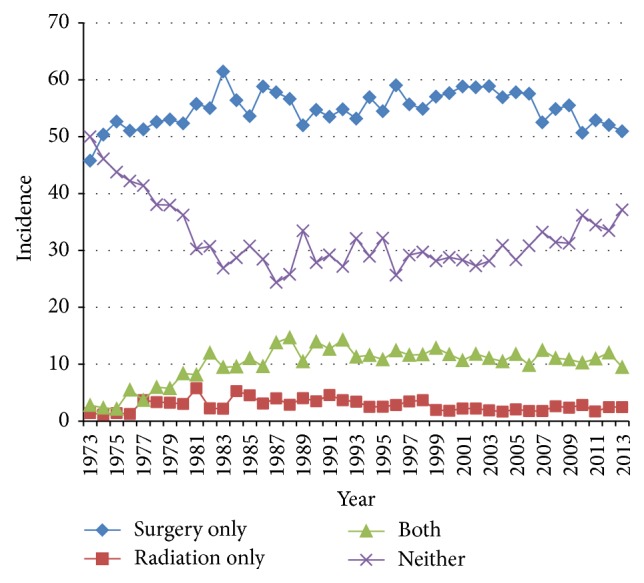
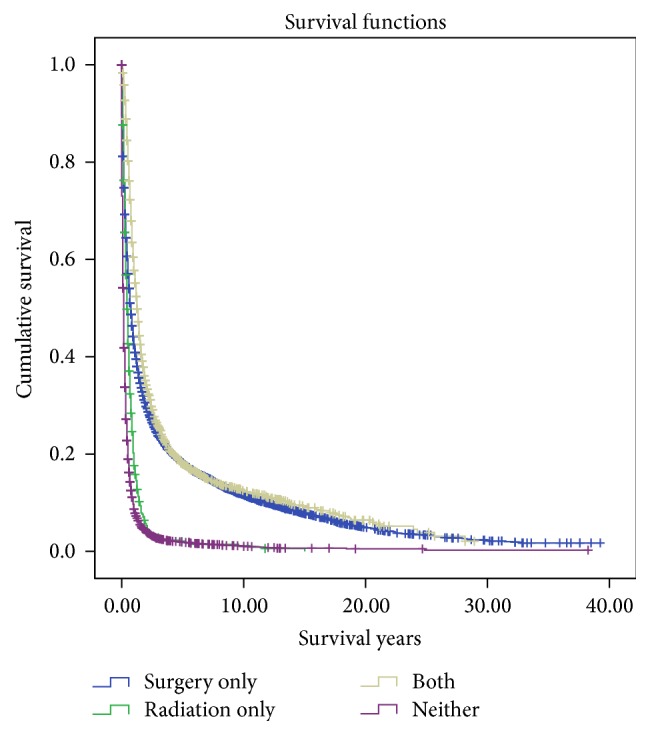
Results: GBC was presented most often among Caucasian (63.9%) females (70.7%) as poorly or moderately differentiated (42.5% and 38.2%) tumors, with lymph node involvement (88.2%). Surgery alone was the most common treatment modality for GBC patients (55.0%). Combination surgery and radiation (10.6%) achieved significantly longer survival rates compared to surgery alone (4.0 ± 0.2 versus 3.7 ± 0.1 years, p = 0.004). Overall mortality was 87.0% and cancer-specific mortality was 75.4%.
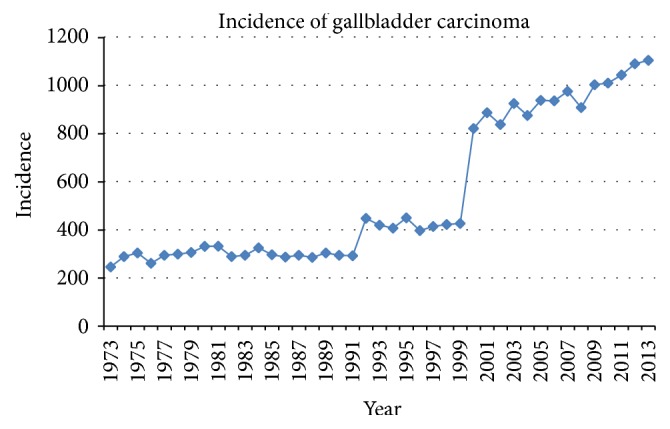
Conclusions: GBC is an uncommon malignancy that presents most often among females in their 8th decade of life, with over a third of cases presenting with distant metastasis. The incidence of GBC has doubled in the last decade concurrent with increases in cholecystectomy rates attributable in part to improved histopathological detection, as well as laparoscopic advances and enhanced endoscopic techniques. Surgical resection confers significant survival benefit in GBC patients.
Figures
References
LinkOut - more resources
Full Text Sources
Other Literature Sources
