


Spontaneous regression of hepatocellular carcinoma: A mini-review
- PMID: 28638219
- PMCID: PMC5467065
- DOI: 10.3748/wjg.v23.i21.3797
Spontaneous regression of hepatocellular carcinoma: A mini-review
Abstract
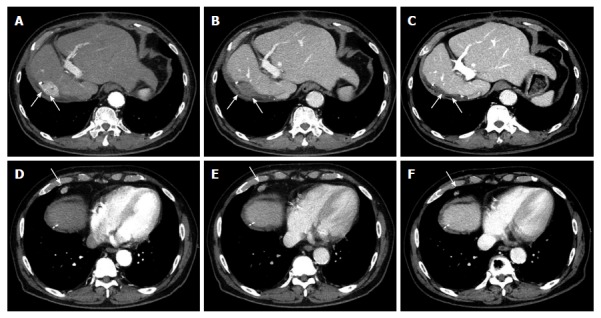
Spontaneous tumor regression is an extremely rare phenomenon in the oncology field. However, there are several case reports resulted in the regression of hepatocellular carcinoma (HCC) and the accumulation of clinical information and analyses of the mechanism can contribute to the development of a novel therapy. For this purpose, we have carefully reviewed 23 cases of spontaneously regressed HCC published in recent 5 years and our case. The information regarding the tumor size, tumor marker, treatments, etc., have been summarized. The mechanism of spontaneous regression has been discussed to date and presumed to be due to many factors, including hypoxia and immunological reactions. In this careful review of the 24 cases based on the clinical information, hypoxia, systemic inflammation, and both upon spontaneous regression were seen in 3, 8, and 4 cases, respectively among the 15 cases for which the information regarding the proposed mechanisms are available. Recent development of immunotherapeutic approaches in oncology shows promising results, therefore, accumulation of additional cases and analysis of mechanisms underlying the spontaneous regression of HCC are essential and could lead to the development of a new generation of immunotherapies including antibodies directed against immune reactions.
Keywords: Hepatocellular carcinoma; Hypoxia; Immunological reaction; Immunotherapy; Spontaneous regression.
Conflict of interest statement
Conflict-of-interest statement: The authors declare that they have no current financial arrangement or affiliation with any organization that may have a direct influence on their work.
Figures
References
-
- Jemal A, Bray F, Center MM, Ferlay J, Ward E, Forman D. Global cancer statistics. CA Cancer J Clin. 2011;61:69–90. - PubMed
-
- El-Serag HB. Hepatocellular carcinoma. N Engl J Med. 2011;365:1118–1127. - PubMed
-
- Llovet JM, Fuster J, Bruix J. Prognosis of hepatocellular carcinoma. Hepatogastroenterology. 2002;49:7–11. - PubMed
-
- Zhong JH, Li LQ. Postoperative adjuvant transarterial chemoembolization for participants with hepatocellular carcinoma: A meta-analysis. Hepatol Res. 2010;40:943–953. - PubMed
Publication types
MeSH terms
Substances
LinkOut - more resources
Full Text Sources
Other Literature Sources
Medical
