


Anticonvulsant hypersensitivity syndrome after phenytoin administration in an adolescent patient: a case report and review of literature
- PMID: 28638280
- PMCID: PMC5472963
- DOI: 10.1186/s12948-017-0069-0
Anticonvulsant hypersensitivity syndrome after phenytoin administration in an adolescent patient: a case report and review of literature
Abstract
Background: Hypersensitivity is a rare adverse drug reaction (ADR) associated with anti-epileptic medications. Phenytoin is one of the commonly used drugs for treatment of epilepsy that encounters a hypersensitivity reaction. This reaction can be ranged from mild cutaneous rash to anticonvulsant hypersensitivity syndrome (AHS) or drug reaction with eosinophilia and systemic symptoms (DRESS) that includes fever, rash, eosinophilia and involvement of multiple internal organs.
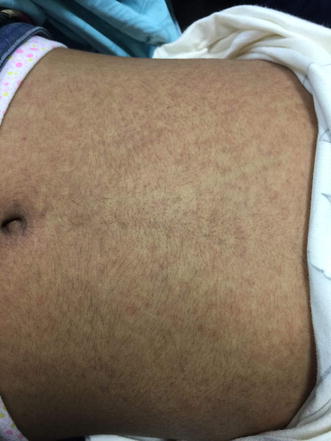
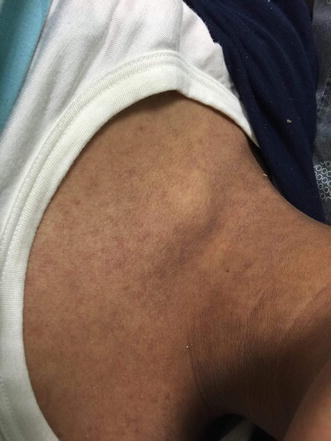
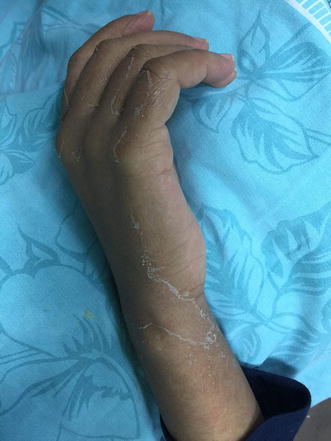
Case presentation: A 15 year old middle eastern female patient from Gaza strip with free past medical and allergic history. She presented to An-Najah National University Hospital (NNUH) in Nablus with intermittent high grade fever, jaundice, rash and skin peeling. On examination, she had axillary and inguinal lymphadenopathy, moderate splenomegaly and diffuse maculopapular rash. The patient was on phenytoin which started 1 month prior to her presentation as a seizure prophylaxis due to previous head injury. Eventually, the patient was diagnosed with AHS/DRESS.
Conclusions: AHS is a diagnosis of exclusion and it is significantly underreported that requires a high index of suspicion. We liked to share this case and shed the light in more details on AHS/DRESS. Our goal was to help making AHS more reported in the literature in adolescent patients, as well as to make physicians more alert of this condition's seriousness when they prescribe antiepileptic medications in particular. In this report, we included the first case of AHS which was reported in an adolescent patient in Palestine. Moreover, we reviewed the available literature for a better understanding of the pathophysiology and management of AHS. We still believe that the full understanding of the pathogenesis of AHS is lacking, and also we are lacking a clinical tool or scoring system to determine the severity of AHS/DRESS.
Keywords: Adolescent patient; Case report; DRESS; Hypersensitivity; Literature review; Phenytoin; Rare condition.
Figures
References
-
- Shivamurthy S, Manchukonda R. Carbamazepine induced anticonvulsant hypersensitivity syndrome. Int J Basic Clin Pharmacol. 2015;4(5):1037–1039. doi: 10.18203/2319-2003.ijbcp20150891. - DOI
Publication types
LinkOut - more resources
Full Text Sources
Other Literature Sources
Research Materials
Miscellaneous
