


An evaluation of the protective role of vitamin C in reactive oxygen species-induced hepatotoxicity due to hexavalent chromium in vitro and in vivo
- PMID: 28638434
- PMCID: PMC5472873
- DOI: 10.1186/s12995-017-0161-x
An evaluation of the protective role of vitamin C in reactive oxygen species-induced hepatotoxicity due to hexavalent chromium in vitro and in vivo
Abstract
Backgroud: Drinking water contamination with hexavalent chromium [Cr (VI)] has become one of the most serious public health problems, thus the investigation of Cr (VI)-induced hepatotoxicity has attracted much attention in recent years.
Methods: In the present study, by determining the indices of hepatotoxicity induced by Cr (VI), the source of accumulated reactive oxygen species (ROS), and the protective effect of the antioxidant Vitamin C (Vit C), we explored the mechanisms involved in Cr (VI)-induced hepatotoxicity in vitro and in vivo.
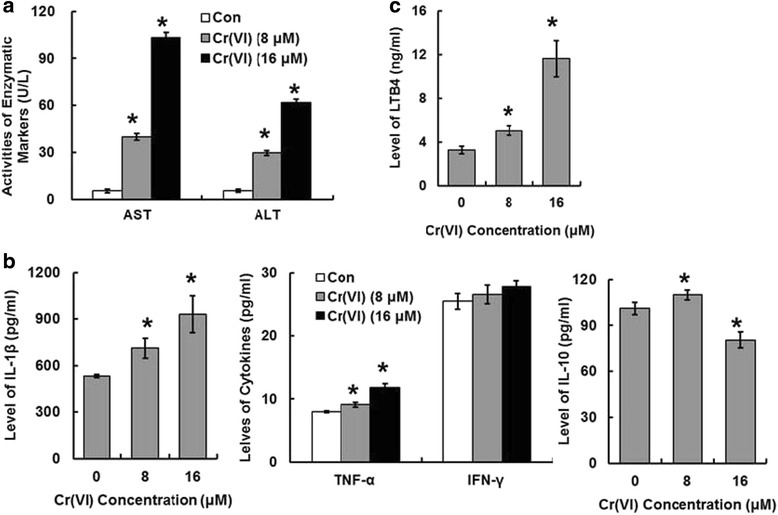
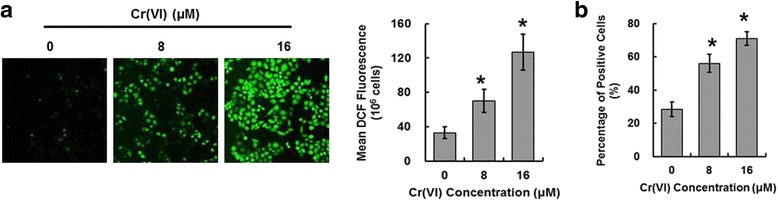
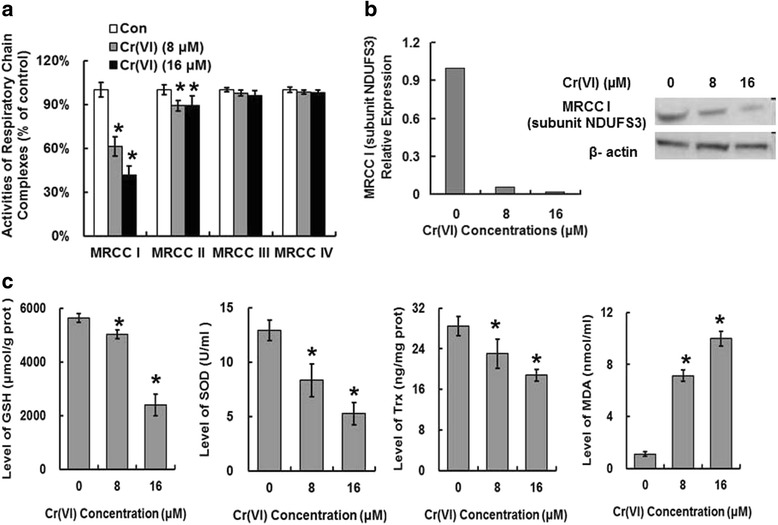
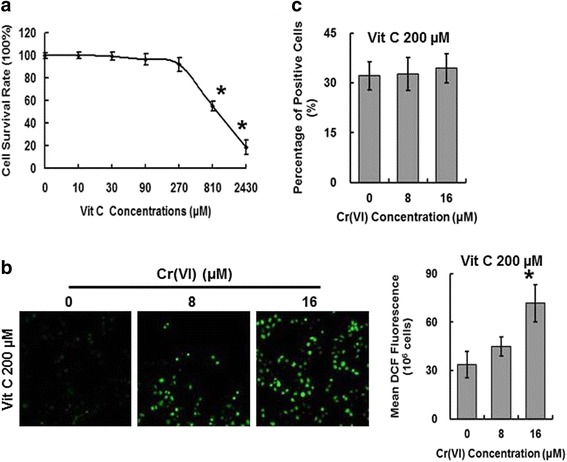
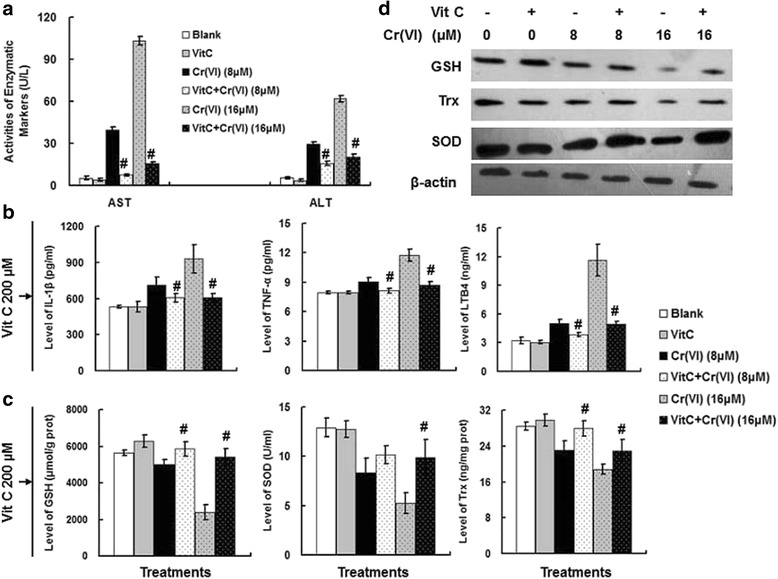
Results: We found Cr (VI) caused hepatotoxicity characterized by the alterations of several enzymatic and cytokine markers including aspartate aminotransferase (AST), alanine aminotransferase (ALT), interleukine-1β (IL-1β), and tumor necrosis factor-α (TNF-α), etc. ROS production after Cr (VI) exposure was origins from the inhibition of electron transfer chain (ETC) and antioxidant system. Vit C inhibited ROS accumulation thus protected against Cr (VI)-induced hepatotoxicity in L-02 hepatocytes and in the rat model.
Conclusions: We concluded that ROS played a role in Cr (VI)-induced hepatotoxicity and Vit C exhibited protective effect. Our current data provides important clues for studying the mechanisms involved in Cr (VI)-induced liver injury, and may be of great help to develop therapeutic strategies for prevention and treatment of liver diseases involving ROS accumulation for occupational exposure population.
Keywords: Hepatotoxicity; Hexavalent chromium [Cr (VI)]; Mitochondrial respiratory chain complex I (MRCC I); Reactive oxygen species (ROS); Vitamin C (Vit C).
Figures

References
LinkOut - more resources
Full Text Sources
Other Literature Sources
