


Predictors of Unplanned Hospitalization in Patients Receiving Outpatient Parenteral Antimicrobial Therapy Across a Large Integrated Healthcare Network
- PMID: 28638844
- PMCID: PMC5473366
- DOI: 10.1093/ofid/ofx086
Predictors of Unplanned Hospitalization in Patients Receiving Outpatient Parenteral Antimicrobial Therapy Across a Large Integrated Healthcare Network
Abstract
Background: Outpatient parenteral antimicrobial therapy (OPAT) prescribing has increased along with the trend toward early discharge of hospitalized patients who have infections. There is limited literature that assesses unplanned hospitalizations during OPAT. This study aims to elucidate the predictors of unplanned hospitalization in OPAT patients after discharge from acute-care facilities within Carolinas HealthCare System (CHS). Understanding these predictors may inform future interventions to improve treatment efficacy and patient outcomes.
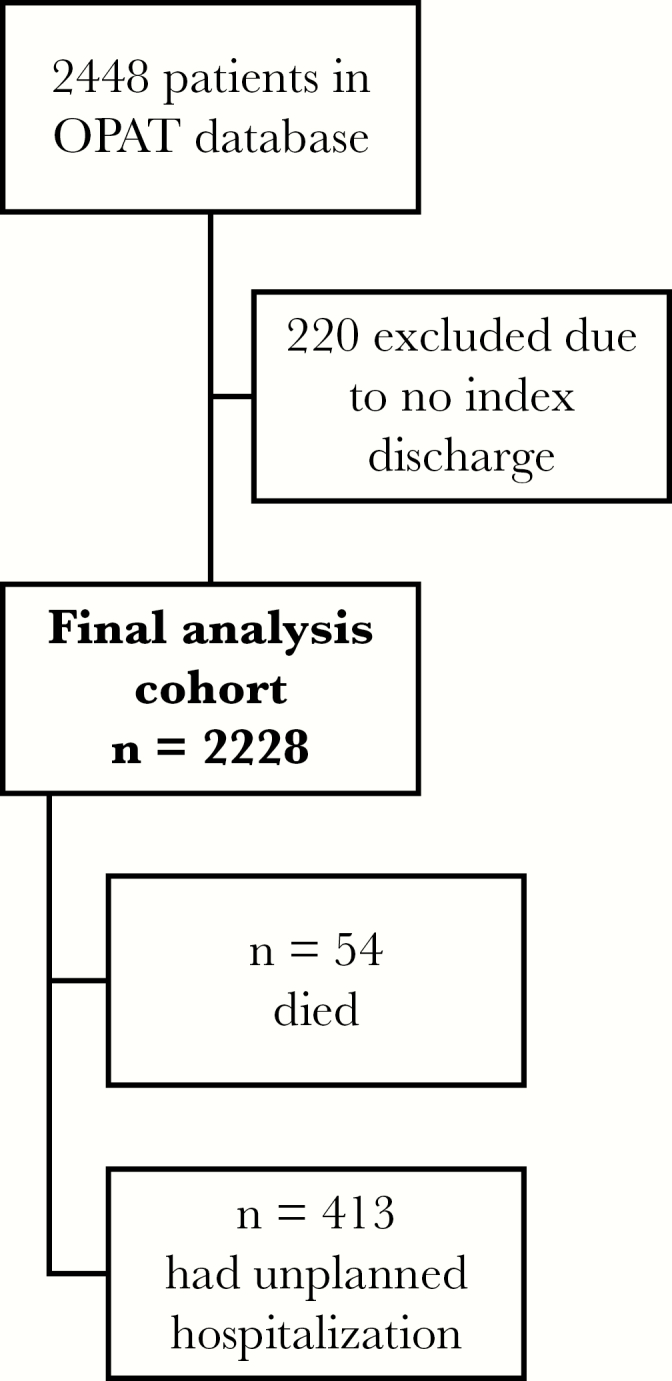
Methods: The study cohort included hospitalized patients aged >19 years who initiated OPAT in an acute-care facility within CHS in 2014-2015. Patients who had OPAT prescribed at an ambulatory-care facility were excluded. The primary outcome was unplanned hospitalization anytime during the at-risk time from discharge through 90 days.
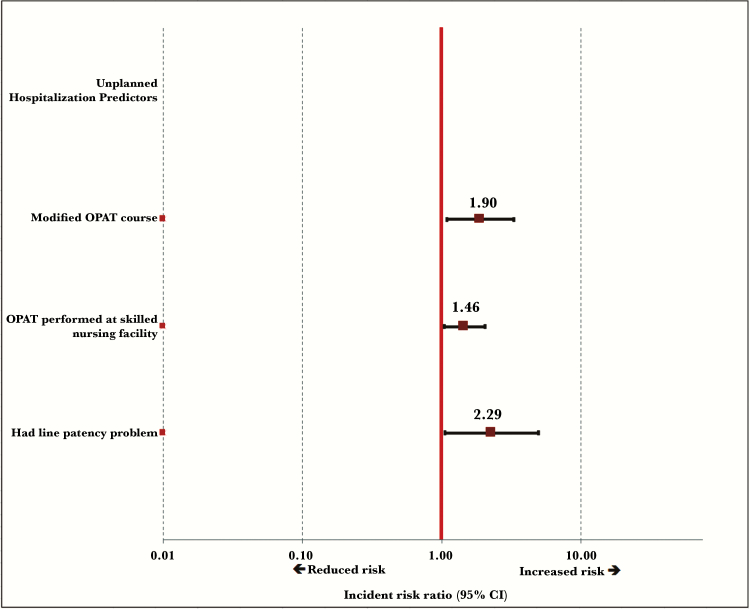
Results: The unplanned hospitalization rate for the cohort was 18.5%. In adjusted analysis, having OPAT delivered at a skilled nursing facility was associated with a 46% (incident risk ratio = 1.46; 95% confidence interval = 1.04-2.06) increased risk of an unplanned hospitalization compared with patients receiving OPAT at home after adjustment for demographics, comorbidities, indication, treatment duration, and antimicrobial prescribed. Infusion, dialysis, and rehabilitation centers had the lowest rates of unplanned hospitalizations.
Conclusions: These results suggest that the location of OPAT delivery is associated with unplanned hospitalizations and that older patients need additional support during OPAT.
Keywords: antimicrobial; hospitalization; infusion; outpatient parenteral antimicrobial therapy (OPAT)..
Figures
References
-
- Tice AD, Rehm SJ, Dalovisio JR et al. ; IDSA Practice guidelines for outpatient parenteral antimicrobial therapy. IDSA guidelines. Clin Infect Dis. 2004;38:1651–72. - PubMed
-
- Chapman AL, Dixon S, Andrews D et al. Clinical efficacy and cost-effectiveness of outpatient parenteral antibiotic therapy (OPAT): a UK perspective. J Antimicrob Chemother. 2009;64:1316–24. - PubMed
-
- Candel FJ, Julian-Jimenez A, Gonzalez-Del Castillo J. Current status in outpatient parenteral antimicrobial therapy: a practical view. Rev Esp Quimioter. 2016; 29:55–68. - PubMed
-
- MacKenzie M, Rae N, Nathwani D. Outcomes from global adult outpatient parenteral antimicrobial therapy programmes: a review of the last decade. Int J Antimicrob Agents. 2014;43:7–16. - PubMed
-
- Paladino JA, Poretz D. Outpatient parenteral antimicrobial therapy today. Clin Infect Dis. 2010;51suppl 2:S198–208. - PubMed
LinkOut - more resources
Full Text Sources
Other Literature Sources
