


Interprofessional collaboration to improve professional practice and healthcare outcomes
- PMID: 28639262
- PMCID: PMC6481564
- DOI: 10.1002/14651858.CD000072.pub3
Interprofessional collaboration to improve professional practice and healthcare outcomes
Abstract
Background: Poor interprofessional collaboration (IPC) can adversely affect the delivery of health services and patient care. Interventions that address IPC problems have the potential to improve professional practice and healthcare outcomes.
Objectives: To assess the impact of practice-based interventions designed to improve interprofessional collaboration (IPC) amongst health and social care professionals, compared to usual care or to an alternative intervention, on at least one of the following primary outcomes: patient health outcomes, clinical process or efficiency outcomes or secondary outcomes (collaborative behaviour).
Search methods: We searched CENTRAL (2015, issue 11), MEDLINE, CINAHL, ClinicalTrials.gov and WHO International Clinical Trials Registry Platform to November 2015. We handsearched relevant interprofessional journals to November 2015, and reviewed the reference lists of the included studies.
Selection criteria: We included randomised trials of practice-based IPC interventions involving health and social care professionals compared to usual care or to an alternative intervention.
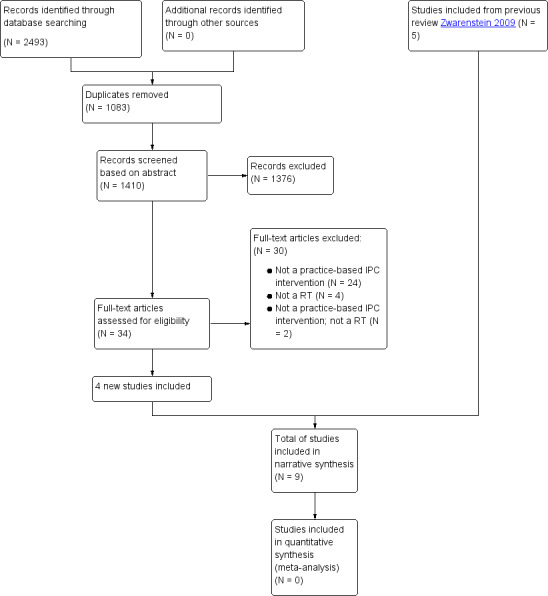
Data collection and analysis: Two review authors independently assessed the eligibility of each potentially relevant study. We extracted data from the included studies and assessed the risk of bias of each study. We were unable to perform a meta-analysis of study outcomes, given the small number of included studies and their heterogeneity in clinical settings, interventions and outcomes. Consequently, we summarised the study data and presented the results in a narrative format to report study methods, outcomes, impact and certainty of the evidence.
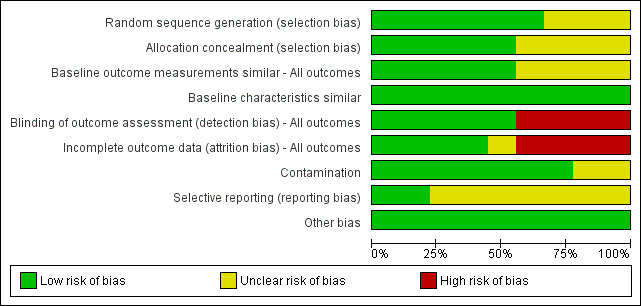
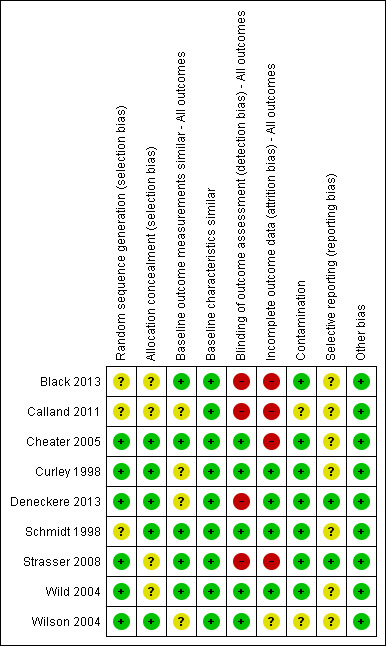
Main results: We included nine studies in total (6540 participants); six cluster-randomised trials and three individual randomised trials (1 study randomised clinicians, 1 randomised patients, and 1 randomised clinicians and patients). All studies were conducted in high-income countries (Australia, Belgium, Sweden, UK and USA) across primary, secondary, tertiary and community care settings and had a follow-up of up to 12 months. Eight studies compared an IPC intervention with usual care and evaluated the effects of different practice-based IPC interventions: externally facilitated interprofessional activities (e.g. team action planning; 4 studies), interprofessional rounds (2 studies), interprofessional meetings (1 study), and interprofessional checklists (1 study). One study compared one type of interprofessional meeting with another type of interprofessional meeting. We assessed four studies to be at high risk of attrition bias and an equal number of studies to be at high risk of detection bias.For studies comparing an IPC intervention with usual care, functional status in stroke patients may be slightly improved by externally facilitated interprofessional activities (1 study, 464 participants, low-certainty evidence). We are uncertain whether patient-assessed quality of care (1 study, 1185 participants), continuity of care (1 study, 464 participants) or collaborative working (4 studies, 1936 participants) are improved by externally facilitated interprofessional activities, as we graded the evidence as very low-certainty for these outcomes. Healthcare professionals' adherence to recommended practices may be slightly improved with externally facilitated interprofessional activities or interprofessional meetings (3 studies, 2576 participants, low certainty evidence). The use of healthcare resources may be slightly improved by externally facilitated interprofessional activities, interprofessional checklists and rounds (4 studies, 1679 participants, low-certainty evidence). None of the included studies reported on patient mortality, morbidity or complication rates.Compared to multidisciplinary audio conferencing, multidisciplinary video conferencing may reduce the average length of treatment and may reduce the number of multidisciplinary conferences needed per patient and the patient length of stay. There was little or no difference between these interventions in the number of communications between health professionals (1 study, 100 participants; low-certainty evidence).
Authors' conclusions: Given that the certainty of evidence from the included studies was judged to be low to very low, there is not sufficient evidence to draw clear conclusions on the effects of IPC interventions. Neverthess, due to the difficulties health professionals encounter when collaborating in clinical practice, it is encouraging that research on the number of interventions to improve IPC has increased since this review was last updated. While this field is developing, further rigorous, mixed-method studies are required. Future studies should focus on longer acclimatisation periods before evaluating newly implemented IPC interventions, and use longer follow-up to generate a more informed understanding of the effects of IPC on clinical practice.
Conflict of interest statement
Scott Reeves: (deceased May 2018), none known. This declaration of interest was provided before the author died. Ferruccio Pelone: none known Reema Harrison: none known Joanne Goldman: none known Merrick Zwarenstein: none known.
The authors have no personal or professional interests as to whether this review shows benefits of practice‐based interventions on interprofessional collaboration. Author deceased; [declarations of interest if provided before the author died
Figures
Update of
-
Interprofessional collaboration: effects of practice-based interventions on professional practice and healthcare outcomes.Cochrane Database Syst Rev. 2009 Jul 8;(3):CD000072. doi: 10.1002/14651858.CD000072.pub2. Cochrane Database Syst Rev. 2009. Update in: Cochrane Database Syst Rev. 2017 Jun 22;6:CD000072. doi: 10.1002/14651858.CD000072.pub3. PMID: 19588316 Updated.
References
References to studies included in this review
Black 2013 {published data only}
-
- Black DA, Taggart J, Jayasinghe UW, Proudfoot J, Crookes P, Beilby J, et al. Teamwork Research Team. The Teamwork Study: enhancing the role of non‐GP staff in chronic disease management in general practice. Australian Journal of Primary Health 2013;19(3):184‐9. - PubMed
Calland 2011 {published data only}
-
- Calland JF, Turrentine FE, Guerlain S, Bovbjerg V, Poole GR, Lebeau K, et al. The surgical safety checklist: lessons learned during implementation. The American Surgeon 2011;77(9):1131‐7. - PubMed
Cheater 2005 {published data only}
-
- Cheater FM, Hearnshaw H, Baker R, Keane M. Can a facilitated programme promote effective multidisciplinary audit in secondary care teams? An exploratory trial. International Journal of Nursing Studies 2005;42:779‐91. - PubMed
Curley 1998 {published data only}
-
- Curley C, McEachern JE, Speroff T. A firm trial of interdisciplinary rounds on the inpatient medical wards. Medical Care 1998;36(8 Suppl):AS4‐12. - PubMed
Deneckere 2013 {published data only}
-
- Deneckere S, Euwema M, Lodewijckx C, Panella M, Mutsvari T, Sermeus W, et al. Better interprofessional teamwork, higher level of organized care, and lower risk of burnout in acute health care teams using care pathways: a cluster randomized controlled trial. Medical Care 2013;51(1):99‐107. - PubMed
Schmidt 1998 {published data only}
-
- Schmidt I, Claesson CB, Westerholm B, Nilsson LG, Svarstad BL. The impact of regular multidisciplinary team interventions on psychotropic prescribing in Swedish nursing homes. Journal of the American Geriatrics Society 1998;46:77‐82. - PubMed
Strasser 2008 {published data only}
-
- Strasser DC, Falconer JA, Stevens AB, Uomoto JM, Herrin J, Bowen SE, et al. Team training and stroke rehabilitation outcomes: a cluster randomized trial. Archives of Physical Medicine and Rehabilitation 2008;89(1):10‐5. - PubMed
Wild 2004 {published data only}
-
- Wild D, Nawaz H, Chan W, Katz DL. Effects of interdisciplinary rounds on length of stay in a telemetry unit. Journal of Public Health Management and Practice 2004;10:63‐9. - PubMed
Wilson 2004 {published data only}
-
- Wilson SF, Marks R, Collins N, Warner B, Frick L. Benefits of multidisciplinary case conferencing using audiovisual compared with telephone communication: a randomized controlled trial. Journal of Telemedicine and Telecare 2004;10:351‐4. - PubMed
References to studies excluded from this review
Bekelman 2015 {published data only}
-
- Bekelman DB, Plomondon ME, Carey EP, Sullivan MD, Nelson KM, Hattler B, et al. Primary results of the patient‐centered disease management (PCDM) for heart failure study: a randomized clinical trial. JAMA Internal Medicine 2015;175(5):725‐32. - PubMed
Boet 2013 {published data only}
-
- Boet S, Bould MD, Sharma B, Reeves S, Naik VN, Triby E, et al. Within‐team debriefing versus instructor‐led debriefing for simulation‐based education: a randomized controlled trial. Annals of Surgery 2013;258(1):53‐8. - PubMed
Boone 2008 {published data only}
-
- Boone BN, King ML, Gresham LS, Wahl P, Suh E. Conflict management training and nurse‐physician collaborative behaviors. Journal for Nurses in Staff Development 2008;24(4):168‐75. - PubMed
Chen 2013 {published data only}
Cheng 2013 {published data only}
-
- Cheng A, Hunt EA, Donoghue A, Nelson‐McMillan K, Nishisaki A, Leflore J, et al. EXPRESS Investigators. Examining pediatric resuscitation education using simulation and scripted debriefing: a multicenter randomized trial. JAMA Pediatrics 2013;167(6):528‐36. - PubMed
Curtis 2012 {published data only}
Dhalla 2014 {published data only}
-
- Dhalla IA, O'Brien T, Morra D, Thorpe KE, Wong BM, Mehta R, et al. Effect of a post‐discharge virtual ward on readmission or death for high‐risk patients: a randomized clinical trial. JAMA 2014;312(13):1305‐12. - PubMed
Döpp 2013 {published data only}
-
- Döpp CM, Graff MJ, Teerenstra S, Nijhuis‐van der Sanden MW, Olde Rikkert MG, Vernooij‐Dassen MJ. Effectiveness of a multifaceted implementation strategy on physicians' referral behavior to an evidence‐based psychosocial intervention in dementia: a cluster randomized controlled trial. BMC Family Practice 2013;14:70. [DOI: 10.1186/1471-2296-14-70] - DOI - PMC - PubMed
Fransen 2012 {published data only}
-
- Fransen AF, Ven J, Merién AE, Wit‐Zuurendonk LD, Houterman S, Mol BW, et al. Effect of obstetric team training on team performance and medical technical skills: a randomised controlled trial. BJOG 2012;119(11):1387‐93. - PubMed
Goud 2009 {published data only}
Hallin 2011 {published data only}
-
- Hallin K, Henriksson P, Dalén N, Kiessling A. Effects of interprofessional education on patient perceived quality of care. Medical Teacher 2011;33(1):e22‐6. - PubMed
Hobgood 2010 {published data only}
-
- Hobgood C, Sherwood G, Frush K, Hollar D, Maynard L, Foster B, et al. Interprofessional Patient Safety Education Collaborative. Teamwork training with nursing and medical students: does the method matter? Results of an interinstitutional, interdisciplinary collaboration. Quality & Safety in Health Care 2010;19(6):e25. - PubMed
Hoffmann 2014 {published data only}
-
- Hoffmann B, Müller V, Rochon J, Gondan M, Müller B, Albay Z, et al. Effects of a team‐based assessment and intervention on patient safety culture in general practice: an open randomised controlled trial. BMJ Quality & Safety 2014;23(1):35‐46. - PubMed
Jankouskas 2011 {published data only}
-
- Jankouskas TS, Haidet KK, Hupcey JE, Kolanowski A, Murray WB. Targeted crisis resource management training improves performance among randomized nursing and medical students. Simulation in Healthcare 2011;6(6):316‐26. - PubMed
Jenkins 2013 {published data only}
-
- Jenkins VA, Farewell D, Farewell V, Batt L, Wagstaff J, Langridge C, et al. Teams Talking Trials Steering Committee. Teams Talking Trials: results of an RCT to improve the communication of cancer teams about treatment trials. Contemporary Clinical Trials 2013;35(1):43‐51. - PubMed
Katakam 2012 {published data only}
Keller 2012 {published data only}
-
- Keller C, Records K, Coe K, Ainsworth B, Vega López S, Nagle‐Williams A, et al. Promotoras' roles in integrative validity and treatment fidelity efforts in randomized controlled trials. Family & Community Health 2012;35(2):120‐9. - PubMed
Kemper 2011 {published data only}
Koerner 2014 {published data only}
-
- Koerner M, Wirtz M, Michaelis M, Ehrhardt H, Steger AK, Zerpies E, et al. A multicentre cluster‐randomized controlled study to evaluate a train‐the‐trainer programme for implementing internal and external participation in medical rehabilitation. Clinical Rehabilitation 2014;28(1):20‐35. - PubMed
Körner 2012 {published data only}
-
- Körner M, Ehrhardt H, Steger AK, Bengel J. Interprofessional SDM train‐the‐trainer program "Fit for SDM": provider satisfaction and impact on participation. Patient Education and Counseling 2012;89(1):122‐8. - PubMed
Kunkler 2007 {published data only}
-
- Kunkler IH, Prescott RJ, Lee RJ, Brebner JA, Cairns JA, Fielding RG, et al. TELEMAM: a cluster randomised trial to assess the use of telemedicine in multi‐disciplinary breast cancer decision making. European Journal of Cancer 2007;43(17):2506‐14. - PubMed
Lee 2013 {published data only}
-
- Lee GA, Murray A, Bushnell R, Niggemeyer LE. Challenges developing evidence‐based algorithms for the trauma reception and resuscitation project. International Emergency Nursing 2013;21(2):129‐35. - PubMed
Marsteller 2013 {published data only}
Mohaupt 2012 {published data only}
-
- Mohaupt J, Soeren M, Andrusyszyn MA, Macmillan K, Devlin‐Cop S, Reeves S. Understanding interprofessional relationships by the use of contact theory. Journal of Interprofessional Care 2012;26(5):370‐5. - PubMed
Musick 2011 {published data only}
O'Leary 2010 {published data only}
Rörtgen 2013 {published data only}
-
- Rörtgen D, Bergrath S, Rossaint R, Beckers SK, Fischermann H, Na IS, et al. Comparison of physician staffed emergency teams with paramedic teams assisted by telemedicine – a randomized, controlled simulation study. Resuscitation 2013;84(1):85‐92. - PubMed
Van de Ven 2010 {published data only}
-
- Ven J, Houterman S, Steinweg RA, Scherpbier AJ, Wijers W, Mol BW, et al. TOSTI‐Trial Group. Reducing errors in health care: cost‐effectiveness of multidisciplinary team training in obstetric emergencies (TOSTI study); a randomised controlled trial. BMC Pregnancy Childbirth 2010;10:59. - PMC - PubMed
Weller 2014 {published data only}
-
- Weller JM, Torrie J, Boyd M, Frengley R, Garden A, Ng WL, et al. Improving team information sharing with a structured call‐out in anaesthetic emergencies: a randomized controlled trial. British Journal of Anaesthesia 2014;112(6):1042‐9. - PubMed
Wittenberg‐Lyles 2013 {published data only}
Additional references
Baker 2011
-
- Baker L, Egan‐Lee E, Martimianakis M, Reeves S. Relationships of power: implications for interprofessional education and practice. Journal of Interprofessional Care 2011;25:98‐104. - PubMed
Department of Health 1997
-
- UK Department of Health. The New NHS: Modern and Dependable. Available from www.gov.uk/government/publications/the‐new‐nhs.
EPOC 2013
-
- Cochrane Effective Practice, Organisation of Care (EPOC). EPOC worksheets for preparing a 'Summary of findings' table using GRADE. EPOC resources for review authors, 2013. Available from epoc.cochrane.org/epoc‐specific‐resources‐review‐authors.
EPOC 2016
-
- Cochrane Effective Practice, Organisation of Care (EPOC). Suggested risk of bias criteria for EPOC reviews. EPOC resources for review authors, 2016. Available from epoc.cochrane.org/epoc‐specific‐resources‐review‐authors.
Francis 2013
-
- Francis R. Report of the Mid Staffordshire NHS Foundation Trust public inquiry. Available from www.gov.uk/government/uploads/system/uploads/attachment_data/file/279124....
Guyatt 2008
Health Canada 2003
-
- Health Canada. 2003 First Ministers' Accord on Health Care Renewal. Available from www.scics.gc.ca/CMFiles/800039004_e1GTC‐352011‐6102.pdf.
Higgins 2011
-
- Higgins JP, Green S, editor(s). Cochrane Handbook for Systematic Reviews of Interventions Version 5.1.0. (updated March 2011). The Cochrane Collaboration, 2011. Available from handbook.cochrane.org.
Institute of Medicine 2000
-
- Institute of Medicine (US) Committee on Quality of Health Care in America, Kohn LT, Corrigan JM, Donaldson MS, editor(s). To Err Is Human: Building a Safer Health System. Washington (DC): National Academies Press (US), 2000. - PubMed
Institute of Medicine 2013
-
- Global Forum on Innovation in Health Professional Education, Board on Global Health, Institute of Medicine. Interprofessional Education for Collaboration: Learning how to improve health from interprofessional models across the continuum of education to practice: Workshop summary. Washington (DC): The National Academies Press (US), 2013. - PubMed
Kenaszchuk 2010
Körner 2016
-
- Körner M, Bütof S, Müller C, Zimmermann L, Becker S, Bengel J. Interprofessional teamwork and team interventions in chronic care: A systematic review. Journal of Interprofessional Care 2016;30(1):15‐28. - PubMed
Lillebo 2015
-
- Lillebo B, Faxvaag A. Continuous interprofessional coordination in perioperative work: an exploratory study. Journal of Interprofessional Care 2015;29(2):125‐30. - PubMed
Reeves 2010
-
- Reeves S, Lewin S, Espin S, Zwarenstein M. Interprofessional Teamwork for Health and Social Care. London: Blackwell‐Wiley, 2010.
Reeves 2011
-
- Reeves S, Goldman J, Gilbert J, Tepper J, Silver I, Suter E, et al. A scoping review to improve conceptual clarity of interprofessional interventions. Journal of Interprofessional Care 2011;25:167‐74. - PubMed
Reeves 2013
The Joint Commission 2016
-
- The Joint Commission (USA). Sentinel Event Data ‐ Root Causes by Event Type. www.jointcommission.org/se_data_event_type_by_year_/.
Van Leijen‐Zeelenberg 2015
-
- Leijen‐Zeelenberg J, Raak A, Duimel‐Peeters I, Kroese M, Brink P, Vrijhoef H. Interprofessional communication failures in acute care chains: How can we identify the causes?. Journal of Interprofessional Care 2015;29(4):320‐30. - PubMed
WHO 1976
-
- World Health Organization. Continuing Education of Health Personnel, 1976. www.who.int/genomics/professionals/education/en/.
WHO 2010
-
- World Health Organization. Framework for action on interprofessional education and collaborative practice, 2010. www.who.int/hrh/resources/framework_action/en/.
References to other published versions of this review
Zwarenstein 1996
Zwarenstein 1997
Publication types
MeSH terms
LinkOut - more resources
Full Text Sources
Other Literature Sources
Medical
