


Recurrent Campylobacter jejuni bacteremia in a patient with hypogammaglobulinemia: A case report
- PMID: 28640123
- PMCID: PMC5484231
- DOI: 10.1097/MD.0000000000007238
Recurrent Campylobacter jejuni bacteremia in a patient with hypogammaglobulinemia: A case report
Abstract
Rationale: Although some cases of recurrent bacteremia due to Campylobacter jejuni have been reported in immunocompromised patients, antibiotic treatment strategies to eradicate C. jejuni and prevent recurrent infections in immunocompromised patients have not been established. Authors' experience of such rare cases should be shared for improving patients' outcomes.
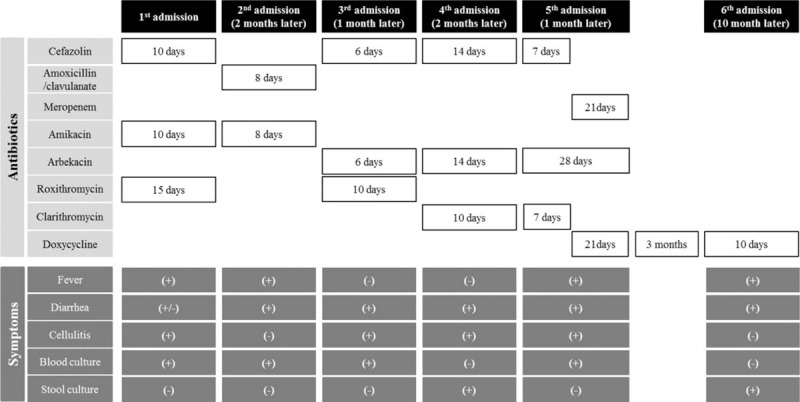
Patient concerns: An 18-year-old boy with hypogammaglobulinemia, who received intravenous immunoglobulin replacement therapy every 3 weeks, was admitted to hospital repeatedly due to recurrent diarrhea and cellulitis of the leg.
Diagnoses: The patient was admitted 6 times, and among them, C. jejuni was isolated from blood cultures 4 times and stool cultures 2 times.
Interventions: The patient experienced recurrent C. jejuni enteritis and bacteremia 5 times despite macrolide therapy. Doxycycline was administered for 3 months after the fifth admission.
Outcomes: Ten months after the completion of doxycycline therapy for 3 months, C. jejuni enteritis relapsed; however, since then, recurrent infection has not occurred for 10 months.
Lessons: Immunocompromised patients can experience recurrent C. jejuni infection despite prolonged antibiotic therapy. Further studies to establish appropriate antibiotic therapy for eradicating colonized C. jejuni and preventing recurrent infection are needed.
Conflict of interest statement
The authors have no conflicts of interest to disclose.
Figures
References
-
- Zakhour R, Heresi GP, Murphy JR. Cherry JD, Demmler-Harrison GJ, Kaplan SL, Hotez P, Steinbach WJ. Campylobacter jejuni. Fiegin and Cherry's Pediatric Infectious Diseases. Philadelphia, PA: Saunders: 2014;1644–57.
-
- Van der Hilst JC, Smits BW, van der Meer JW. Hypogammaglobulinaemia: cumulative experience in 49 patients in a tertiary care institution. Neth J Med 2002;60:140–7. - PubMed
-
- Jirapongsananuruk O, Wanotayan K, Phongsamart W, et al. Recurrent Campylobacter lari bacteremia in X-linked agammaglobulinemia: a case report and review. Asian Pac J Allergy Immunol 2006;24:171–4. - PubMed
-
- Kerstens PJ, Endtz HP, Meis JF, et al. Erysipelas-like skin lesions associated with Campylobacter jejuni septicemia in patients with hypogammaglobulinemia. Eur J Clin Microbiol Infect Dis 1992;11:842–7. - PubMed
Publication types
MeSH terms
Substances
LinkOut - more resources
Full Text Sources
Other Literature Sources
Medical
