


Ischaemia-reperfusion injury and hyperbaric oxygen pathways: a review of cellular mechanisms
- PMID: 28641323
- PMCID: PMC6147229
- DOI: 10.28920/dhm47.2.110-117
Ischaemia-reperfusion injury and hyperbaric oxygen pathways: a review of cellular mechanisms
Abstract
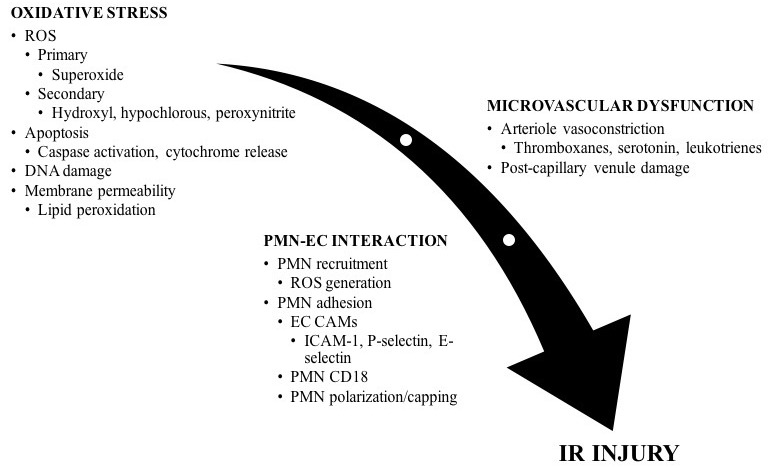
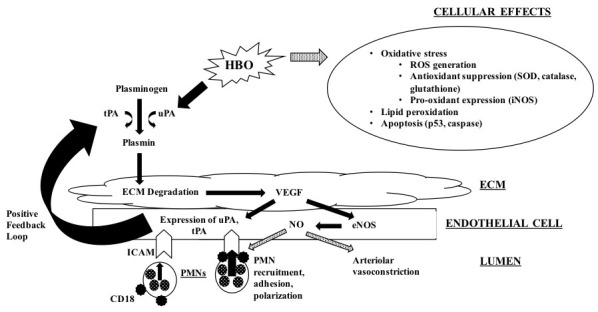
Ischaemia-induced tissue injury has wide-ranging clinical implications including myocardial infarction, stroke, compartment syndrome, ischaemic renal failure and replantation and revascularization. However, the restoration of blood flow produces a 'second hit' phenomenon, the effect of which is greater than the initial ischaemic event and characterizes ischaemia-reperfusion (IR) injury. Some examples of potential settings of IR injury include: following thrombolytic therapy for stroke, invasive cardiovascular procedures, solid organ transplantation, and major trauma resuscitation. Pathophysiological events of IR injury are the result of reactive oxygen species (ROS) production, microvascular vasoconstriction, and ultimately endothelial cell-neutrophil adhesion with subsequent neutrophil infiltration of the affected tissue. Initially thought to increase the amount of free radical oxygen in the system, hyperbaric oxygen (HBO) has demonstrated a protective effect on tissues by influencing the same mechanisms responsible for IR injury. Consequently, HBO has tremendous therapeutic value. We review the biochemical mechanisms of ischaemia-reperfusion injury and the effects of HBO following ischaemia-reperfusion.
Keywords: Free radicals; Hyperoxia; Hypoxia; Ischaemic preconditioning; Nitric oxide; Reperfusion injury; Review article.
Figures
References
-
- Becker LB. New concepts in reactive oxygen species and cardiovascular reperfusion physiology . Cardiovasc Res. 2004;61:461–470. - PubMed
-
- Russell RC, Roth AC, Kucan JO, Zook EG. Reperfusion injury and oxygen free radicals: a review . J Reconstr Micro. 1989;5:79. - PubMed
-
- Zweier JL, Talukder MA. The role of oxidants and free radicals in reperfusion injury . Cardiovasc Res. 2006;70:181–190. - PubMed
-
- Khalil AA, Aziz FA, Hall JC. Reperfusion injury . Plast Reconstr Surg. 2006;117:1024–1033. - PubMed
Publication types
MeSH terms
Substances
LinkOut - more resources
Full Text Sources