


HIV-1-Associated Atherosclerosis: Unraveling the Missing Link
- PMID: 28641798
- PMCID: PMC5512584
- DOI: 10.1016/j.jacc.2017.05.012
HIV-1-Associated Atherosclerosis: Unraveling the Missing Link
Abstract
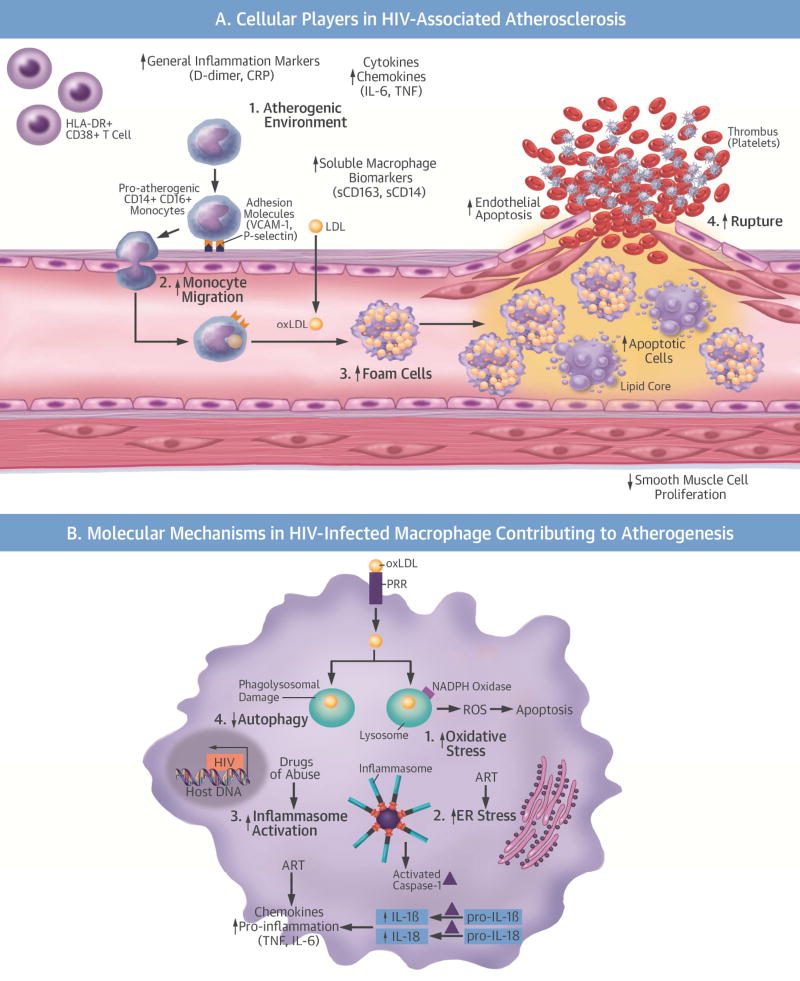
Cardiovascular disease, including atherosclerosis and atherosclerosis-associated complications, is an increasing cause of morbidity and mortality in human immunodeficiency virus (HIV) patients in the post-antiretroviral therapy era. HIV alone accelerates atherosclerosis. Antiretroviral therapy; HIV-associated comorbidities, such as dyslipidemia, drug abuse, and opportunistic infections; and lifestyle are risk factors for HIV-associated atherosclerosis. However, our current understanding of HIV-associated atherogenesis is very limited and has largely been obtained from clinical observation. There is a pressing need to experimentally unravel the missing link between HIV and atherosclerosis. Understanding these mechanisms will help to better develop and design novel therapeutic interventions for the treatment of HIV-associated cardiovascular disease. HIV mainly infects T cells and macrophages resulting in the induction of oxidative and endoplasmic reticulum stress, the formation of the inflammasome, and the dysregulation of autophagy. These mechanisms may contribute to HIV-associated atherogenesis. In this review, we will summarize our current understanding and propose potential mechanisms of HIV-associated atherosclerosis.
Keywords: Tg26 transgenic mice; caspase-1; immune activation; inflammasome; inflammation; macrophage.
Copyright © 2017 American College of Cardiology Foundation. Published by Elsevier Inc. All rights reserved.
Figures
References
-
- Shrestha S, Irvin MR, Grunfeld C, Arnett DK. HIV, inflammation, and calcium in atherosclerosis. Arterioscler Thromb Vasc Biol. 2014;34:244–50. - PubMed
-
- Vachiat A, McCutcheon K, Tsabedze N, Zachariah D, Manga P. HIV and ischemic heart disease. J Am Coll Cardiol. 2017;69:73–82. - PubMed
-
- Gili S, Grosso Marra W, D’Ascenzo F, et al. Comparative safety and efficacy of statins for primary prevention in human immunodeficiency virus-positive patients: a systematic review and meta-analysis. Eur Heart J. 2016;37:3600–9. - PubMed
-
- D’Ascenzo F, Quadri G, Cerrato E, et al. A meta-analysis investigating incidence and features of stroke in HIV-infected patients in the highly active antiretroviral therapy era. J Cardiovasc Med (Hagerstown) 2015;16:839–43. - PubMed
Publication types
MeSH terms
Grants and funding
LinkOut - more resources
Full Text Sources
Other Literature Sources
Medical
