. 2017 Jun 22;7(1):4056.
doi: 10.1038/s41598-017-04370-9.

A cross-species approach to identify transcriptional regulators exemplified for Dnajc22 and Hnf4a

Affiliations

A cross-species approach to identify transcriptional regulators exemplified for Dnajc22 and Hnf4a

A C Aschenbrenner et al. Sci Rep. .

Abstract

There is an enormous need to make better use of the ever increasing wealth of publicly available genomic information and to utilize the tremendous progress in computational approaches in the life sciences. Transcriptional regulation of protein-coding genes is a major mechanism of controlling cellular functions. However, the myriad of transcription factors potentially controlling transcription of any given gene makes it often difficult to quickly identify the biological relevant transcription factors. Here, we report on the identification of Hnf4a as a major transcription factor of the so far unstudied DnaJ heat shock protein family (Hsp40) member C22 (Dnajc22). We propose an approach utilizing recent advances in computational biology and the wealth of publicly available genomic information guiding the identification of potential transcription factor candidates together with wet-lab experiments validating computational models. More specifically, the combined use of co-expression analyses based on self-organizing maps with sequence-based transcription factor binding prediction led to the identification of Hnf4a as the potential transcriptional regulator for Dnajc22 which was further corroborated using publicly available datasets on Hnf4a. Following this procedure, we determined its functional binding site in the murine Dnajc22 locus using ChIP-qPCR and luciferase assays and verified this regulatory loop in fruitfly, zebrafish, and humans.


Conflict of interest statement

The authors declare that they have no competing interests.

Figures
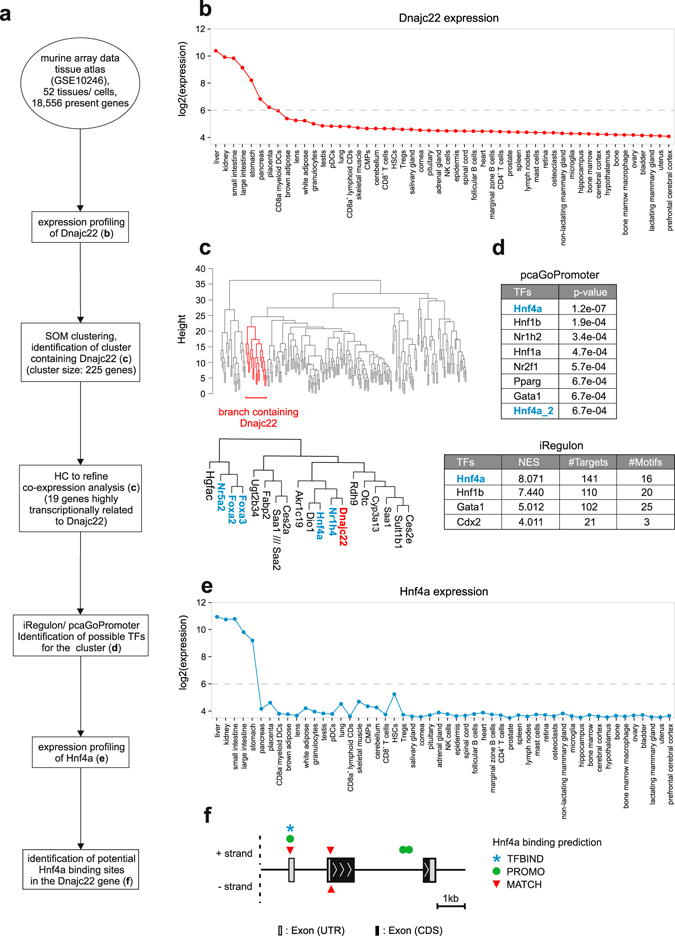
Figure 1
Figure 1
Identification of Hnf4a as a potential transcriptional regulator of Dnajc22. (a) Schematic workflow for the in silico analyses to identify potential transcriptional regulators of Dnajc22 expression (TF = transcription factor, HC = hierarchical clustering, SOM = self-organizing map). (b) Expression profile of murine Dnajc22. (c) Hierarchical clustering of genes which were grouped together according to self-organizing maps. Subcluster containing genes which were found to be highly transcriptionally related to Dnajc22 is highlighted in red. Transcription factors among those are marked in blue. (d) Potential TFs regulating genes contained in the Dnajc22-associated SOM-cluster identified by either iRegulon or pcaGoPromoter. TFs that are included in the SOM-cluster (c) themselves are marked in blue (TFs = transcription factors, NES = motif enrichment score). (e) Expression profile of Hnf4a. (f) Schematic representation of the murine Dnajc22 promoter region including possible Hnf4a binding sites predicted by TFBIND, PROMO, or MATCH. (UTR = untranslated region, CDS = coding sequence).
Figure 2
Figure 2
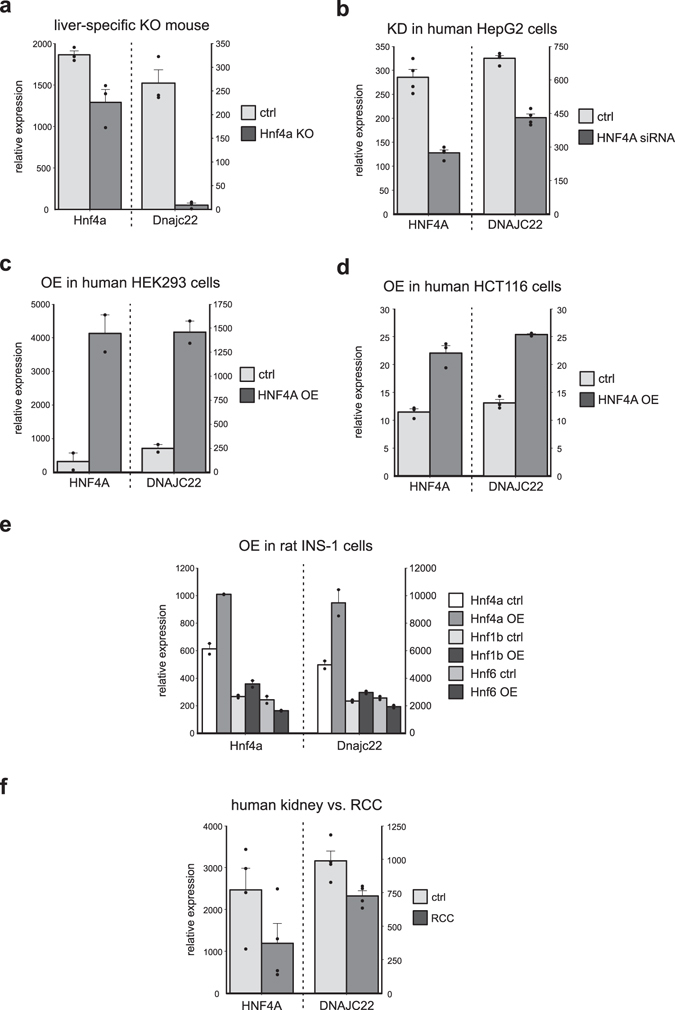
Alterations of cellular Hnf4a transcript levels affects Dnajc22 expression. Data for Hnf4a and Dnajc22 transcript levels in different Hnf4a-dependent experiments were extracted and reanalysed from online available GEO datasets. The significance of the observed differences was assessed using a one-sided t-test. (a) Hepatic tissue from liver-specific Hnf4a knockout and control mice (n = 3). (b) Knockdown of HNF4A by siRNA in human embryonic kidney cells (n = 4). (c) Doxycyclin-induced overexpression of HNF4A in human embryonic kidney cells (n = 2). (d) Doxycyclin-induced overexpression of HNF4A in human colon carcinoma (HCT116) cells (n = 3). (e) Doxycyclin-induced heterologous expression of HNF4A, HNF6, and HNF1B in rat insulinoma (INS-1) cells (n = 2). (f) Comparison of human healthy and renal carcinoma (RCC) tissue samples (n = 4).
Figure 3
Figure 3
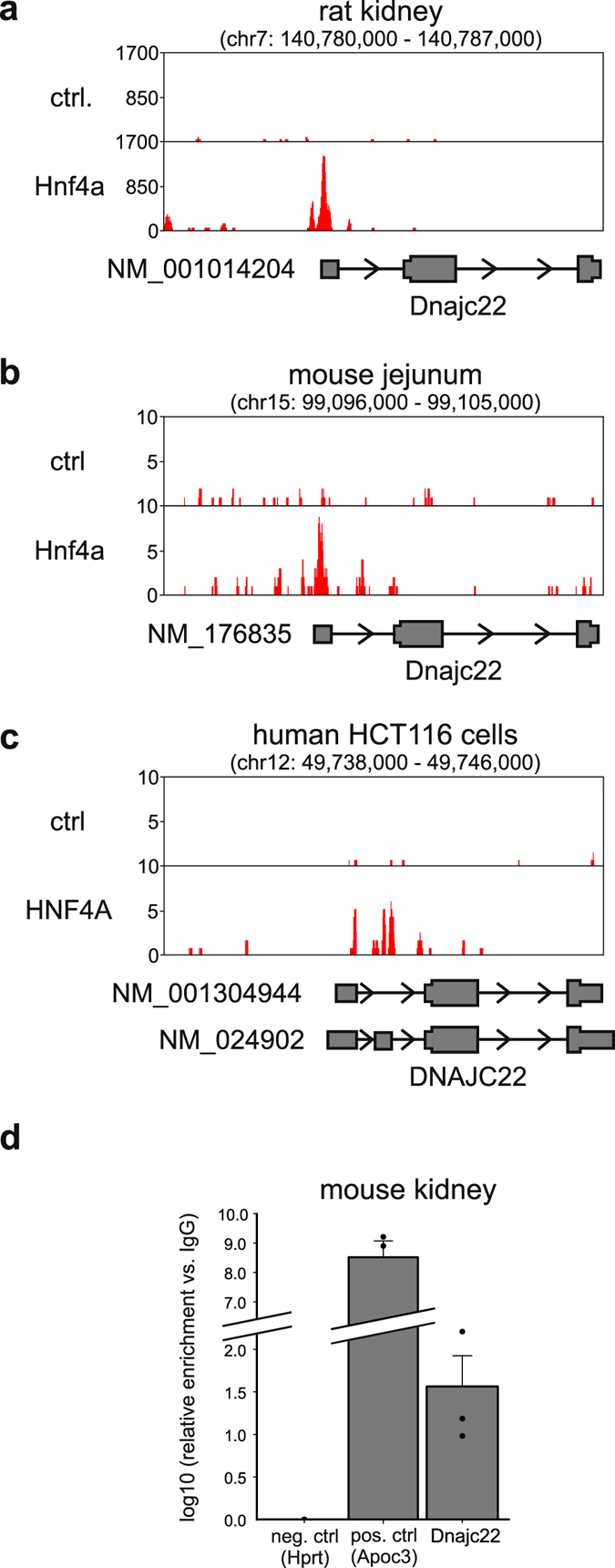
Hnf4a binds at the Dnajc22 locus. ChIP-seq peaks for Hnf4a at the rat Dnajc22 locus in kidney tissue (a), at the murine Dnajc22 locus in samples from intestine (b), and for HNF4A at the human DNAJC22 locus in human colon carcinoma (HCT116) cells (c). (d) HNF4A ChIP-qPCR of murine kidney cortex samples showing an enrichment of Hnf4a binding to the identified Dnajc22 promoter fragment. The Apoc3 promoter serves as a positive, a region in exon 9 of Hprt1 as a negative control. The significance of the enrichment was determined using a one-sided one-sample t-test.
Figure 4
Figure 4
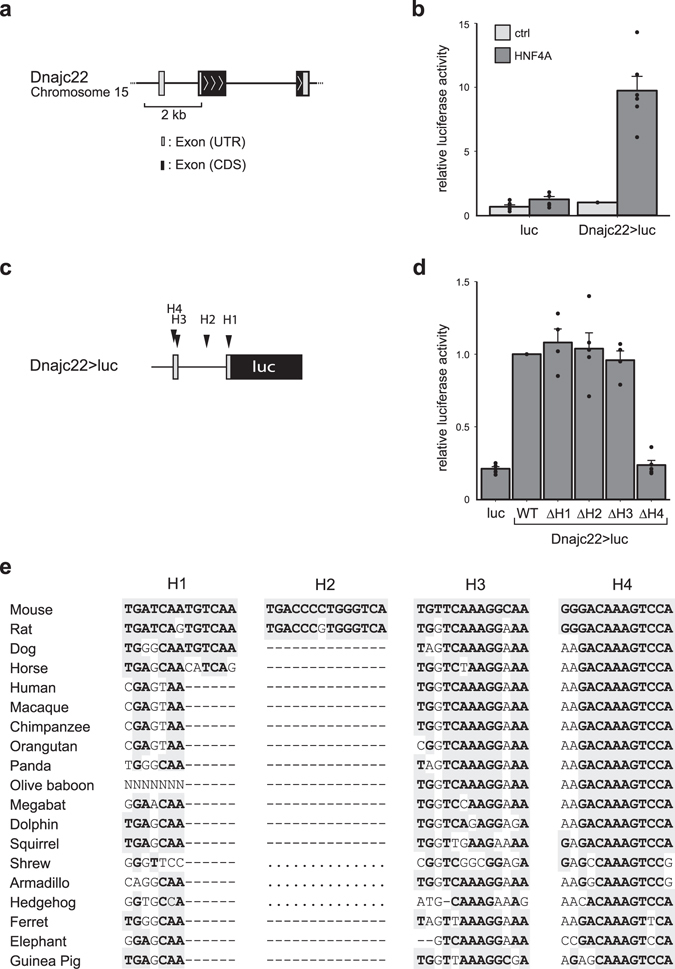
Identification of a functional Hnf4a binding site for murine Dnajc22. (a) Schematic presentation of the genomic locus of murine Dnajc22 indicating the 2 kb fragment cloned upstream of luciferase to test for responsiveness to heterologous HNF4A expression. (b) Heterologous expression of human HNF4A in murine M-1 cells increases luciferase activity of a construct driven by the 2 kb promoter fragment of murine Dnajc22 (normalized to Dnajc22 > luc control). Significance testing was performed using a one-sided paired t-test. (c) Predicted Hnf4a binding sites in the Dnajc22 > luc construct, denoted H1-4. (d) Analysis of single mutants of the four predicted Hnf4a binding sites (∆H1-4) show significantly reduced luciferase activity compared to the WT fragment after heterologous HNF4A expression only for ∆H4 (normalized to the WT construct). Significance testing was performed using a one-sided paired t-test. (e) Genomic alignment of the four identified potential HNF4A binding sequences in the Dnajc22 locus in 19 species including mouse, rat, and human shows greatest conservation for H4.
Figure 5
Figure 5
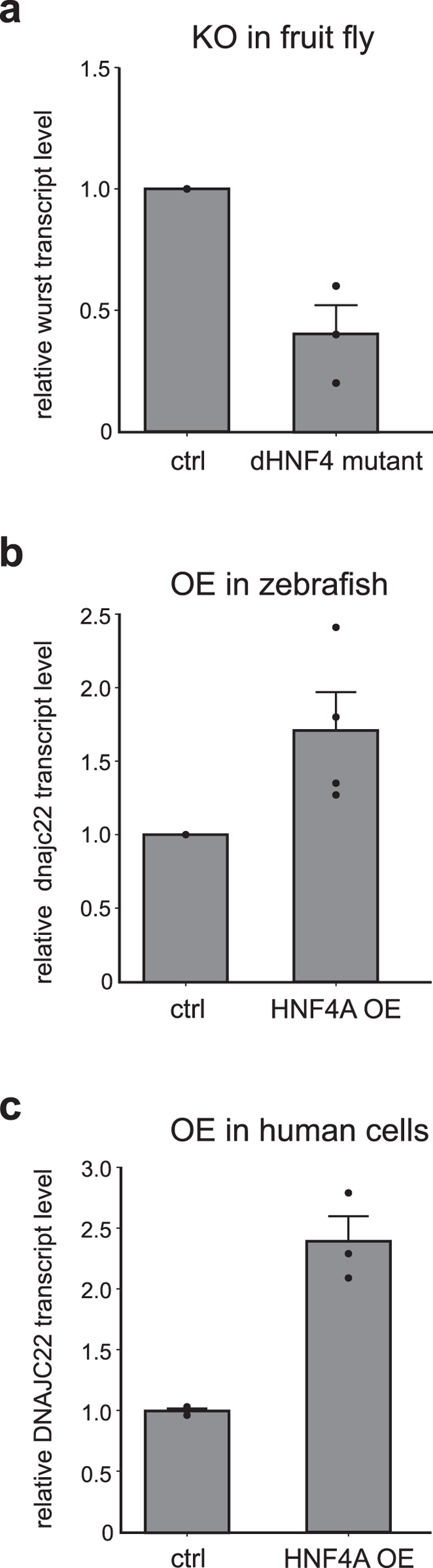
Hnf4a and Dnajc22 transcripts are co-regulated in fruitfly, zebrafish, and human. Endogenous expression of Dnajc22 ortholog transcript levels were analysed by quantitative realtime PCR in Hnf4a gain- and loss-of-function experiments. The data was generated from three independent experiments and normalized to the controls. Significance was tested using a one-sided paired t-test. (a) Drosophila melanogaster Dnajc22 ortholog wurst expression in Hnf4 mutant and control larvae. (b) Heterologous expression of human HNF4A in zebrafish embryos leads to elevation of zebrafish dnajc22 transcript levels. (c) Overexpression of human HNF4A in HEK293 cells leads to increased human DNAJC22 transcript levels.
Figure 6
Figure 6
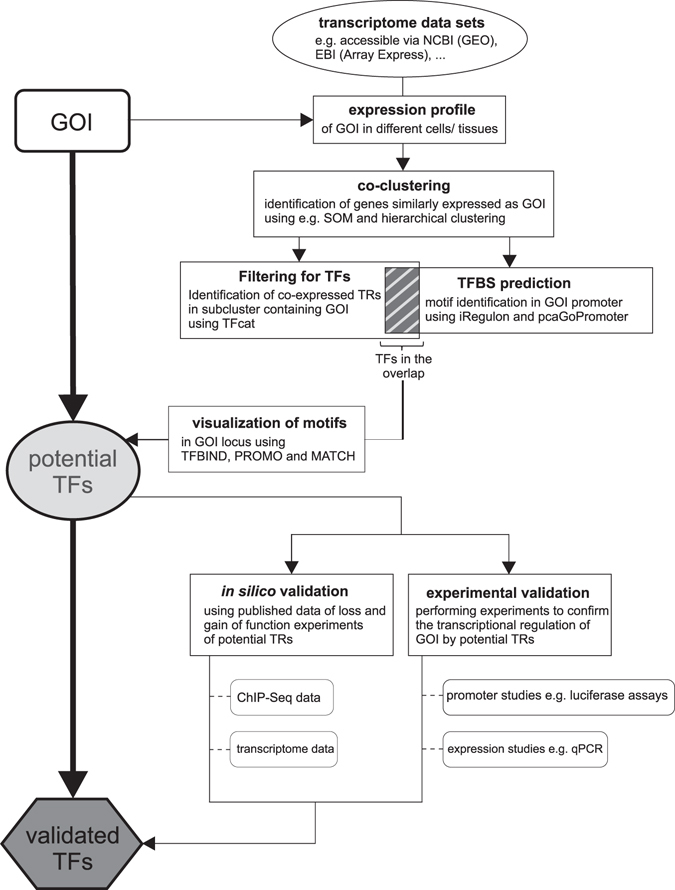
Schematic workflow. (GOI = gene of interest, SOM = self-organizing map, TFBS = transcription factor binding site, TR = transcriptional regulator).

References

    1. Suryamohan K, Halfon MS. Identifying transcriptional cis -regulatory modules in animal genomes. Wiley Interdiscip. Rev. Dev. Biol. 2015;4:59–84. doi: 10.1002/wdev.168. - DOI - PMC - PubMed
    1. Garner MM, Revzin A. A gel electrophoresis method for quantifying the binding of proteins to specific DNA regions: application to components of the Escherichia coli lactose operon regulatory system. Nucleic Acids Res. 1981;9:3047–60. doi: 10.1093/nar/9.13.3047. - DOI - PMC - PubMed
    1. Buck MJ, Lieb JD. ChIP-chip: considerations for the design, analysis, and application of genome-wide chromatin immunoprecipitation experiments. Genomics. 2004;83:349–60. doi: 10.1016/j.ygeno.2003.11.004. - DOI - PubMed
    1. Mathelier A, et al. JASPAR 2014: an extensively expanded and updated open-access database of transcription factor binding profiles. Nucleic Acids Res. 2014;42:D142–D147. doi: 10.1093/nar/gkt997. - DOI - PMC - PubMed
    1. Matys V, et al. TRANSFAC and its module TRANSCompel: transcriptional gene regulation in eukaryotes. Nucleic Acids Res. 2006;34:D108–10. doi: 10.1093/nar/gkj143. - DOI - PMC - PubMed

Publication types

LinkOut - more resources