


Predicting long-term mortality in hospitalized elderly patients using the new ESPEN definition
- PMID: 28642623
- PMCID: PMC5481447
- DOI: 10.1038/s41598-017-04483-1
Predicting long-term mortality in hospitalized elderly patients using the new ESPEN definition
Abstract
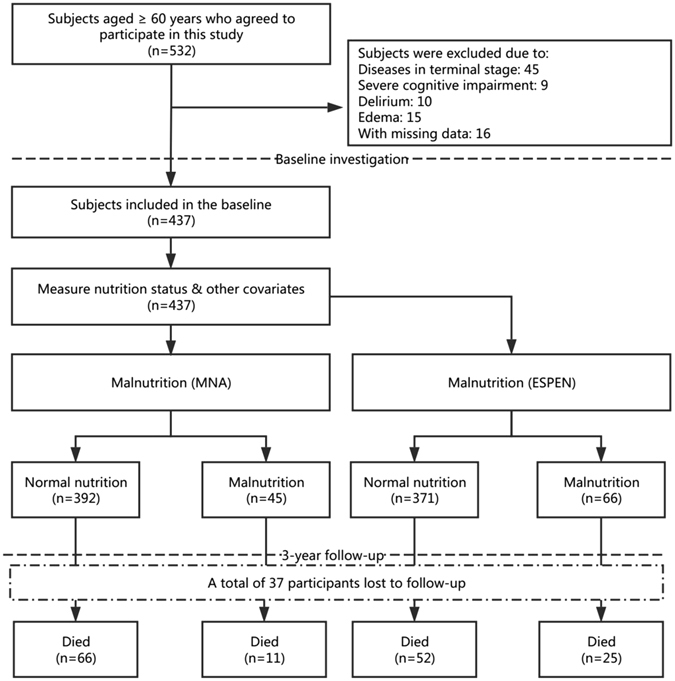
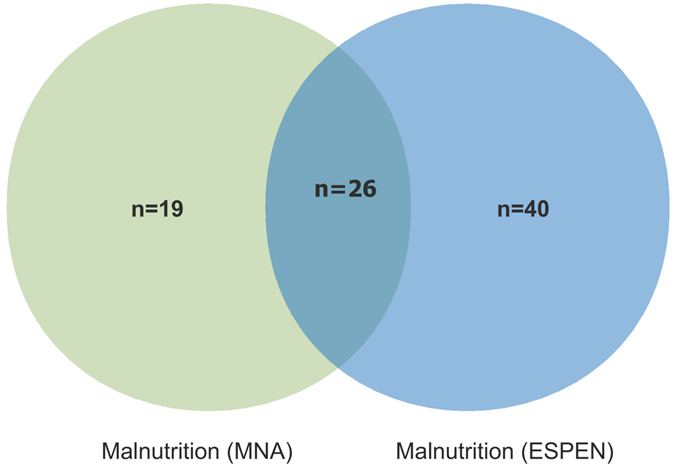
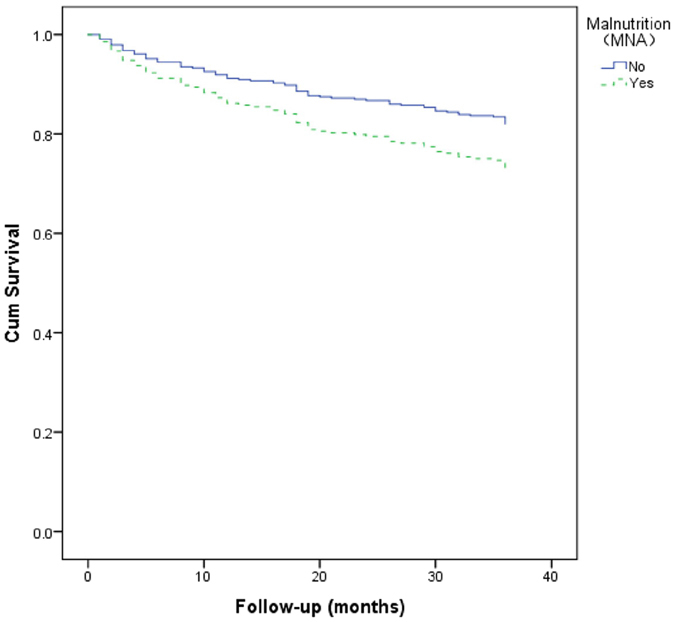
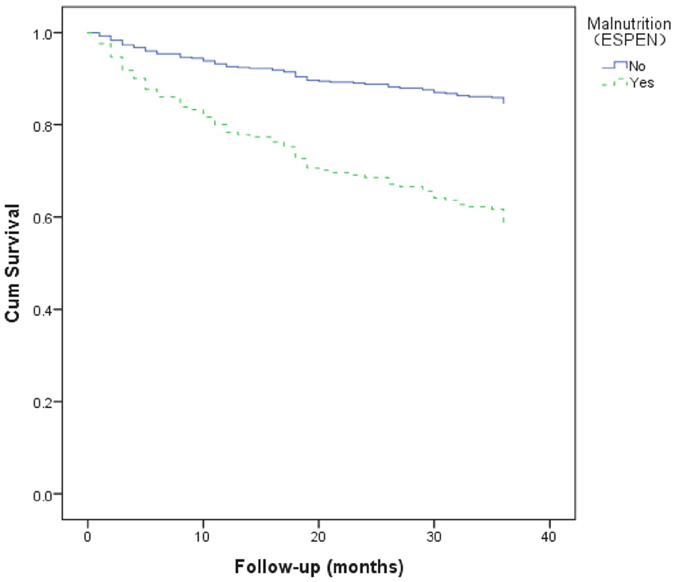
The European Society of Clinical Nutrition and Metabolism (ESPEN) recently published new diagnostic criteria for malnutrition. The aim of this study was to evaluate whether malnutrition by the new ESPEN diagnostic criteria can predict long-term mortality in elderly inpatients. We conducted a prospective study in the acute geriatric wards. Malnutrition was defined according to the new ESPEN criteria and the Mini Nutritional Assessment (MNA), respectively. The survival status was determined by telephone interviews at 3-years. A total of 437 elderly adults were included. According to the new ESPEN criteria, 66 participants (15.1%) were malnourished. According to the MNA, 45 participants (10.3%) were identified as malnourished. The 3-year all-cause mortality was 41.7% in participants with malnutrition defined by the ESPEN criteria and 15.3% in participants without malnutrition (p < 0.001). After adjusting for relevant confounders, malnutrition defined by the ESPEN criteria was a significant predictor of 3-year all-cause mortality (hazard ratio [HR] 2.98, 95% confidence interval [CI] 1.87-4.86). However, malnutrition defined by the MNA was not a significant predictor of 3-year all-cause mortality (HR 1.67, 95% CI 0.89-2.31). In conclusion, the new ESPEN diagnostic criteria for malnutrition are reliable in predicting 3-year all-cause mortality among elderly inpatients.
Conflict of interest statement
The authors declare that they have no competing interests.
Figures
References
-
- White JV, et al. Consensus statement: Academy of Nutrition and Dietetics and American Society for Parenteral and Enteral Nutrition: characteristics recommended for the identification and documentation of adult malnutrition (undernutrition) JPEN J Parenter Enteral Nutr. 2012;36:275–283. doi: 10.1177/0148607112440285. - DOI - PubMed
Publication types
MeSH terms
LinkOut - more resources
Full Text Sources
Other Literature Sources
Medical
