


Molecularly targeted therapies for p53-mutant cancers
- PMID: 28643165
- PMCID: PMC5664959
- DOI: 10.1007/s00018-017-2575-0
Molecularly targeted therapies for p53-mutant cancers
Abstract
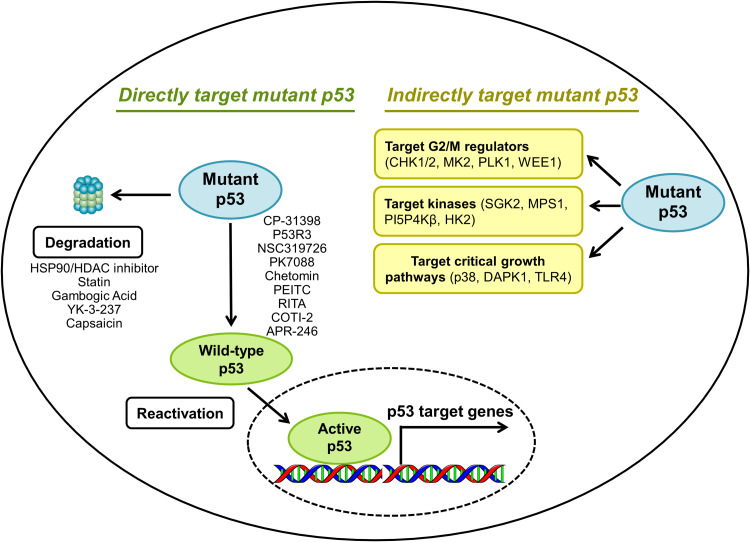
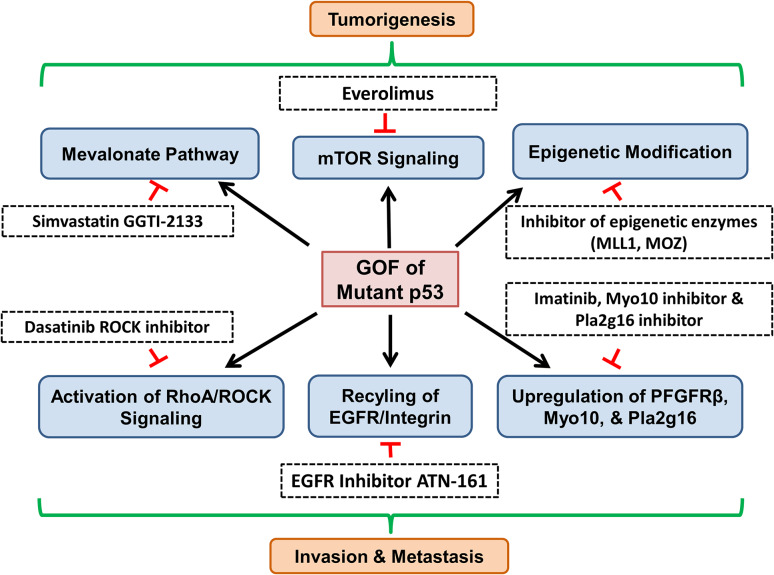
The tumor suppressor p53 is lost or mutated in approximately half of human cancers. Mutant p53 not only loses its anti-tumor transcriptional activity, but also often acquires oncogenic functions to promote tumor proliferation, invasion, and drug resistance. Traditional strategies have been taken to directly target p53 mutants through identifying small molecular compounds to deplete mutant p53, or to restore its tumor suppressive function. Accumulating evidence suggest that cancer cells with mutated p53 often exhibit specific functional dependencies on secondary genes or pathways to survive, providing alternative targets to indirectly treat p53-mutant cancers. Targeting these genes or pathways, critical for survival in the presence of p53 mutations, holds great promise for cancer treatment. In addition, mutant p53 often exhibits novel gain-of-functions to promote tumor growth and metastasis. Here, we review and discuss strategies targeting mutant p53, with focus on targeting the mutant p53 protein directly, and on the progress of identifying genes and pathways required in p53-mutant cells.
Keywords: Gain of function; Survival pathway; Targeted therapies; p53 mutation.
Conflict of interest statement
PH Brown is on the Scientific Advisory Board of Susan G. Komen for the Cure. All remaining authors declare no actual, potential, or perceived conflict of interest that would prejudice the impartiality of this article.
Figures
References
Publication types
MeSH terms
Substances
Grants and funding
LinkOut - more resources
Full Text Sources
Other Literature Sources
Research Materials
Miscellaneous
