Proenkephalin, Neutrophil Gelatinase-Associated Lipocalin, and Estimated Glomerular Filtration Rates in Patients With Sepsis
- PMID: 28643487
- PMCID: PMC5500737
- DOI: 10.3343/alm.2017.37.5.388
Proenkephalin, Neutrophil Gelatinase-Associated Lipocalin, and Estimated Glomerular Filtration Rates in Patients With Sepsis
Abstract
Background: Proenkephalin (PENK) has been suggested as a novel biomarker for kidney function. We investigated the diagnostic and prognostic utility of plasma PENK in comparison with neutrophil gelatinase-associated lipocalin (NGAL) and estimated glomerular filtration rates (eGFR) in septic patients.
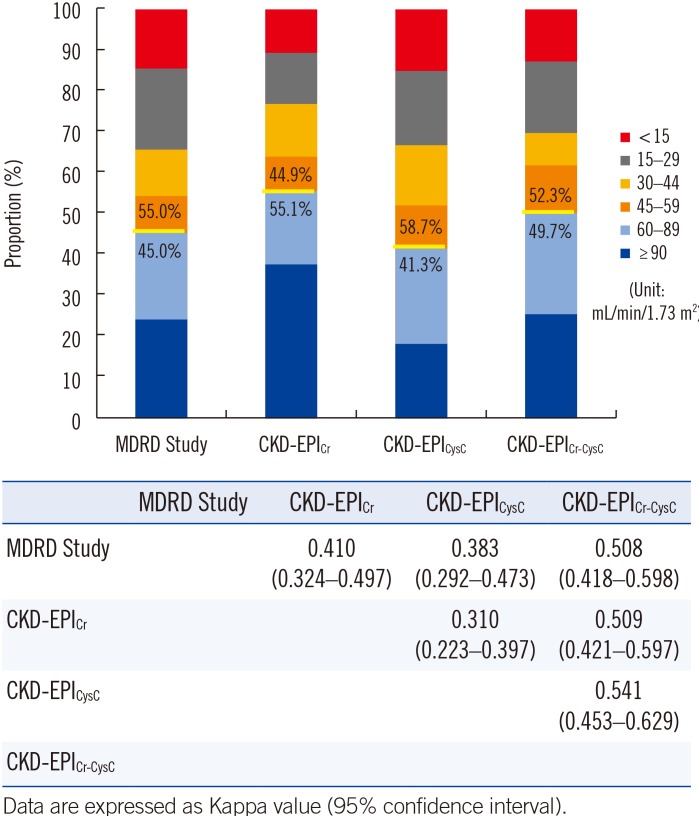
Methods: A total of 167 septic patients were enrolled: 99 with sepsis, 37 with septic shock, and 31 with suspected sepsis. PENK and NGAL concentrations were measured and GFR was estimated by using the isotope dilution mass spectrometry traceable-Modification of Diet in Renal Disease (MDRD) Study and three Chronic Kidney Disease Epidemiology Collaboration (CKD-EPI) equations: CKD-EPI(Cr), CDK-EPI(CysC), and CKD-EPI(Cr-CysC). The PENK, NGAL, and eGFR results were compared according to sepsis severity, presence or absence of acute kidney injury (AKI), and clinical outcomes.
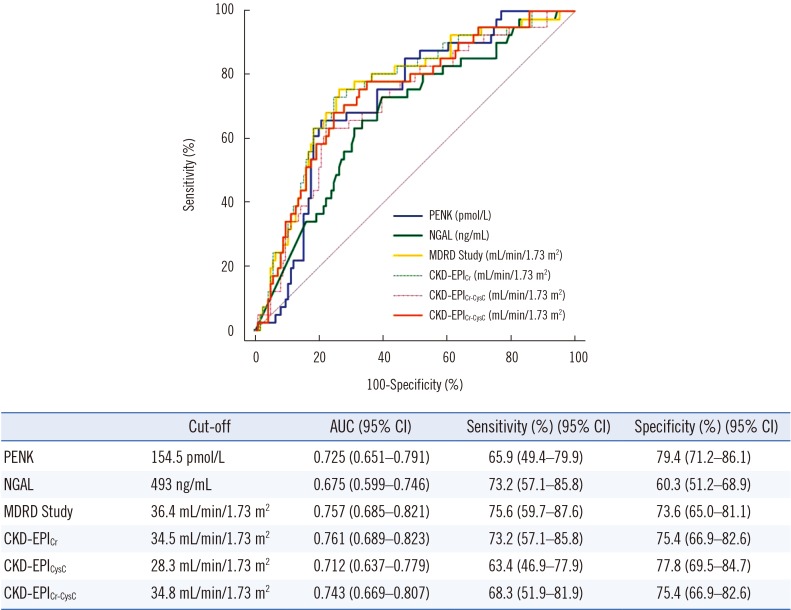
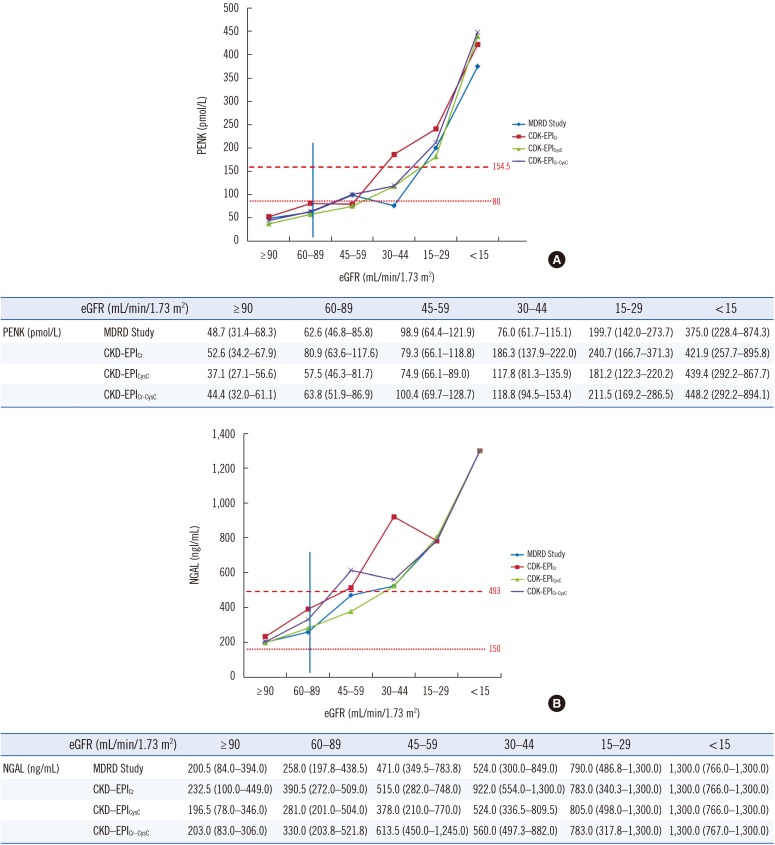
Results: The PENK, NGAL, and eGFR results were significantly associated with sepsis severity and differed significantly between patients with and without AKI only in the sepsis group (all P<0.05). PENK was superior to NGAL in predicting AKI (P=0.022) and renal replacement therapy (RRT) (P=0.0085). Regardless of the variable GFR category by the different eGFR equations, PENK showed constant and significant associations with all eGFR equations. Unlike NGAL, PENK was not influenced by inflammation and predicted the 30-day mortality.
Conclusions: PENK is a highly sensitive and objective biomarker of AKI and RRT and is useful for prognosis prediction in septic patients. With its diagnostic robustness and predictive power for survival, PENK constitutes a promising biomarker in critical care settings including sepsis.
Keywords: Acute kidney injury; Glomerular filtration rate; Neutrophil gelatinase-associated lipocalin; Proenkephalin; Sepsis.
© The Korean Society for Laboratory Medicine
Conflict of interest statement
AB, JSt, and OH are employed by Sphingotec GmbH, the company that provided the penKid assays for this study. The other authors declare no conflicts of interest. The authors alone are responsible for the content and writing of the paper.
Figures
References
MeSH terms
Substances
LinkOut - more resources
Full Text Sources
Other Literature Sources
Medical
Research Materials
Miscellaneous