


Vitamin D Deficiency Is Not Associated With Growth or the Incidence of Common Morbidities Among Tanzanian Infants
- PMID: 28644368
- PMCID: PMC5604126
- DOI: 10.1097/MPG.0000000000001658
Vitamin D Deficiency Is Not Associated With Growth or the Incidence of Common Morbidities Among Tanzanian Infants
Abstract
Objective: The objective of this study was to examine risk factors for vitamin D deficiency and determine the association of vitamin D status with child growth and incidence of common morbidities among Tanzanian infants.
Methods: A prospective cohort of 581 Tanzanian infants born to human immunodeficiency virus (HIV)-uninfected mothers had serum 25-hydroxyvitamin D assessed at 6 weeks and 6 months of age. Infants were seen at monthly clinic visits for growth monitoring until 18 months of age. Physicians examined infants every 3 months or when an illness was noted to document morbidities.
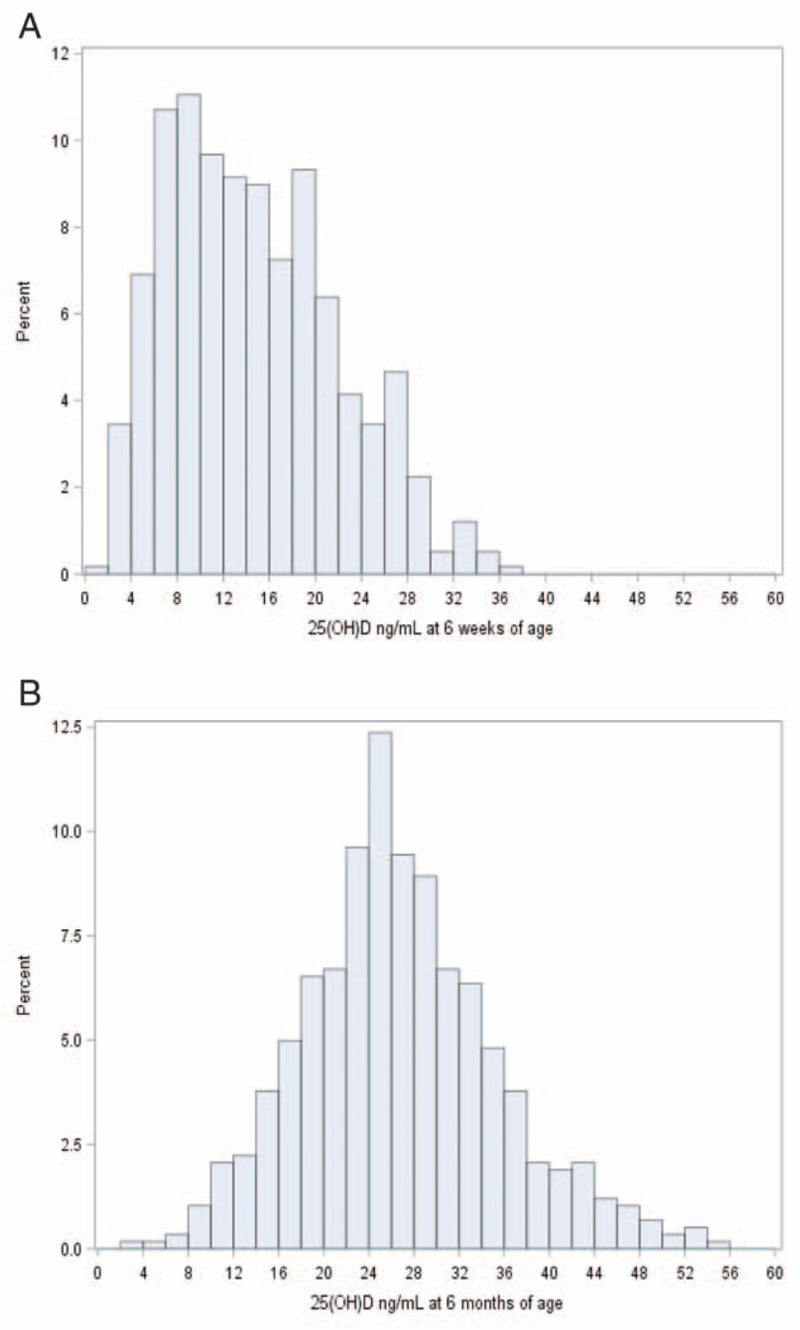
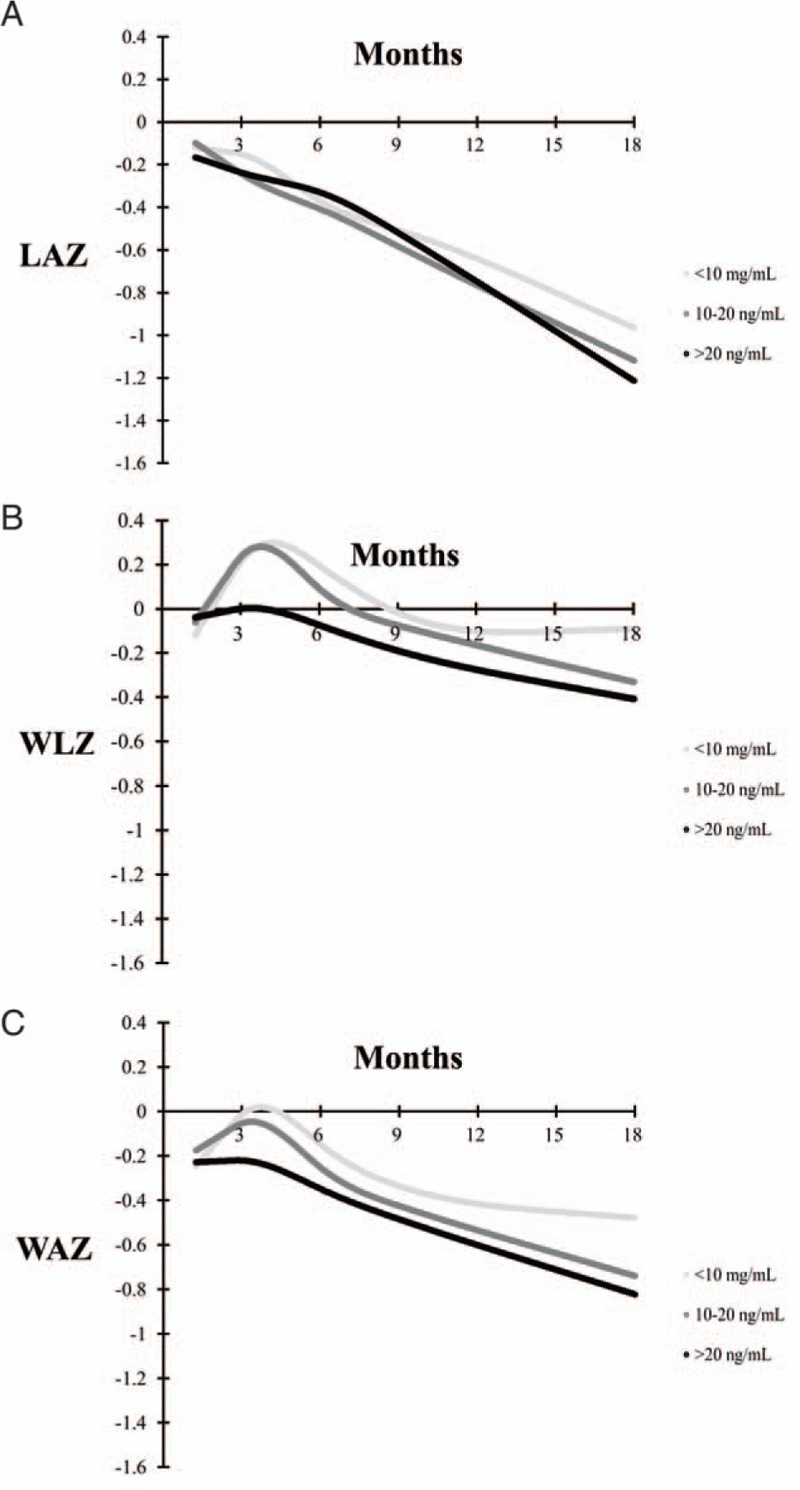
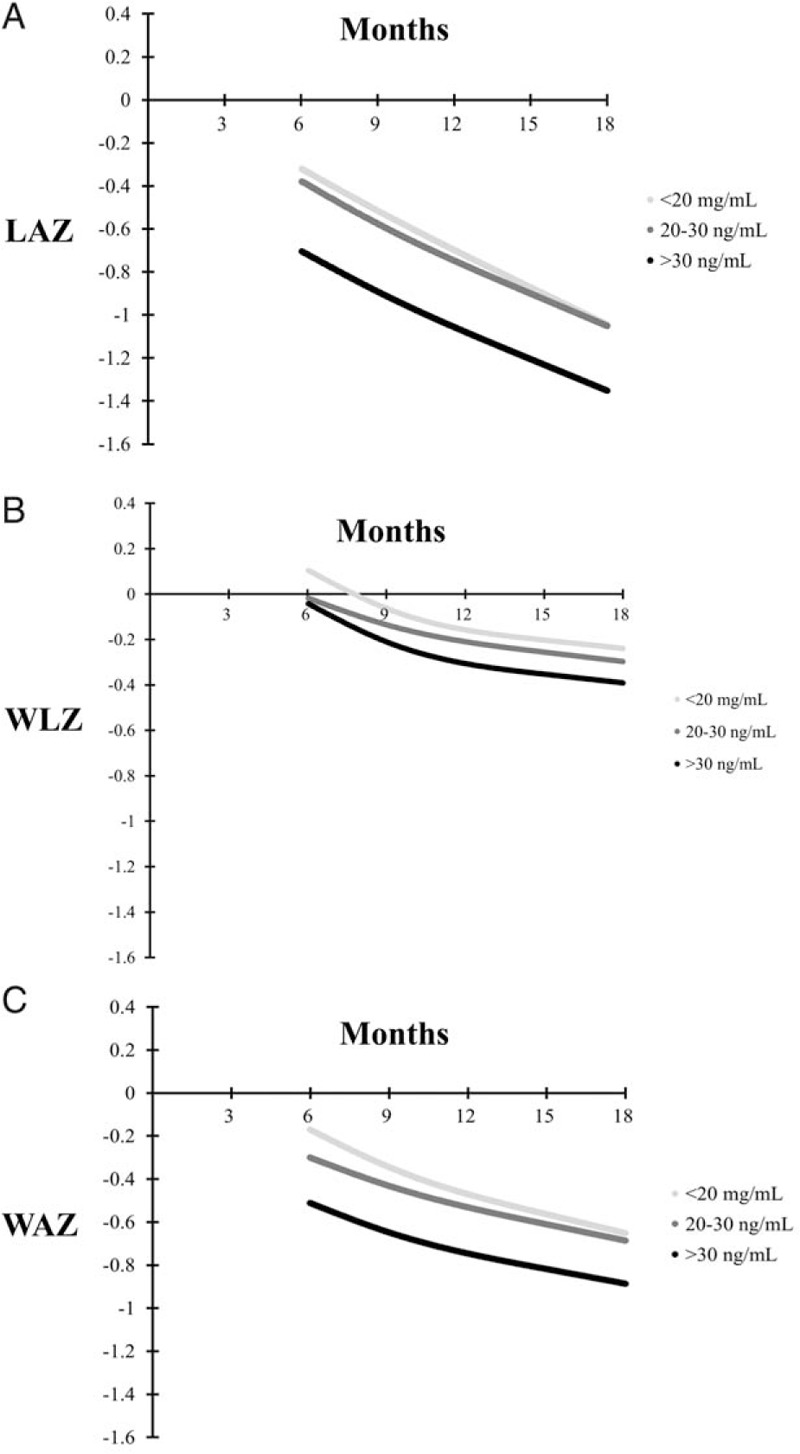
Results: The prevalence of vitamin D deficiency (<20 ng/mL) declined from 76.4% at 6 weeks of age to 21.2% at 6 months. Infants who were exclusively breastfed at 6 weeks of age had 2.05 (95% confidence interval 1.11-3.79; P = 0.02) times the risk of vitamin D deficiency as compared formula-fed infants. After multivariate adjustment, there was no association of vitamin D status at 6 weeks or 6 months with the incidence of stunting, wasting, or underweight. There was also no association of low vitamin D with the incidence of diarrhea, upper respiratory infection, acute lower respiratory tract infection, or malaria.
Conclusions: Vitamin D deficiency is common during early infancy, particularly among exclusively breastfed infants; however, these observational data suggest it may not be an important contributor to morbidity and growth among the general population of Tanzanian infants. Future studies of vitamin D among high-risk infants, including those with low birthweight and exposed to HIV, may be warranted.
Conflict of interest statement
The authors report no conflicts of interest.
Figures
Comment in
-
Commentary to Article Entitled "Vitamin D Deficiency Is Not Associated With Growth or the Incidence of Common Morbidities Among Tanzanian Infants".J Pediatr Gastroenterol Nutr. 2017 Oct;65(4):357-358. doi: 10.1097/MPG.0000000000001702. J Pediatr Gastroenterol Nutr. 2017. PMID: 28753189 No abstract available.
References
-
- Holick MF. Vitamin D deficiency. N Engl J Med 2007; 357:266–281. - PubMed
-
- Lips P. Worldwide status of vitamin D nutrition. J Steroid Biochem Mol Biol 2010; 121:297–300. - PubMed
-
- Mithal A, Wahl DA, Bonjour JP, et al. Global vitamin D status and determinants of hypovitaminosis D. Osteoporos Int 2009; 20:1807–1820. - PubMed
-
- Greer FR, Marshall S. Bone mineral content, serum vitamin D metabolite concentrations, and ultraviolet B light exposure in infants fed human milk with and without vitamin D2 supplements. J Pediatr 1989; 114:204–212. - PubMed
-
- Wagner CL, Greer FR. Prevention of rickets and vitamin D deficiency in infants, children, and adolescents. Pediatrics 2008; 122:1142–1152. - PubMed
Publication types
MeSH terms
Grants and funding
LinkOut - more resources
Full Text Sources
Other Literature Sources
Medical
