


Energy and carbon metabolisms in a deep terrestrial subsurface fluid microbial community
- PMID: 28644444
- PMCID: PMC5607374
- DOI: 10.1038/ismej.2017.94
Energy and carbon metabolisms in a deep terrestrial subsurface fluid microbial community
Abstract
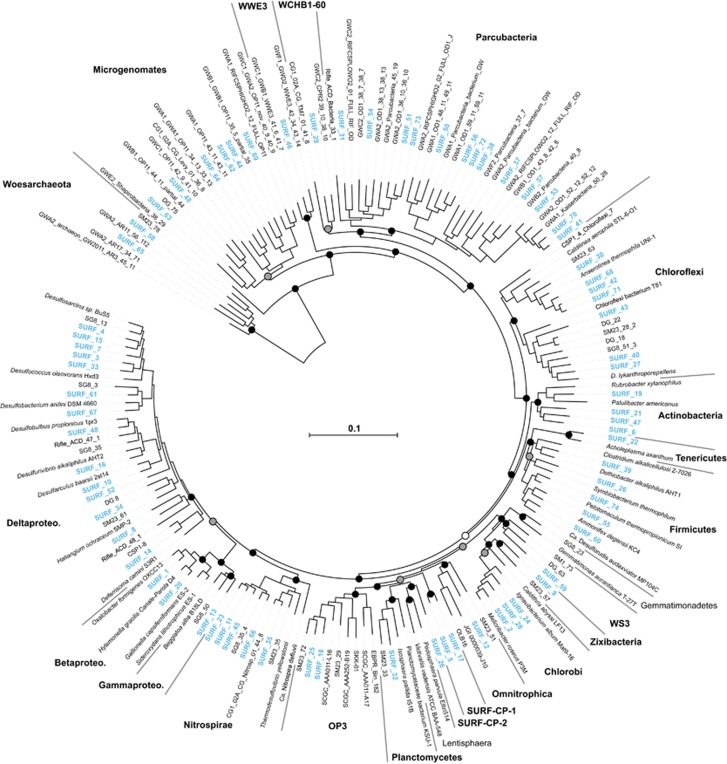
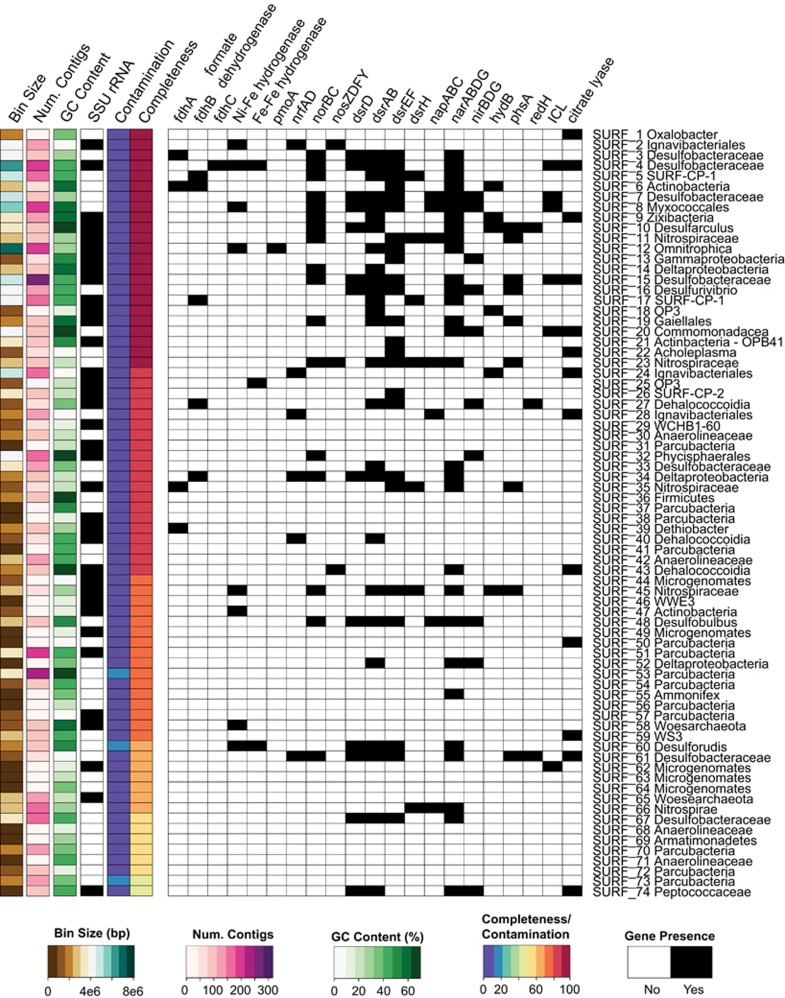
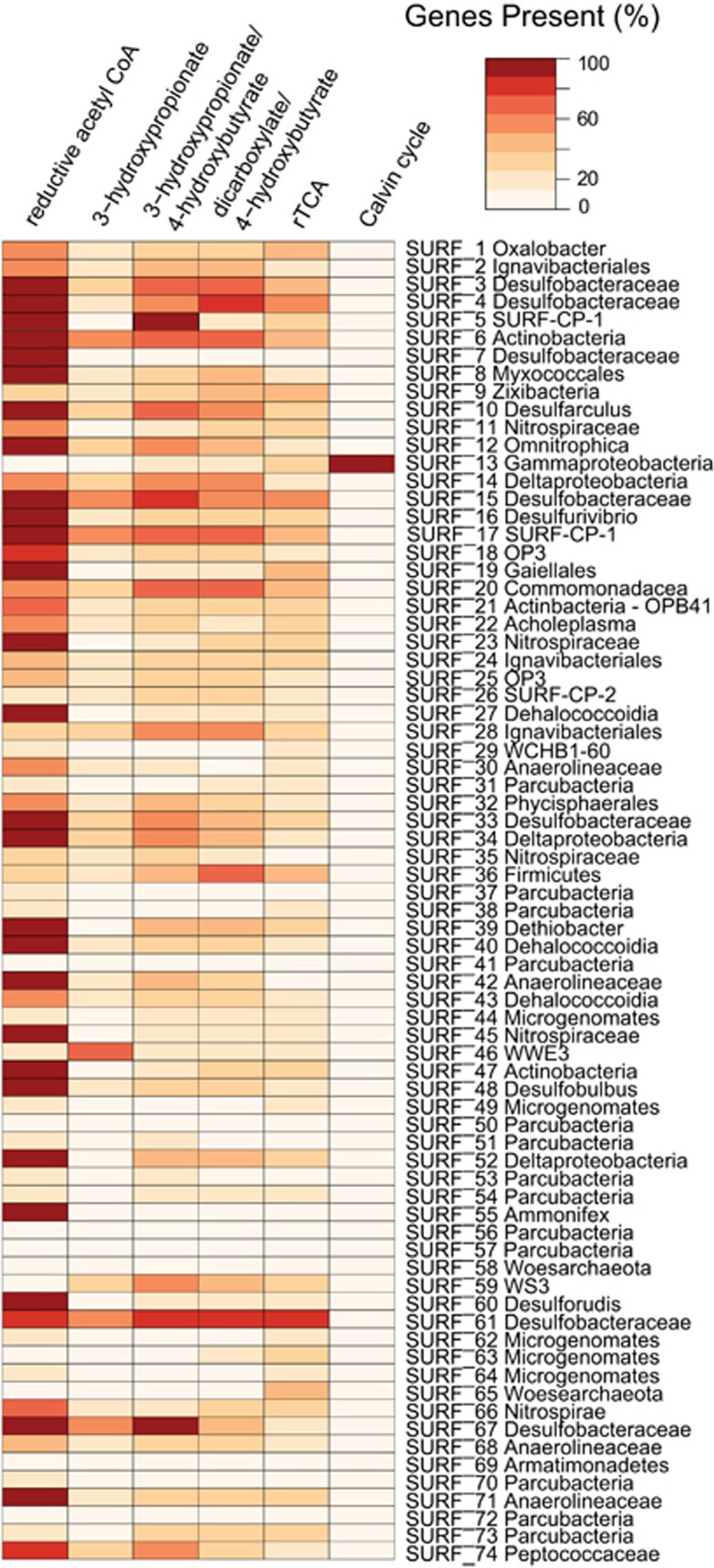
The terrestrial deep subsurface is a huge repository of microbial biomass, but in relation to its size and physical heterogeneity, few sites have been investigated in detail. Here, we applied a culture-independent metagenomic approach to characterize the microbial community composition in deep (1500 meters below surface) terrestrial fluids. Samples were collected from a former gold mine in Lead, South Dakota, USA, now Sanford Underground Research Facility (SURF). We reconstructed 74 genomes from metagenomes (MAGs), enabling the identification of common metabolic pathways. Sulfate and nitrate/nitrite reduction were the most common putative energy metabolisms. Complete pathways for autotrophic carbon fixation were found in more than half of the MAGs, with the reductive acetyl-CoA pathway by far the most common. Nearly 40% (29 of 74) of the recovered MAGs belong to bacterial phyla without any cultivated members-microbial dark matter. Three of our MAGs constitute two novel phyla previously only identified in 16 S rRNA gene surveys. The uniqueness of this data set-its physical depth in the terrestrial subsurface, the relative abundance and completeness of microbial dark matter genomes and the overall diversity of this physically deep, dark, community-make it an invaluable addition to our knowledge of deep subsurface microbial ecology.
Conflict of interest statement
The authors declare no conflict of interest.
Figures
References
-
- Alneberg J, Bjarnason BS, de Bruijn I, Schirmer M, Quick J, Ijaz UZ et al (2014). Binning metagenomic contigs by coverage and composition. Nat Methods 11: 1144–1146. - PubMed
-
- Baker BJ, Moser DP, MacGregor BJ, Fishbain S, Wagner M, Fry NK et al (2003). Related assemblages of sulphate‐reducing bacteria associated with ultradeep gold mines of South Africa and deep basalt aquifers of Washington State. Environ Microbiol 5: 267–277. - PubMed
-
- Baker BJ, Saw JH, Lind AE, Lazar CS, Hinrichs K-U, Teske AP et al (2016). Genomic inference of the metabolism of cosmopolitan subsurface Archaea, Hadesarchaea. Nat Microbiol 1: 16002. - PubMed
MeSH terms
Substances
Associated data
LinkOut - more resources
Full Text Sources
Other Literature Sources
Molecular Biology Databases
