


Visceral adiposity index predicts the conversion of metabolically healthy obesity to an unhealthy phenotype
- PMID: 28644850
- PMCID: PMC5482460
- DOI: 10.1371/journal.pone.0179635
Visceral adiposity index predicts the conversion of metabolically healthy obesity to an unhealthy phenotype
Abstract
Objective: Some individuals with metabolically healthy obesity (MHO) convert to metabolically unhealthy obesity (MUO) phenotype, and visceral adiposity is one of proposed mechanisms underlying such conversion. Visceral adipose index (VAI) is a novel mathematical model which estimates visceral adiposity based on anthropometric and lipid profiles. We aimed to determine the association of VAI-estimated visceral adiposity with the MHO-to-MUO conversion and the predictive value of VAI in estimating such unfavorable outcomes.
Methods: A total of 2,204 Korean subjects with the MHO phenotype were enrolled and stratified by body mass index and metabolic health state according to Wildman criteria at baseline and last follow-up examinations. VAI was calculated at baseline.
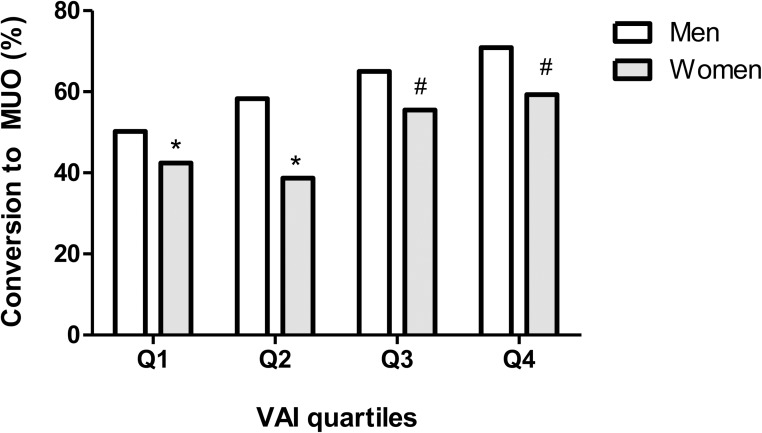
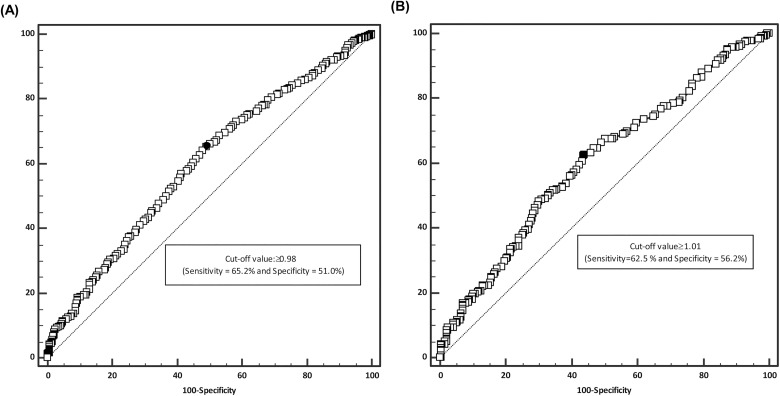
Results: Over a median follow-up period of 41.1 months, 46.0% of subjects converted to MUO phenotype. Higher VAI quartiles were associated with a greater proportion of subjects who underwent MHO-to-MUO conversion, and also with increased odds ratios for such conversion even after multivariate analyses. The optimal VAI cut off value was around 1.00, and VAI had a greater power in the prediction of MHO-to MUO conversion than waist circumference in both genders.
Conclusion: MHO phenotypes with high VAI values are associated with poor future metabolic outcomes. VAI-estimated visceral adiposity is well correlated with the prognosis of MHO subjects, and VAI has a good predictive value in determining the MHO-to-MUO conversion.
Conflict of interest statement
Figures
References
-
- Manson JE, Willett WC, Stampfer MJ, Colditz GA, Hunter DJ, Hankinson SE, et al. Body weight and mortality among women. N Engl J Med. 1995;333(11):677–85. Epub 1995/09/14. doi: 10.1056/NEJM199509143331101 . - DOI - PubMed
-
- Meigs JB, Wilson PW, Fox CS, Vasan RS, Nathan DM, Sullivan LM, et al. Body mass index, metabolic syndrome, and risk of type 2 diabetes or cardiovascular disease. J Clin Endocrinol Metab. 2006;91(8):2906–12. Epub 2006/06/01. doi: 10.1210/jc.2006-0594 . - DOI - PubMed
-
- Wannamethee SG, Shaper AG, Walker M. Overweight and obesity and weight change in middle aged men: impact on cardiovascular disease and diabetes. J Epidemiol Community Health. 2005;59(2):134–9. Epub 2005/01/15. doi: 10.1136/jech.2003.015651 ; PubMed Central PMCID: PMCPMC1733005. - DOI - PMC - PubMed
-
- Arnlov J, Ingelsson E, Sundstrom J, Lind L. Impact of body mass index and the metabolic syndrome on the risk of cardiovascular disease and death in middle-aged men. Circulation. 2010;121(2):230–6. Epub 2009/12/30. doi: 10.1161/CIRCULATIONAHA.109.887521 . - DOI - PubMed
-
- Hinnouho GM, Czernichow S, Dugravot A, Batty GD, Kivimaki M, Singh-Manoux A. Metabolically healthy obesity and risk of mortality: does the definition of metabolic health matter? Diabetes care. 2013;36(8):2294–300. Epub 2013/05/03. doi: 10.2337/dc12-1654 ; PubMed Central PMCID: PMCPMC3714476. - DOI - PMC - PubMed
MeSH terms
Substances
LinkOut - more resources
Full Text Sources
Other Literature Sources
