


Variation in the prevalence of urinary catheters: a profile of National Health Service patients in England
- PMID: 28645950
- PMCID: PMC5577876
- DOI: 10.1136/bmjopen-2016-013842
Variation in the prevalence of urinary catheters: a profile of National Health Service patients in England
Abstract
Introduction: Harm from catheter-associated urinary tract infections is a common, potentially avoidable, healthcare complication. Variation in catheter prevalence may exist and provide opportunity for reducing harm, yet to date is poorly understood. This study aimed to determine variation in the prevalence of urinary catheters between patient groups, settings, specialities and over time.
Methods: A prospective study (July 2012 to April 2016) of National Health Service (NHS) patients surveyed by healthcare professionals, following a standardised protocol to determine the presence of a urinary catheter and duration of use, on 1 day per month using the NHS Safety Thermometer.
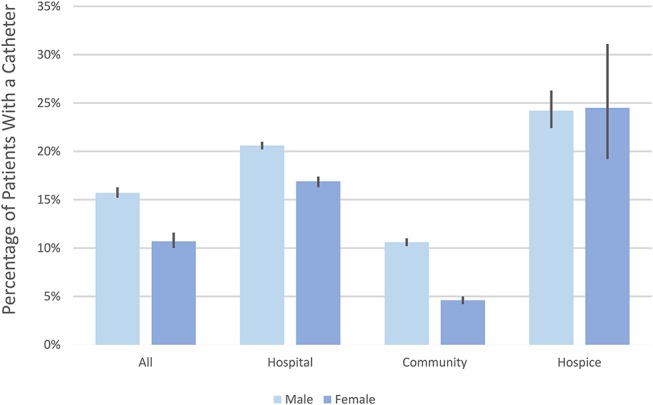
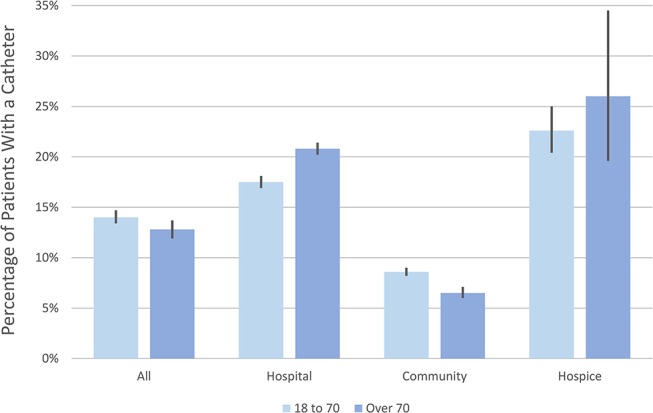
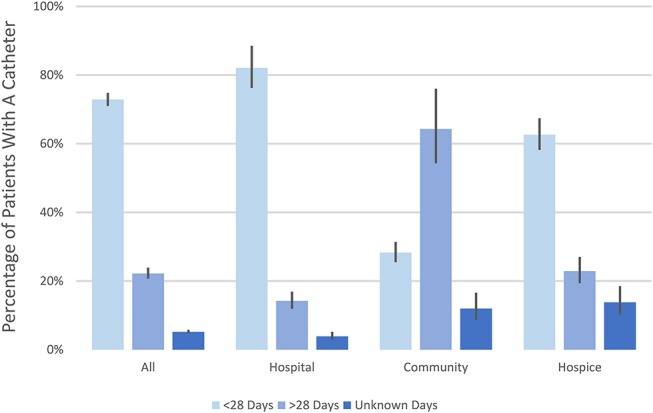
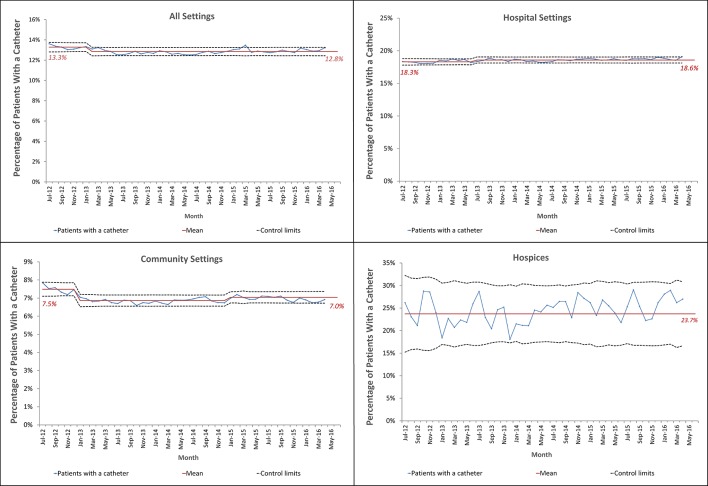
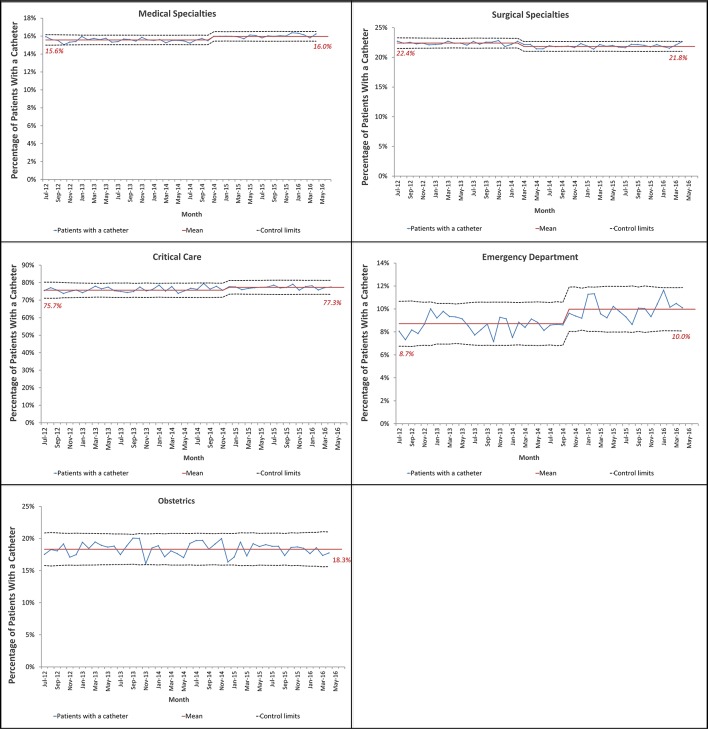
Results: 1314 organisations (253 NHS trusts) and 9 266 284 patients were included. Overall, 12.9% of patients were catheterised, but utilisation varied. There was higher utilisation of catheters in males (15.7% vs 10.7% p<0.001) and younger people (18-70 year 14.0% vs >70 year 12.8% p<0.001), utilisation was highest in hospital settings (18.6% p<0.001), particularly in critical care (76.6% p<0.001). Most catheters had been in situ <28 days (72.9% p<0.001). No clinically significant changes were seen over time in any setting or specialty.
Conclusion: Catheter prevalence in patients receiving NHS-funded care varies according to gender, age, setting and specialty, being most prevalent in males, younger people, hospitals and critical care. Utilisation has changed only marginally over 46 months, and further guidance is indicated to provide clarity for clinicians on the insertion and removal of catheters to supplement the existing guidance on care.
Keywords: Adult urology; Urology; epidemiology.
© Article author(s) (or their employer(s) unless otherwise stated in the text of the article) 2017. All rights reserved. No commercial use is permitted unless otherwise expressly granted.
Conflict of interest statement
Competing interests: CV reports personal fees from Haelo during the conduct of the study and carries out occasional paid consultancy work on patient safety, though not related to this paper.
Figures
References
MeSH terms
Grants and funding
LinkOut - more resources
Full Text Sources
Other Literature Sources
Medical
Molecular Biology Databases
Miscellaneous
