


Coffee and caffeine intake and male infertility: a systematic review
- PMID: 28646871
- PMCID: PMC5482951
- DOI: 10.1186/s12937-017-0257-2
Coffee and caffeine intake and male infertility: a systematic review
Abstract
Background: Semen quality, a predictor of male fertility, has been suggested declining worldwide. Among other life style factors, male coffee/caffeine consumption was hypothesized to influence semen parameters, but also sperm DNA integrity. To summarize available evidence, we performed a systematic review of observational studies on the relation between coffee/caffeine intake and parameters of male fertility including sperm ploidy, sperm DNA integrity, semen quality and time to pregnancy.
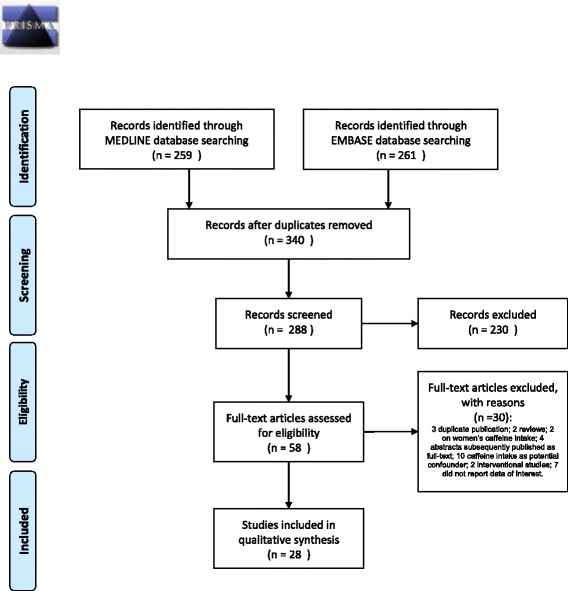
Methods: A systematic literature search was performed up to November 2016 (MEDLINE and EMBASE). We included all observational papers that reported the relation between male coffee/caffeine intake and reproductive outcomes: 1. semen parameters, 2. sperm DNA characteristics, 3. fecundability. All pertinent reports were retrieved and the relative reference lists were systematically searched in order to identify any potential additional studies that could be included.
Results: We retrieved 28 papers reporting observational information on coffee/caffeine intake and reproductive outcomes. Overall, they included 19,967 men. 1. Semen parameters did not seem affected by caffeine intake, at least caffeine from coffee, tea and cocoa drinks, in most studies. Conversely, other contributions suggested a negative effect of cola-containing beverages and caffeine-containing soft drinks on semen volume, count and concentration. 2. As regards sperm DNA defects, caffeine intake seemed associated with aneuploidy and DNA breaks, but not with other markers of DNA damage. 3. Finally, male coffee drinking was associated to prolonged time to pregnancy in some, but not all, studies.
Conclusions: The literature suggests that caffeine intake, possibly through sperm DNA damage, may negatively affect male reproductive function. Evidence from epidemiological studies on semen parameters and fertility is however inconsistent and inconclusive. Well-designed studies with predefined criteria for semen analysis, subject selection, and life style habits definition, are essential to reach a consistent evidence on the effect of caffeine on semen parameters and male fertility.
Keywords: Caffeine; Coffee consumption; Fecundability; Life style; Male infertility; Risk factors; Semen quality; Sperm parameters; Systematic review.
References
-
- Lotti F, Corona G, Vitale P, Maseroli E, Rossi M, Fino MG, et al. Current smoking is associated with lower seminal vesicles and ejaculate volume, despite higher testosterone levels, in male subjects of infertile couples. Hum Reprod. 2015;30:590–602. doi:10.1093/humrep/deu347. - PubMed
Publication types
MeSH terms
Substances
LinkOut - more resources
Full Text Sources
Other Literature Sources
Medical
Research Materials
