


Practical, Broadly Applicable, α-Selective, Z-Selective, Diastereoselective, and Enantioselective Addition of Allylboron Compounds to Mono-, Di-, Tri-, and Polyfluoroalkyl Ketones
- PMID: 28648084
- PMCID: PMC5551497
- DOI: 10.1021/jacs.7b05011
Practical, Broadly Applicable, α-Selective, Z-Selective, Diastereoselective, and Enantioselective Addition of Allylboron Compounds to Mono-, Di-, Tri-, and Polyfluoroalkyl Ketones
Abstract
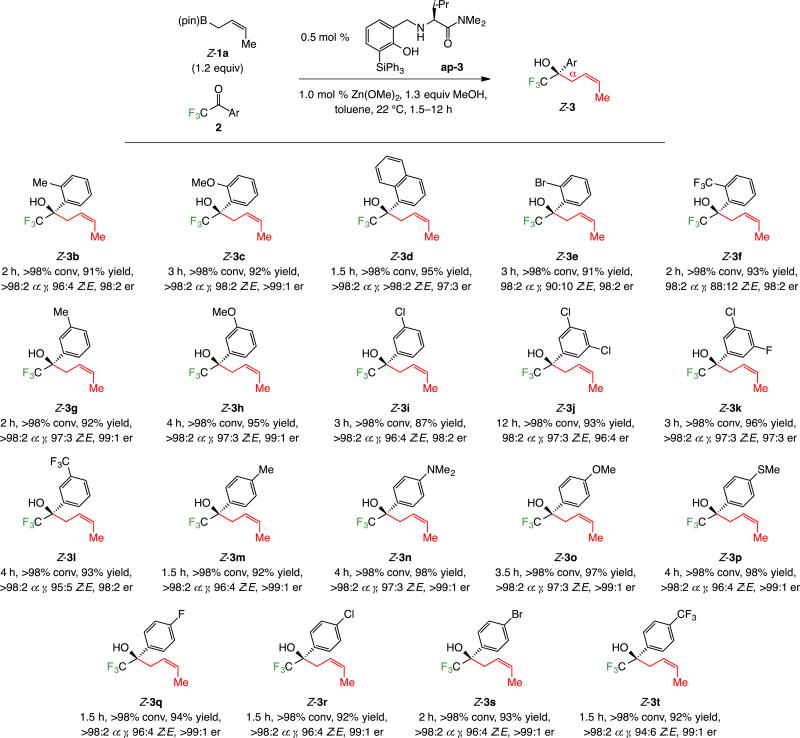
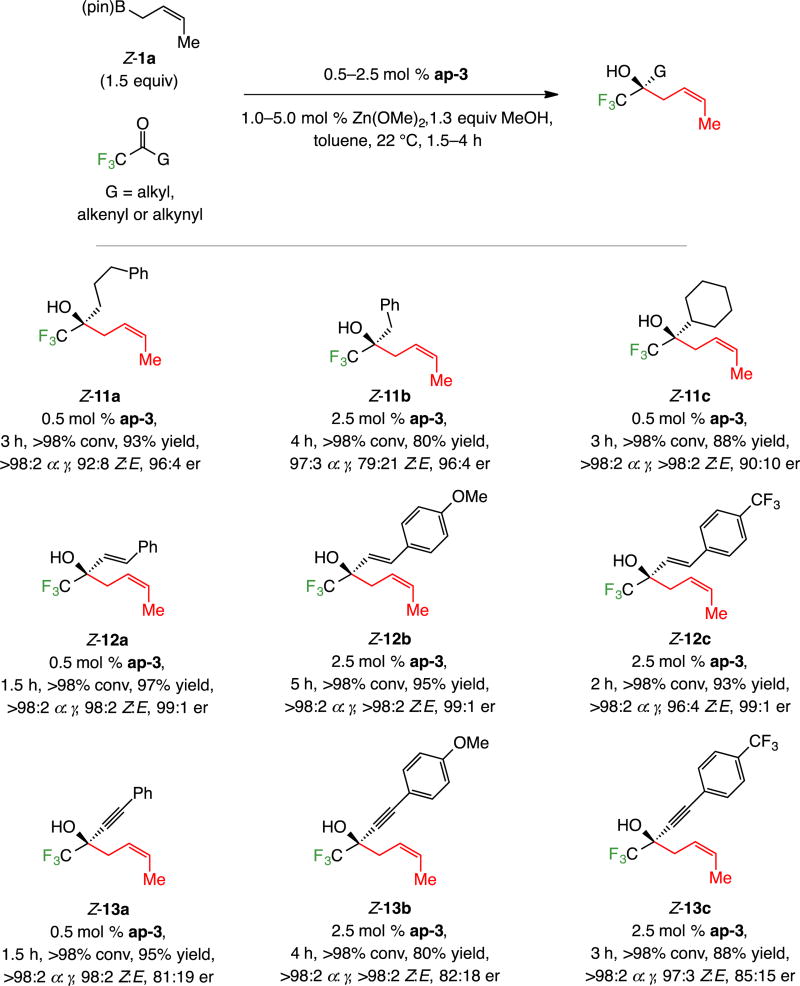
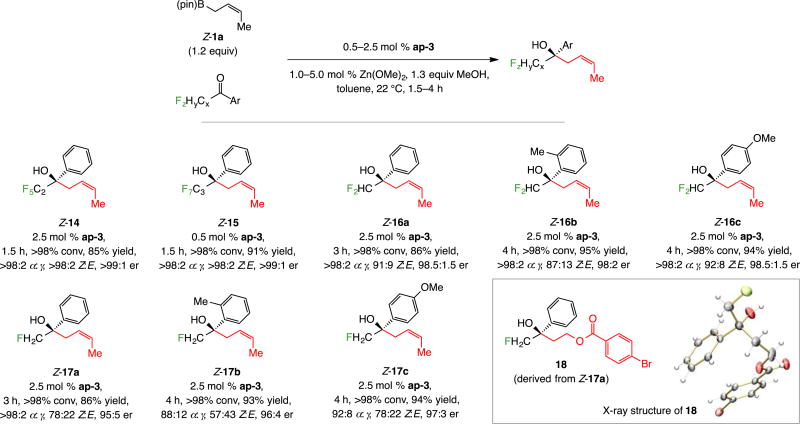
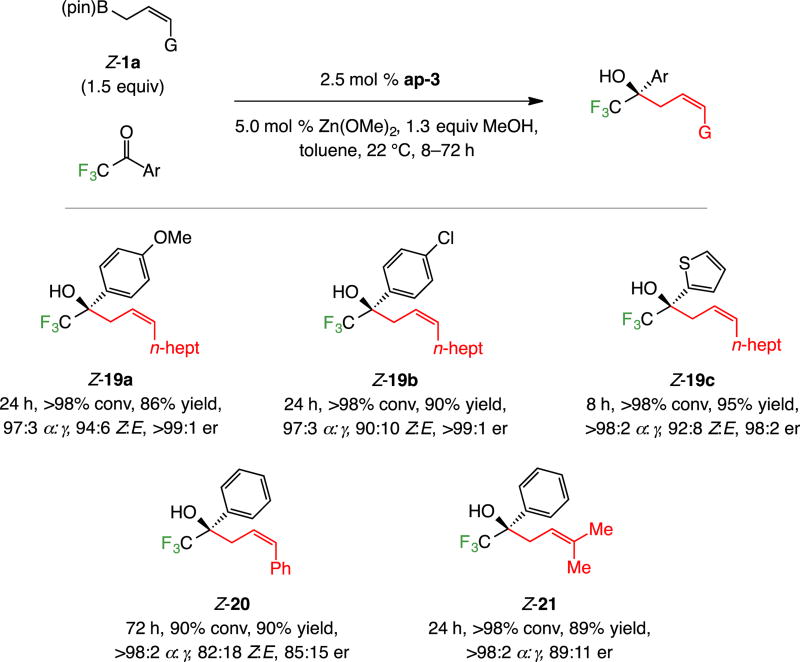
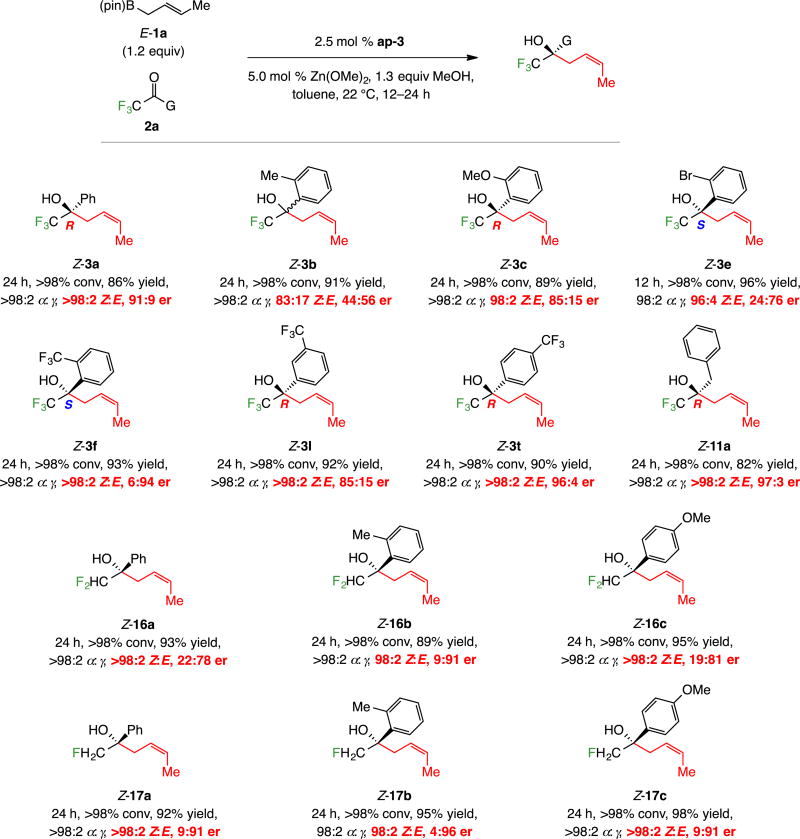
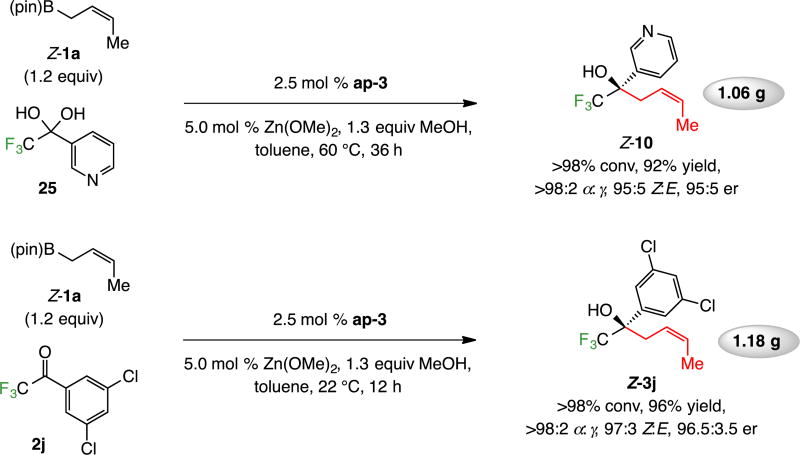
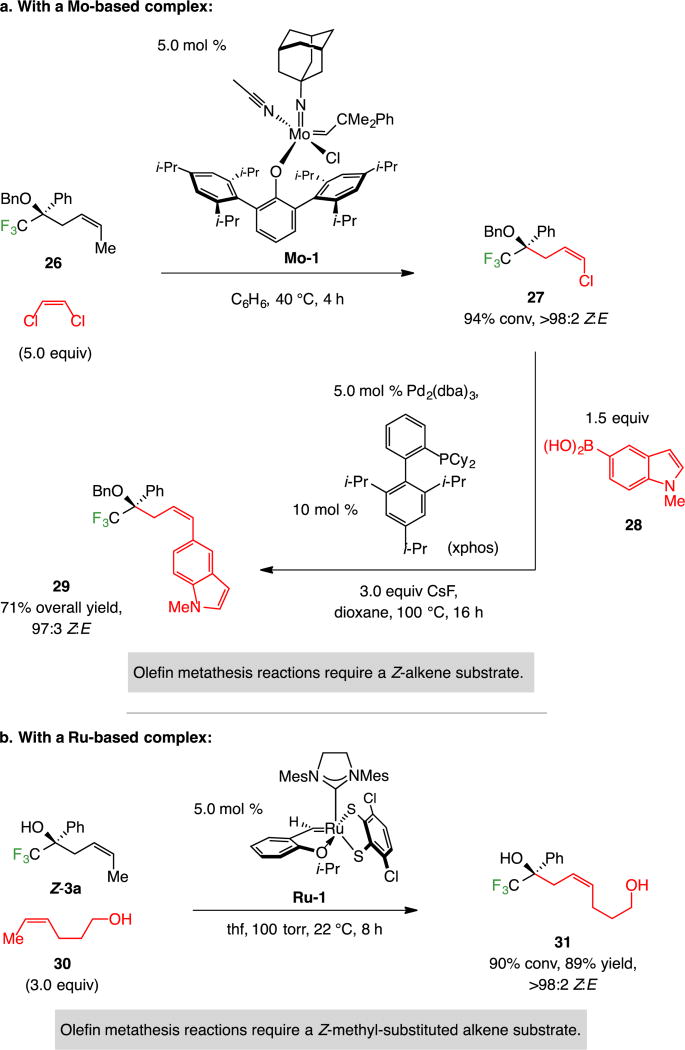
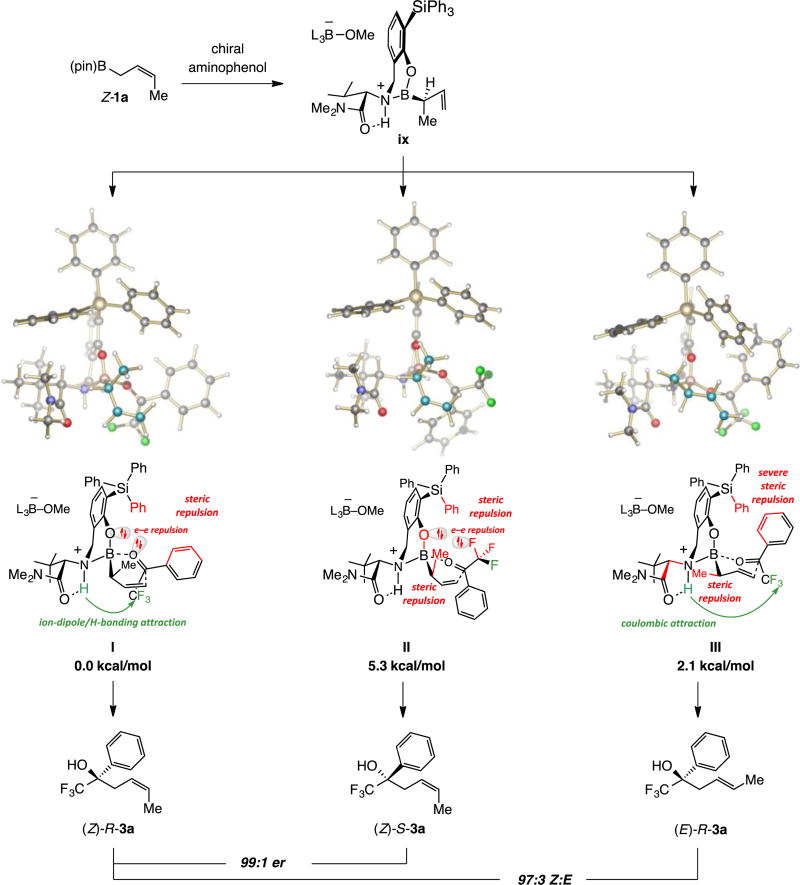
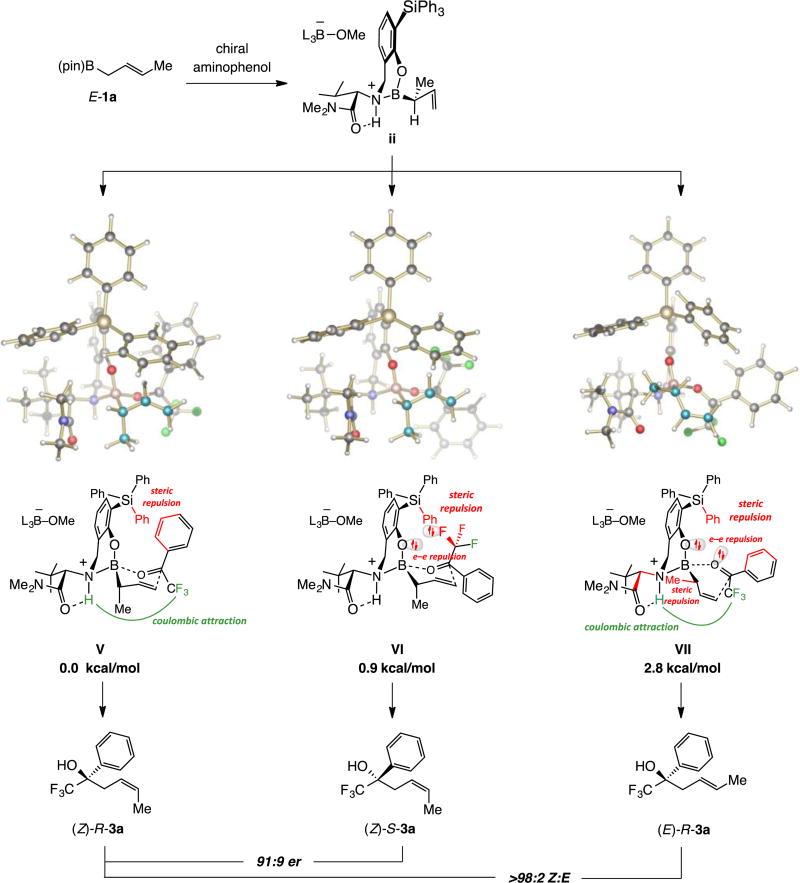
A practical method for enantioselective synthesis of fluoroalkyl-substituted Z-homoallylic tertiary alcohols has been developed. Reactions may be performed with ketones containing a polylfluoro-, trifluoro-, difluoro-, and monofluoroalkyl group along with an aryl, a heteroaryl, an alkenyl, an alkynyl, or an alkyl substituent. Readily accessible unsaturated organoboron compounds serve as reagents. Transformations were performed with 0.5-2.5 mol % of a boron-based catalyst, generated in situ from a readily accessible valine-derived aminophenol and a Z- or an E-γ-substituted boronic acid pinacol ester. With a Z organoboron reagent, additions to trifluoromethyl and polyfluoroalkyl ketones proceeded in 80-98% yield, 97:3 to >98:2 α:γ selectivity, >95:5 Z:E selectivity, and 81:19 to >99:1 enantiomeric ratio. In notable contrast to reactions with unsubstituted allylboronic acid pinacol ester, additions to ketones with a mono- or a difluoromethyl group were highly enantioselective as well. Transformations were similarly efficient and α- and Z-selective when an E-allylboronate compound was used, but enantioselectivities were lower. In certain cases, the opposite enantiomer was favored (up to 4:96 er). With a racemic allylboronate reagent that contains an allylic stereogenic center, additions were exceptionally α-selective, affording products expected from γ-addition of a crotylboron compound, in up to 97% yield, 88:12 diastereomeric ratio, and 94:6 enantiomeric ratio. Utility is highlighted by gram-scale preparation of representative products through transformations that were performed without exclusion of air or moisture and through applications in stereoselective olefin metathesis where Z-alkene substrates are required. Mechanistic investigations aided by computational (DFT) studies and offer insight into different selectivity profiles.
Figures





References
-
- Gillis EP, Eastman KJ, Hill MD, Donnelly DJ, Meanwell NA. J. Med. Chem. 2015;58:8315–8359. - PubMed
-
- Fujiwara T, O’Hagan D. J. Fluorine Chem. 2014;167:16–29.
-
- Berger R, Resnati G, Metrangolo P, Weber E, Hulliger J. Chem. Soc. Rev. 2011;40:3496–3508. - PubMed
-
- Loh TP, Zhou J-R, Li X-R. Tetrahedron Lett. 1999;40:9333–9336.
- Zhang X, Chen D, Liu X, Feng X. J. Org. Chem. 2007;72:5227–5233. - PubMed
- Haddad TD, Hirayama LC, Taynton P, Singaram B. Tetrahedron Lett. 2008;49:508–511.
-
-
For recent reviews on enantioselective synthesis through additions of allyl groups to ketones and imines and their applications, see: Yus M, González-Gómez JC, Foubelo F. Chem. Rev. 2011;111:7774–7854.For corresponding diastereoselective processes, see: Yus M, González-Gómez JC, Foubelo F. Chem. Rev. 2013;113:5595–5698.
-
Publication types
MeSH terms
Substances
Grants and funding
LinkOut - more resources
Full Text Sources
Other Literature Sources
