


Angiotensin-converting enzyme inhibitors and receptor blockers in heart failure and chronic kidney disease - Demystifying controversies
- PMID: 28648436
- PMCID: PMC5485404
- DOI: 10.1016/j.ihj.2016.08.007
Angiotensin-converting enzyme inhibitors and receptor blockers in heart failure and chronic kidney disease - Demystifying controversies
Abstract
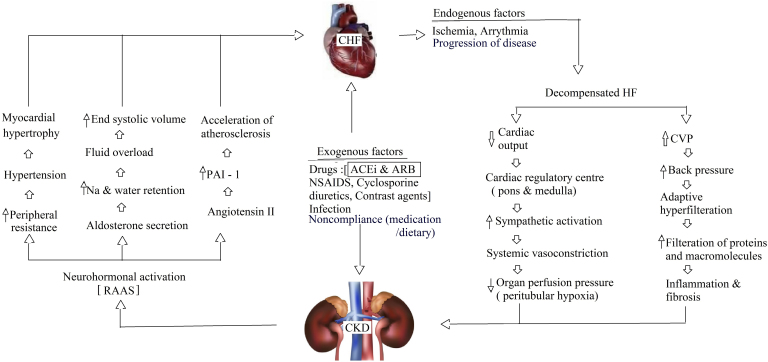
In clinical setting, congestive heart failure (CHF) and chronic kidney disease (CKD) often co-exist in patients due to common underlying predisposing factors. An intricate equilibrium between the cardiovascular and renal system is maintained through rennin angiotensin-aldosterone axis and autonomic nervous system. Consequent to favorable hemodynamic modification, angiotensin converting enzyme inhibitors (ACEI) and angiotensin receptor blocking (ARB) therapy have proven to be an indispensable aspect of heart failure management with morbidity and mortality benefit. Additionally, progression to end stage renal failure may be halted by renin angiotensin aldosterone system (RAAS) blockade in patients with preexisting renal dysfunction. However, concern over the safety of RAAS blockade in presence of renal impairment has led to profound underutilization of these drugs in CHF patients with renal insufficiency. This review aims to provide a simplified guide to pathophysiology and management options of this perplexing situation.
Keywords: ACE inhibitors; Angiotensin receptor blockers; Chronic kidney disease; Congestive heart failure; Creatinine.
Copyright © 2016 Cardiological Society of India. Published by Elsevier B.V. All rights reserved.
Figures
References
-
- Sarnak M. Kidney disease as a risk factor for development of cardiovascular disease: a statement from the American Heart Association Councils on kidney in cardiovascular disease, high blood pressure research, clinical cardiology, and epidemiology and prevention. Circulation. 2003;108(17):2154–2169. - PubMed
-
- Damman K., Tang W., Felker G. Current evidence on treatment of patients with chronic systolic heart failure and renal insufficiency. J Am Coll Cardiol. 2014;63(9):853–871. - PubMed
-
- Khalifeh N., Vychytil A., Hörl W. The role of peritoneal dialysis in the management of treatment-resistant congestive heart failure: a European perspective. Kidney Int. 2006;70:S72–S75. - PubMed
-
- KDOQI clinical practice guideline for diabetes and CKD: 2012 update. Am J Kidney Dis. 2012;60(5):850–886. - PubMed
Publication types
MeSH terms
Substances
LinkOut - more resources
Full Text Sources
Other Literature Sources
Medical
Miscellaneous
