


Latent virus reactivation in astronauts on the international space station
- PMID: 28649633
- PMCID: PMC5445581
- DOI: 10.1038/s41526-017-0015-y
Latent virus reactivation in astronauts on the international space station
Abstract
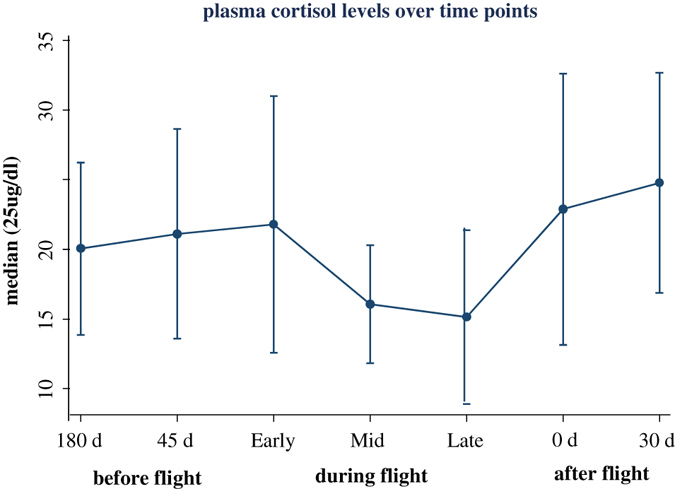
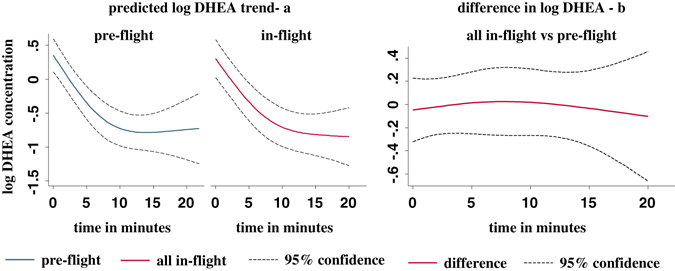
Reactivation of latent herpes viruses was measured in 23 astronauts (18 male and 5 female) before, during, and after long-duration (up to 180 days) spaceflight onboard the international space station . Twenty age-matched and sex-matched healthy ground-based subjects were included as a control group. Blood, urine, and saliva samples were collected before, during, and after spaceflight. Saliva was analyzed for Epstein-Barr virus, varicella-zoster virus, and herpes simplex virus type 1. Urine was analyzed for cytomegalovirus. One astronaut did not shed any targeted virus in samples collected during the three mission phases. Shedding of Epstein-Barr virus, varicella-zoster virus, and cytomegalovirus was detected in 8 of the 23 astronauts. These viruses reactivated independently of each other. Reactivation of Epstein-Barr virus, varicella-zoster virus, and cytomegalovirus increased in frequency, duration, and amplitude (viral copy numbers) when compared to short duration (10 to 16 days) space shuttle missions. No evidence of reactivation of herpes simplex virus type 1, herpes simplex virus type 2, or human herpes virus 6 was found. The mean diurnal trajectory of salivary cortisol changed significantly during flight as compared to before flight (P = 0.010). There was no statistically significant difference in levels of plasma cortisol or dehydoepiandosterone concentrations among time points before, during, and after flight for these international space station crew members, although observed cortisol levels were lower at the mid and late-flight time points. The data confirm that astronauts undertaking long-duration spaceflight experience both increased latent viral reactivation and changes in diurnal trajectory of salivary cortisol concentrations.
Conflict of interest statement
The authors declare no competing interest.
Figures



References
-
- Pierson, D. L., Mehta, S. K., Stowe, R. P. in Psychoneuroimmunology 4th edn, (ed Ader, R.) Ch. Reactivation of latent herpes viruses in astronauts (Elsevier Academic Press, 2007).
LinkOut - more resources
Full Text Sources
Other Literature Sources
