


Constitutional variants are not associated with HER2-positive breast cancer: results from the SIGNAL/PHARE clinical cohort
- PMID: 28649644
- PMCID: PMC5445615
- DOI: 10.1038/s41523-017-0005-y
Constitutional variants are not associated with HER2-positive breast cancer: results from the SIGNAL/PHARE clinical cohort
Abstract
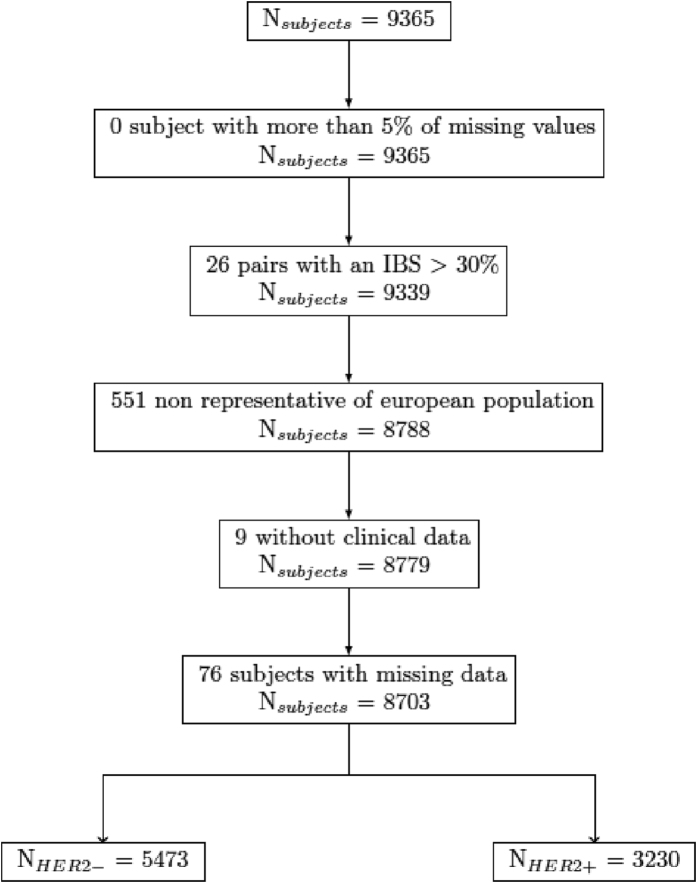
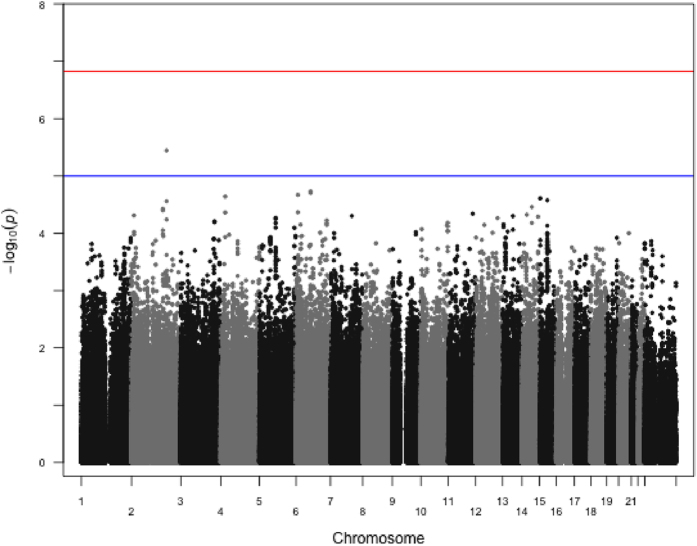
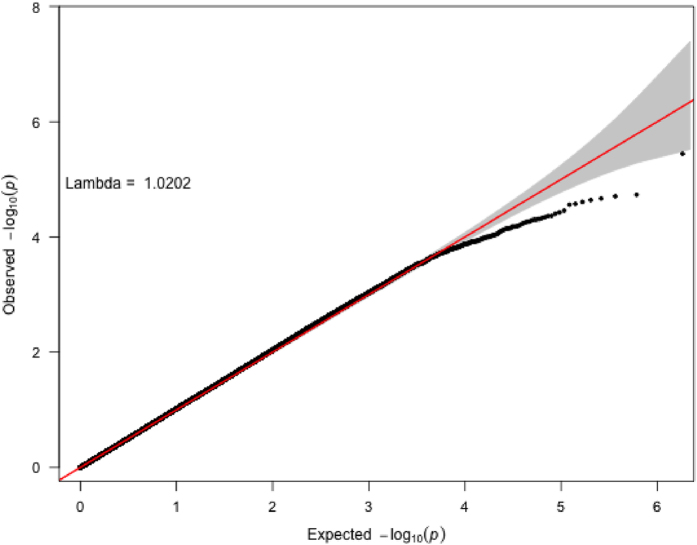
Human epidermal growth factor receptor 2-positive breast cancer is a subtype of interest regarding its outcome and the impressive impact of human epidermal growth factor receptor 2 targeted therapy. Constitutional variants may be involved in the aetiology of human epidermal growth factor receptor 2-positive breast cancer, and we propose a case-case study to test the hypothesis that single nucleotide polymorphisms may be associated with human epidermal growth factor receptor 2 status. A Genome-Wide Association Study was used in a cohort of 9836 patients from the SIGNAL/PHARE study (NCT00381901-RECF1098). The main goal was to identify variants specifically related to human epidermal growth factor receptor 2-positive breast cancer. A two-staged genotyping strategy was carried out to cover as large a proportion of the genome as possible. All subjects were genotyped using the Illumina HumanCore Exome chip set. Principal Components Analysis and k-means were then used to characterize the ancestry of the participants. A random sample of subjects from the main "European" cluster was genotyped with the Omni5 chip set. These data were then used to impute missing genotypes from the remaining subjects genotyped only using the HumanCore Exome array. From the 9836 patients, a total of 8703 cases including 3230 patients with human epidermal growth factor receptor 2-positive breast cancer were analyzed. Despite having 80% power to detect an odds ratio of 1.23 in this population, no variant achieved genome-wide significance for association with the occurrence of human epidermal growth factor receptor 2-positive breast cancer vs. any other subtype of breast tumour. Our study was unable to identify constitutional polymorphisms that are strongly associated with human epidermal growth factor receptor 2-positive status among breast cancer patients.
Figures
References
LinkOut - more resources
Full Text Sources
Other Literature Sources
Research Materials
Miscellaneous
