


New targeted therapies for relapsed pediatric acute lymphoblastic leukemia
- PMID: 28649891
- PMCID: PMC6028000
- DOI: 10.1080/14737140.2017.1347507
New targeted therapies for relapsed pediatric acute lymphoblastic leukemia
Abstract
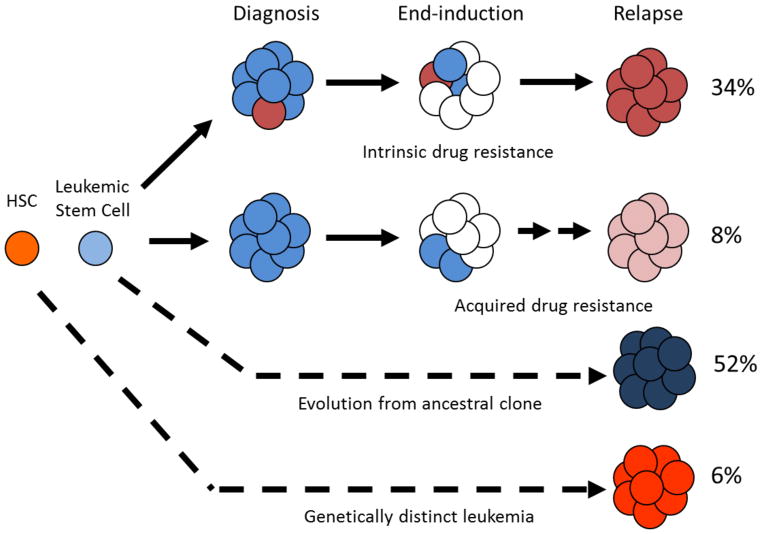
The improvement in outcomes for children with acute lymphoblastic leukemia (ALL) is one of the greatest success stories of modern oncology however the prognosis for patients who relapse remains dismal. Recent discoveries by high resolution genomic technologies have characterized the biology of relapsed leukemia, most notably pathways leading to the drug resistant phenotype. These observations open the possibility of targeting such pathways to prevent and/or treat relapse. Likewise, early experiences with new immunotherapeutic approaches have shown great promise. Areas covered: We performed a literature search on PubMed and recent meeting abstracts using the keywords below. We focused on the biology and clonal evolution of relapsed disease highlighting potential new targets of therapy. We further summarized the results of early trials of the three most prominent immunotherapy agents currently under investigation. Expert commentary: Discovery of targetable pathways that lead to drug resistance and recent breakthroughs in immunotherapy show great promise towards treating this aggressive disease. The best way to treat relapse, however, is to prevent it which makes incorporation of these new approaches into frontline therapy the best approach. Challenges remain to balance efficacy with toxicity and to prevent the emergence of resistant subclones which is why combining these newer agents with conventional chemotherapy will likely become standard of care.
Keywords: Acute lymphoblastic leukemia; bispecific T-cell engagers; chimeric antigen receptor T-cells; clonal evolution; immunotherapy; monoclonal antibodies; relapse; targeted therapy.
Figures
References
-
- Raetz EA, Bhatla T. Where do we stand in the treatment of relapsed acute lymphoblastic leukemia? Hematology Am Soc Hematol Educ Program. 2012;2012:129–136. - PubMed
-
- Carroll WL, Raetz EA. Clinical and laboratory biology of childhood acute lymphoblastic leukemia. J Pediatr. 2012;160(1):10–18. - PubMed
Publication types
MeSH terms
Substances
Grants and funding
LinkOut - more resources
Full Text Sources
Other Literature Sources
