A study of ticks and tick-borne livestock pathogens in Pakistan
- PMID: 28650978
- PMCID: PMC5501686
- DOI: 10.1371/journal.pntd.0005681
A study of ticks and tick-borne livestock pathogens in Pakistan
Abstract
Background: As obligate blood-feeding arthropods, ticks transmit pathogens to humans and domestic animals more often than other arthropod vectors. Livestock farming plays a vital role in the rural economy of Pakistan, and tick infestation causes serious problems with it. However, research on tick species diversity and tick-borne pathogens has rarely been conducted in Pakistan. In this study, a systematic investigation of the tick species infesting livestock in different ecological regions of Pakistan was conducted to determine the microbiome and pathobiome diversity in the indigenous ticks.
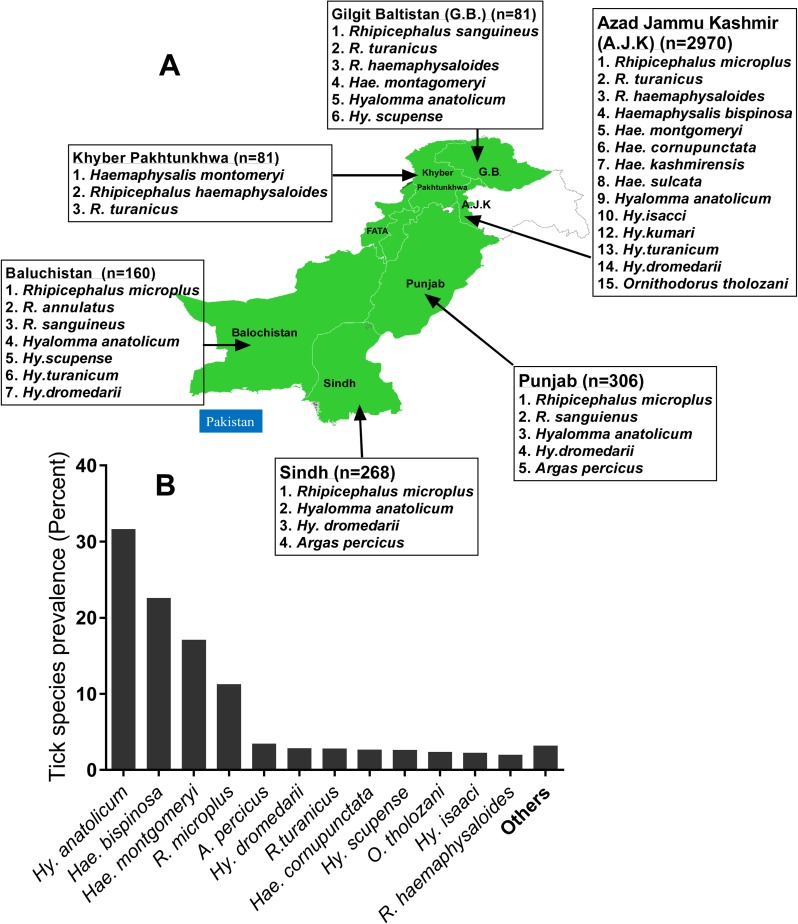
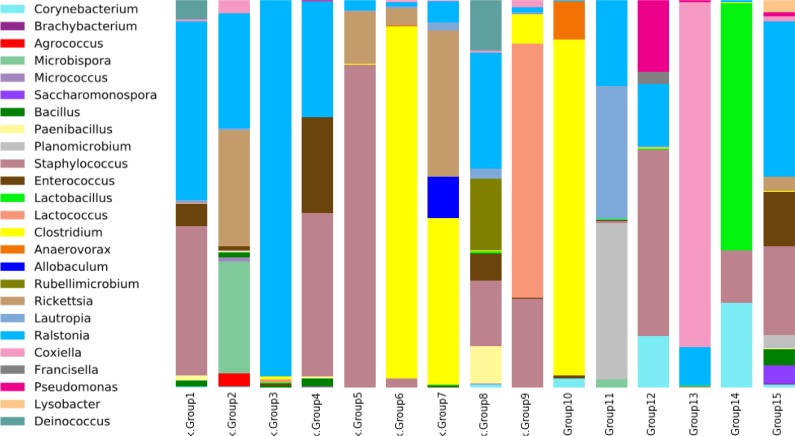
Methodology/principal findings: A total of 3,866 tick specimens were morphologically identified as 19 different tick species representing three important hard ticks, Rhipicephalus, Haemaphysalis and Hyalomma, and two soft ticks, Ornithodorus and Argas. The bacterial diversity across these tick species was assessed by bacterial 16S rRNA gene sequencing using a 454-sequencing platform on 10 of the different tick species infesting livestock. The notable genera detected include Ralstonia, Clostridium, Staphylococcus, Rickettsia, Lactococcus, Lactobacillus, Corynebacterium, Enterobacter, and Enterococcus. A survey of Spotted fever group rickettsia from 514 samples from the 13 different tick species generated rickettsial-specific amplicons in 10% (54) of total ticks tested. Only three tick species Rhipicephalus microplus, Hyalomma anatolicum, and H. dromedarii had evidence of infection with "Candidatus Rickettsia amblyommii" a result further verified using a rompB gene-specific quantitative PCR (qPCR) assay. The Hyalomma ticks also tested positive for the piroplasm, Theileria annulata, using a qPCR assay.
Conclusions/significance: This study provides information about tick diversity in Pakistan, and pathogenic bacteria in different tick species. Our results showed evidence for Candidatus R. amblyommii infection in Rhipicephalus microplus, H. anatolicum, and H. dromedarii ticks, which also carried T. annulata.
Conflict of interest statement
The authors have declared that no competing interests exist.
Figures
References
-
- | Ministry of Finance | Government of Pakistan | [Internet]. [cited 4 Jan 2017]. Available: http://finance.gov.pk/survey_1314.html
-
- de Castro JJ. Sustainable tick and tickborne disease control in livestock improvement in developing countries. Vet Parasitol. 1997;71: 77–97. doi: 10.1016/S0304-4017(97)00033-2 - DOI - PubMed
-
- de Castro JJ, James AD, Minjauw B, Di Giulio GU, Permin A, Pegram RG, et al. Long-term studies on the economic impact of ticks on Sanga cattle in Zambia. Exp Appl Acarol. Kluwer Academic Publishers; 1997;21: 3–19. doi: 10.1023/A:1018477202022 - DOI - PubMed
-
- Hoogstraal H, Varma MGR. Haemaphysalis cornupunctata sp. n. and H. kashmirensis sp. n. from Kashmir, with Notes on H. sundrai Sharif and H. sewelli Sharif of India and Pakistan (Ixodoidea, Ixodidae). J Parasitol. 1962;48: 185 doi: 10.2307/3275561 - DOI
-
- Robertson RG, Wiseman CL, Traub R. Tick-borne rickttsiae of the spotted fever group in West Pakistan. I. Isolation of strains from ticks in different habitats. Am J Epidemiol. Oxford University Press; 1970;92: 382–94. - PubMed
MeSH terms
Grants and funding
LinkOut - more resources
Full Text Sources
Other Literature Sources
Medical
Research Materials