


The economic burden of human papillomavirus-related precancers and cancers in Sweden
- PMID: 28651012
- PMCID: PMC5484479
- DOI: 10.1371/journal.pone.0179520
The economic burden of human papillomavirus-related precancers and cancers in Sweden
Erratum in
-
Correction: The economic burden of human papillomavirus-related precancers and cancers in Sweden.PLoS One. 2018 Jul 9;13(7):e0200554. doi: 10.1371/journal.pone.0200554. eCollection 2018. PLoS One. 2018. PMID: 29985954 Free PMC article.
Abstract
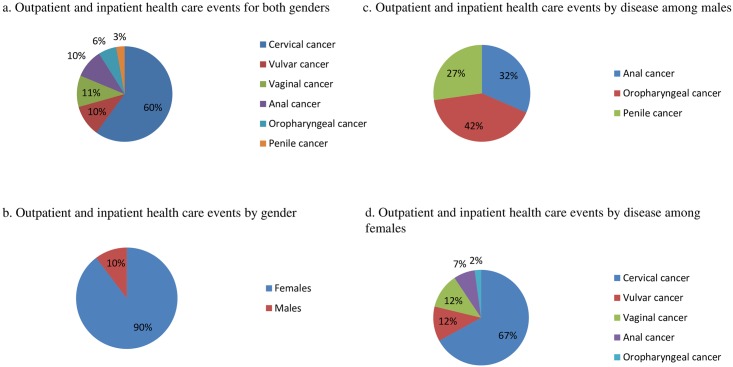
Background: High-risk (HR) human papillomavirus (HPV) infection is an established cause of malignant disease. We used a societal perspective to estimate the cost of HR HPV-related cervical, vulvar, vaginal, anal, and penile precancer and cancer, and oropharyngeal cancer in Sweden in 2006, 1 year before HPV vaccination became available in the country.
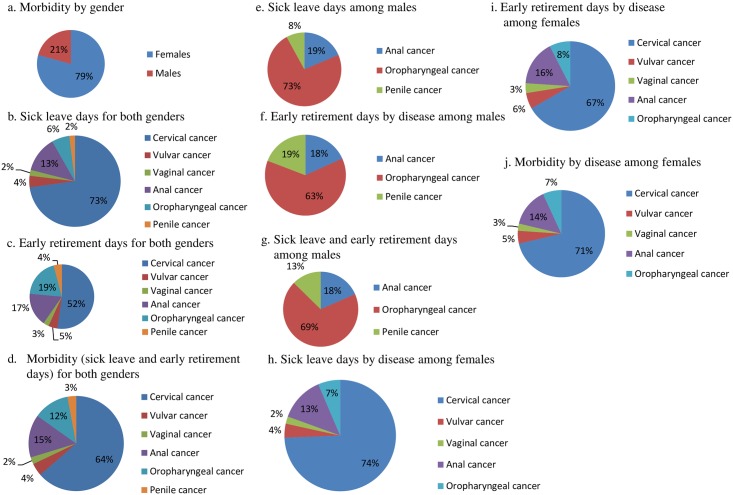
Materials and methods: This prevalence-based cost-of-illness study used diagnosis-specific data from national registries to determine the number of HR HPV-related precancers and cancers. The HR HPV-attributable fractions of these diseases were derived from a literature review and applied to the total burden to estimate HR HPV-attributable costs. Direct costs were based on health care utilization and indirect costs on loss of productivity due to morbidity (i.e., sick leave and early retirement) and premature mortality.
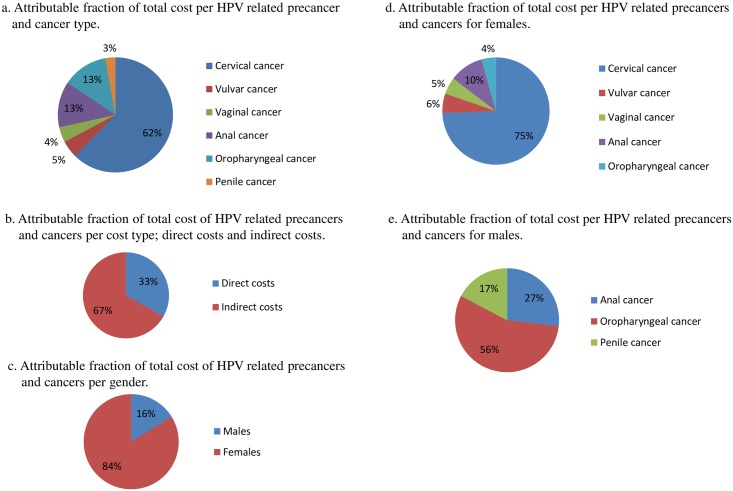
Results: The total annual cost of all HR HPV-attributable precancers and cancers was €94 million (€10.3/inhabitant). Direct costs accounted for €31.3 million (€3.4/inhabitant) of the total annual cost, and inpatient care amounted to €20.7 million of direct costs. Indirect costs made up €62.6 million (€6.9/inhabitant) of the total annual cost, and premature mortality amounted to €36 million of indirect costs. Cervical precancer and cancer was most costly (total annual cost €58.4 million). Among cancers affecting both genders, anal precancer and cancer, and oropharyngeal cancer were the most costly (€11.2 million and €11.9 million, respectively). For oropharyngeal cancer, males had the highest health care utilization and represented 71% of the total annual cost. Penile precancer and cancer was least costly (€2.6 million).
Conclusion: The economic burden of HR HPV-related precancers and cancers is substantial. The disease-related management and treatment costs we report are relevant as a point of reference for future economic evaluations investigating the overall benefits of HPV vaccination in females and males in Sweden.
Conflict of interest statement
Figures
References
-
- Wiley D, Masongsong E. Human papillomavirus: the burden of infection. Obstet Gynecol Surv. 2006;61(6 Suppl 1): S3–S14. doi: 10.1097/01.ogx.0000221010.82943.8c - DOI - PubMed
-
- Walboomers JM, Jacobs MV, Manos MM, Bosch FX, Kummer JA, Shah KV, et al. Human papillomavirus is a necessary cause of invasive cervical cancer worldwide. J Pathol. 1999;189: 12–19. doi: 10.1002/(SICI)1096-9896(199909)189:1<12::AID-PATH431>3.0.CO;2-F - DOI - PubMed
-
- Clifford GM, Smith JS, Plummer M, Muñoz N, Franceschi S. Human papillomavirus types in invasive cervical cancer worldwide: a meta-analysis. Br J Cancer. 2003;88: 63–73. doi: 10.1038/sj.bjc.6600688 - DOI - PMC - PubMed
-
- Perez-Ordonez B, Beauchemin M, Jordan RC. Molecular biology of squamous cell carcinoma of the head and neck. J Clin Pathol. 2006;59: 445–453. doi: 10.1136/jcp.2003.007641 - DOI - PMC - PubMed
-
- von Krogh G. Management of anogenital warts (condylomata acuminata). Eur J Dermatol. 2001;11: 598–603; quiz 4. - PubMed
MeSH terms
Substances
LinkOut - more resources
Full Text Sources
Other Literature Sources
Medical
