


Systolic Blood Pressure and Biochemical Assessment of Adherence: A Cross-Sectional Analysis in the Emergency Department
- PMID: 28652467
- PMCID: PMC5531074
- DOI: 10.1161/HYPERTENSIONAHA.117.09659
Systolic Blood Pressure and Biochemical Assessment of Adherence: A Cross-Sectional Analysis in the Emergency Department
Abstract
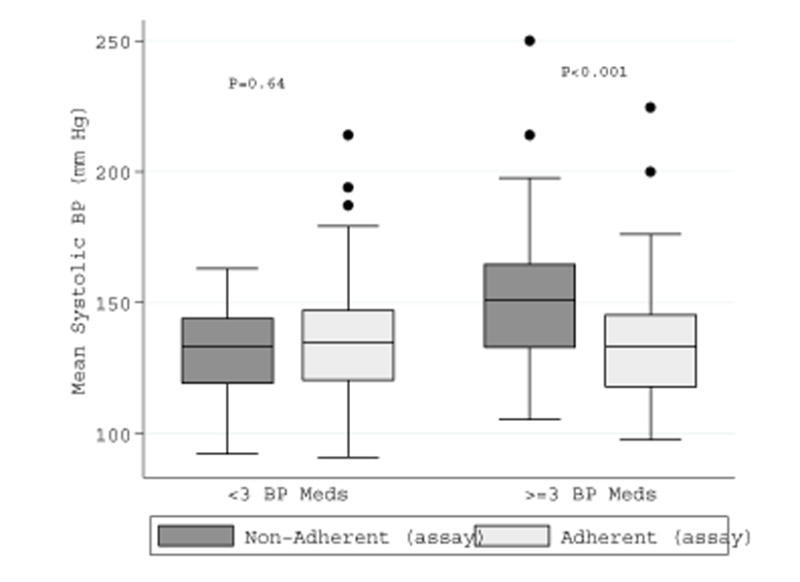
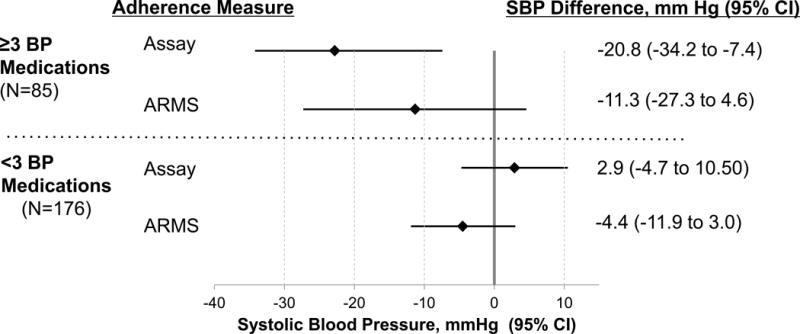
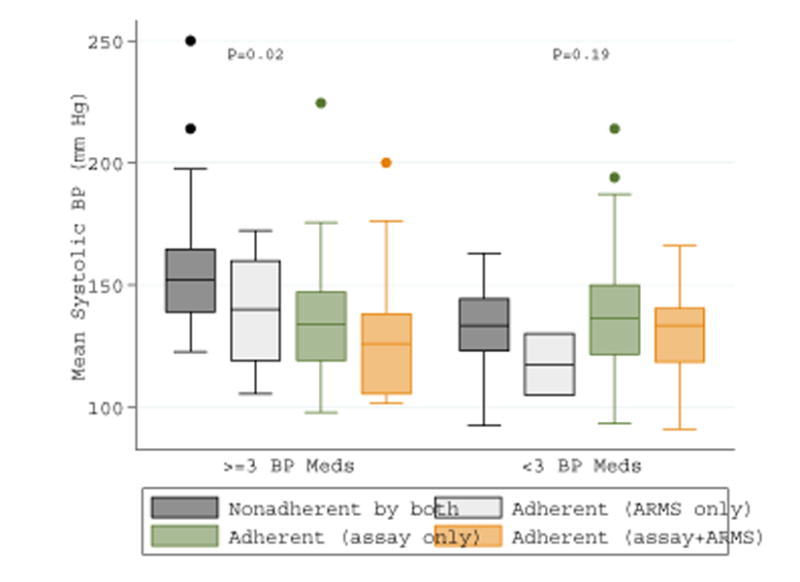
Elevated blood pressure (BP) is common in the emergency department (ED), but the relationship between antihypertensive medication adherence and BP in the ED is unclear. This cross-sectional study tested the hypothesis that higher antihypertensive adherence is associated with lower systolic BP (SBP) in the ED among adults with hypertension who sought ED care at an academic hospital from July 2012 to April 2013. Biochemical assessment of antihypertensive adherence was performed using a mass spectrometry blood assay, and the primary outcome was average ED SBP. Analyses were stratified by number of prescribed antihypertensives (<3, ≥3) and adjusted for age, sex, race, insurance, literacy, numeracy, education, body mass index, and comorbidities. Among 85 patients prescribed ≥3 antihypertensives, mean SBP for adherent patients was 134.4 mm Hg (±26.1 mm Hg), and in adjusted analysis was -20.8 mm Hg (95% confidence interval, -34.2 to -7.4 mm Hg; P=0.003) different from nonadherent patients. Among 176 patients prescribed <3 antihypertensives, mean SBP was 135.5 mm Hg (±20.6 mm Hg) for adherent patients, with no difference by adherence in adjusted analysis (+2.9 mm Hg; 95% confidence interval, -4.7 to 10.5 mm Hg; P=0.45). Antihypertensive nonadherence identified by biochemical assessment was common and associated with higher SBP in the ED among patients who had a primary care provider and health insurance and who were prescribed ≥3 antihypertensives. Biochemical assessment of antihypertensives could help distinguish medication nonadherence from other contributors to elevated BP and identify target populations for intervention.
Keywords: blood pressure; emergency medical services; hypertension; literacy; mass spectrometry; medication adherence.
© 2017 American Heart Association, Inc.
Conflict of interest statement
The authors have no relevant competing interests. A portion of the results were presented the American Heart Association’s High Blood Pressure Research Council meeting on September 14–17, 2015 in Washington D.C.
Figures
Comment in
-
Detecting Nonadherence to Antihypertensive Treatment: Any Time, Anywhere?Hypertension. 2017 Aug;70(2):257-258. doi: 10.1161/HYPERTENSIONAHA.117.09739. Epub 2017 Jun 26. Hypertension. 2017. PMID: 28652471 No abstract available.
References
-
- Writing Group M. Mozaffarian D, Benjamin EJ, Go AS, et al. American Heart Association Statistics C and Stroke Statistics S Executive Summary: Heart Disease and Stroke Statistics-2016 Update: A Report From the American Heart Association. Circulation. 2016;133:447–454. - PubMed
-
- Peterson AM, Takiya L, Finley R. Meta-analysis of trials of interventions to improve medication adherence. Am J Health Syst Pharm. 2003;60:657–665. - PubMed
-
- Osterberg L, Blaschke T. Adherence to medication. N Engl J Med. 2005;353:487–497. - PubMed
Publication types
MeSH terms
Substances
Grants and funding
LinkOut - more resources
Full Text Sources
Other Literature Sources
Medical
Miscellaneous
