


Low-Level Laser Therapy in Russia: History, Science and Practice
- PMID: 28652897
- PMCID: PMC5474383
- DOI: 10.15171/jlms.2017.11
Low-Level Laser Therapy in Russia: History, Science and Practice
Abstract
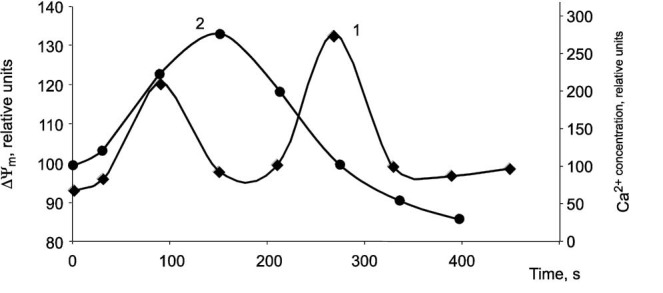
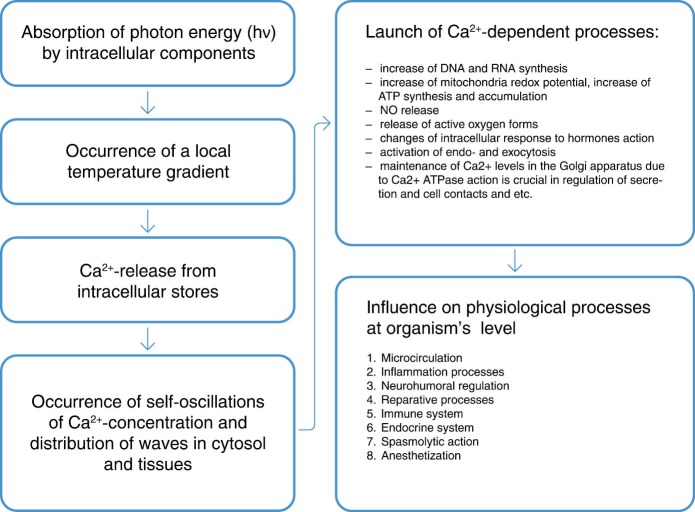
In Russia (formerly USSR) study of biomodulation action (BMA) mechanisms of low-intensity laser irradiation (LILI) began in 1964, immediately after the development of lasers. During the period from 1965 to 1972 several dozens of scientific conferences were held, hundreds of studies were published. Generally, secondary mechanisms and results of LILI effect on patients with various diseases were studied. This data was immediately implemented into practical medicine in the fields of oncology, surgery, dermatology and dentistry, and since 1974 low level laser therapy (LLLT) is included in the standard of state medical care. For 50 years no less than 1000 books were published (monographs, collections, methodical and clinical materials), thousands of researches were carried out. Primary mechanism and patterns of interaction of LILI with acceptors within cells can be represented in the following order: absorption of photon's energy - emergence of a local temperature gradient - release of Ca2+ from intracellular stores - stimulating Ca2+-dependent processes. Understanding of this process allowed the explanation of all known secondary effects, optimized methods and extremely increased effectiveness of LLLT. Owing to the knowledge of BMA mechanisms of LILI, numerous associated and combined LLLT techniques were developed and are widely used nowadays: locally, on the projection of internal organs, laser acupuncture, reflexology, intracavitary, transdermal and intravenous laser blood illumination, magnetic-laser therapy, laser phoresis, laser-vacuum massage, biomodulation, etc. About 400 000 laser therapeutic devices are used in Russian practical healthcare. Unique, having no analogues in the world devices, are produced - red pulsed laser diodes (wavelength 635 nm, power 5-40 W, pulse duration 100 ns, frequency 10 000 Hz) are designed specially for effective laser therapy.
Keywords: Laser biomodulation; Low-level laser therapy; Mechanisms and methods; Russia.
Figures

References
-
- Tunér J, Hode L. It’s all in the parameters: a critical analysis of some well-known negative studies on lowlevel laser therapy. J Clin Laser Med Surg. 1998;16(5):245–248. - PubMed
-
- Ohshiro Т. Light and life: a review of low reactive-level laser therapy, following 13 year’s experience in over 12000 patients. Laser Ther. 1993;5(1):5–22.
-
- Zhou YC. LLLT in the people’s republic of China. Laser Ther. 1991;3(1):5–9.
-
- McKibbin LS, Downie R. LLLT in Canada. Laser Ther. 1991;3(1):45–47.
-
- Baxter GD, Bell AJ, Allen JM, Ravey J. Low level laser therapy: current clinical practice in Northern Ireland. Physiotherapy. 1991;77(3):171–8.
Publication types
LinkOut - more resources
Full Text Sources
Other Literature Sources
Miscellaneous