. 2017 Jun 24:21:13.
doi: 10.1186/s40824-017-0099-1. eCollection 2017.

Anticancer activity of drug-loaded calcium phosphate nanocomposites against human osteosarcoma

Affiliations

Anticancer activity of drug-loaded calcium phosphate nanocomposites against human osteosarcoma

Kyoung Dan Son et al. Biomater Res. .

Abstract

Background: Calcium phosphate (CaP) based nanoparticles are considered to be ideal drug carriers for delivery of anticancer drugs because of their excellent biocompatibility and pH responsiveness. However, CaP nanoparticles have the problems of limited drug load capacity, initial burst release, and short-term release. Thus, we prepared the CaP nanocomposites containing anticancer drug such as caffeic acid (CA-NP), chlorogenic acid (CG-NP), or cisplatin (CP-NP) in the presence of alginate as a polymer template to control the release rate of drugs.

Results: The drug-loaded CaP nanocomposites exhibited spherical shape with a size of under 100 nm and the size of nanocomposites was hardly affected by the addition of drug. UV-visible spectroscopic analysis confirmed the insertion of drug into the CaP nanocomposites. These nanocomposites showed an initial burst release of drug, followed by a prolonged release, in which the release profile of drugs was depended on the solution pH. In addition, the drug-loaded CaP nanocomposites revealed anticancer activity on human osteosarcoma in a manner dependent on concentration of drugs and time.

Conclusions: The drug-loaded CaP nanocomposites can contribute to the development of a new generation of controlled drug release carriers for chemotherapy of cancers.

Keywords: Anticancer activity; Calcium phosphate; Controlled release; Drug delivery; Nanocomposite.


Figures
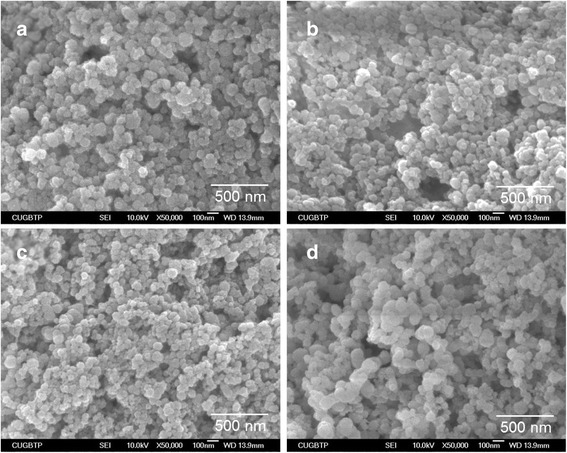
Fig. 1
Fig. 1
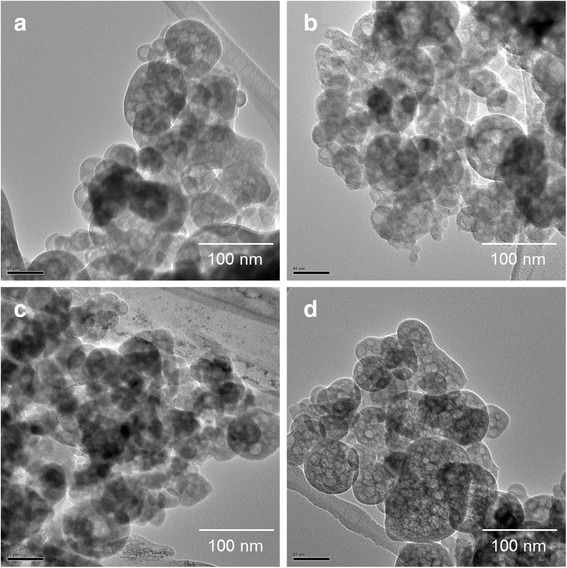
SEM micrographs of the drug-free and drug-loaded CaP nanocomposites: (a) SA-NP (drug free), (b) CA-NP (caffeic acid), (c) CG-NP (chlorogenic acid), and (d) CP-NP (cisplatin)
Fig. 2
Fig. 2
SEM micrographs of the drug-free and drug-loaded CaP nanocomposites: (a) SA-NP, (b) CA-NP, (c) CG-NP, and (d) CP-NP
Fig. 3
Fig. 3
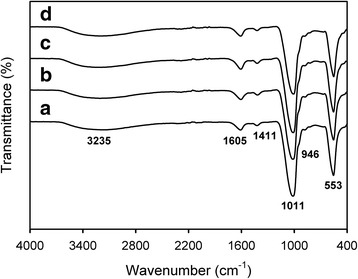
FT-IR spectra of (a) SA-NP, (b) CA-NP, (c) CG-NP, and (d) CP-NP
Fig. 4
Fig. 4
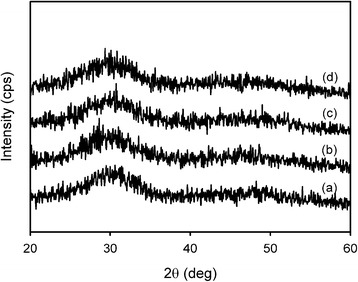
X-ray diffraction patterns of (a) SA-NP, (b) CA-NP, (c) CG-NP, and (d) CP-NP
Fig. 5
Fig. 5
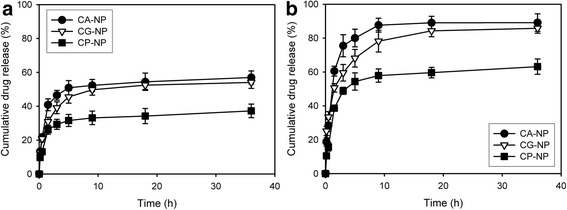
The cumulative release profiles of drugs from the nanocomposites in different pH of 0.01 M DPBS at 37 °C: (a) 7.4 and (b) 4.5
Fig. 6
Fig. 6
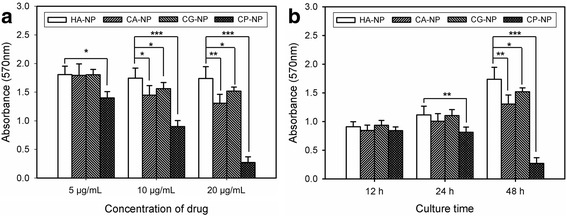
In vitro anticancer activity of the drug-loaded CaP nanocomposites on MG-63 cells. The cells were incubated (a) with different concentration of nanocomposites (5–20 μg/mL of drug) for 48 h and (b) with nanocomposites containing 20 μg/mL of drug for different culture time (n = 5). The same amount of SA-NP with CA-NP was used as a reference standard. (p* ˂0.05, p** ˂0.01, p*** ˂0.001)
Fig. 7
Fig. 7
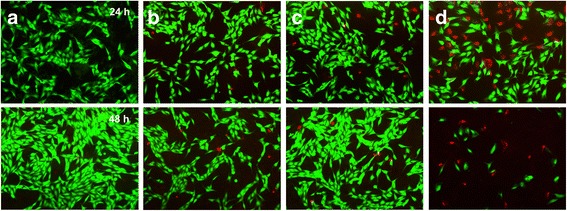
Live/Dead fluorescence microscopy images of MG-63 cells stained with calcein-AM (green) and EthD-1 (red) in the presence of (a) SA-NP, (b) CA-NP, (c) CG-NP, and (d) CP-NP. The same amount of SA-NP with CA-NP was used as a reference standard

References

    1. Ding Y, Zhai K, Pei P, Lin Y, Zhu H, Shao M, Yang X, Tao W. Encapsulation of cisplatin in a pegylated calcium phosphate nanoparticle (CPNP) for enhanced cytotoxicity to cancerous cells. J Colloid Interface Sci. 2017;493:181–189. doi: 10.1016/j.jcis.2017.01.032. - DOI - PubMed
    1. Fang J, Nakamura H, Maeda H. The EPR effect: unique features of tumor blood vessels for drug delivery, factors involved, and limitations and augmentation of the effect. Adv Drug Deliv Rev. 2011;63:136–151. doi: 10.1016/j.addr.2010.04.009. - DOI - PubMed
    1. Salama A, El-Sakhawy M. Preparation of polyelectrolyte/calcium phosphate hybrids for drug delivery application. Carbohydr Polym. 2014;113:500–506. doi: 10.1016/j.carbpol.2014.07.022. - DOI - PubMed
    1. Zhou ZF, Sun TW, Chen F, Zuo DQ, Wang HS, Hua YQ, Cai ZD, Tan J. Calcium phosphate-phosphorylated adenosine hybrid microspheres for anti-osteosarcoma drug delivery and osteogenic differentiation. Biomaterials. 2017;121:1–14. doi: 10.1016/j.biomaterials.2016.12.031. - DOI - PubMed
    1. Wang S, Wang X, Xu H, Abe H, Tan Z, Zhao Y, Guo J, Naito M, Ichikawa H, Fukumori Y. Towards sustained delivery of small molecular drugs using hydroxyapatite microspheres as the vehicle. Adv Powder Technol. 2010;21:268–272. doi: 10.1016/j.apt.2009.12.001. - DOI

LinkOut - more resources