


Attentional focus affects how events are segmented and updated in narrative reading
- PMID: 28653273
- PMCID: PMC8684441
- DOI: 10.3758/s13421-017-0707-2
Attentional focus affects how events are segmented and updated in narrative reading
Abstract
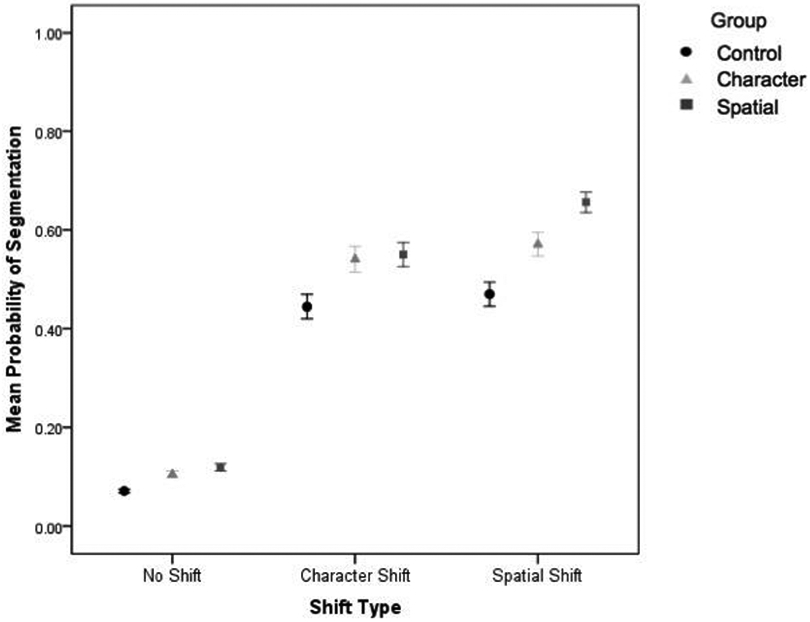
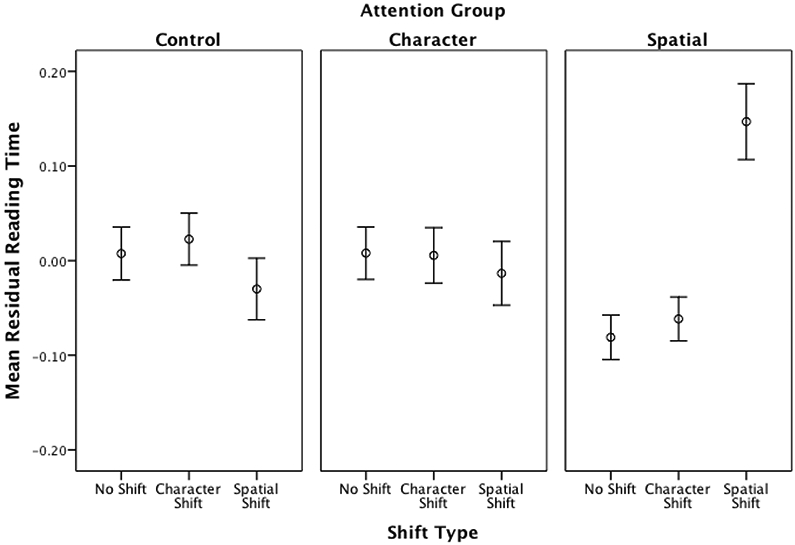
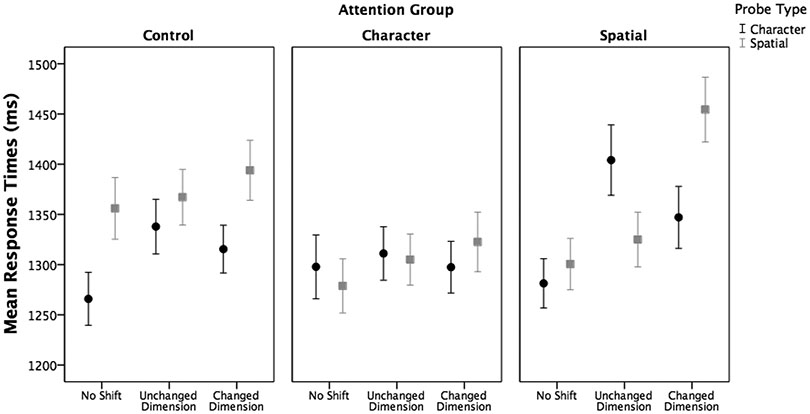
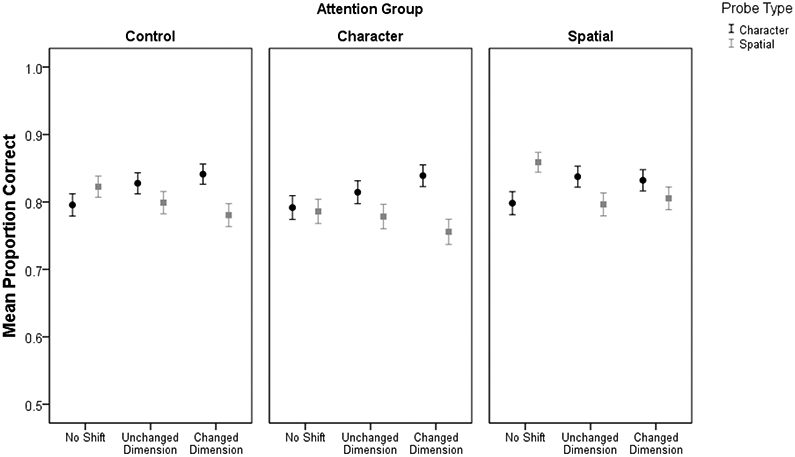
Readers generate situation models representing described events, but the nature of these representations may differ depending on the reading goals. We assessed whether instructions to pay attention to different situational dimensions affect how individuals structure their situation models (Exp. 1) and how they update these models when situations change (Exp. 2). In Experiment 1, participants read and segmented narrative texts into events. Some readers were oriented to pay specific attention to characters or space. Sentences containing character or spatial-location changes were perceived as event boundaries-particularly if the reader was oriented to characters or space, respectively. In Experiment 2, participants read narratives and responded to recognition probes throughout the texts. Readers who were oriented to the spatial dimension were more likely to update their situation models at spatial changes; all readers tracked the character dimension. The results from both experiments indicated that attention to individual situational dimensions influences how readers segment and update their situation models. More broadly, the results provide evidence for a global situation model updating mechanism that serves to set up new models at important narrative changes.
Keywords: Event segmentation; Global updating; Incremental updating; Situation model updating; Text comprehension.
Figures
References
-
- Albrecht JE & O’Brien EJ (1993). Updating a mental model: Maintaining both local and global coherence. Journal of Experimental Psychology: Learning, Memory, and Cognition, 19, 1061–1070.
-
- Bower GH & Rinck M (2001). Selecting one among many referents in spatial situation models. Journal of Experimental Psychology: Learning, Memory, & Cognition, 27, 81–98. - PubMed
-
- Braten I, & Samuelstuen MS (2004). Does the influence of reading purpose on reports of strategic text processing depend on students’ topic knowledge? Journal of Educational Psychology, 96, 324–336.
Publication types
MeSH terms
Grants and funding
LinkOut - more resources
Full Text Sources
Other Literature Sources
