


Human MAP Tau Based Targeted Cytolytic Fusion Proteins
- PMID: 28653985
- PMCID: PMC5618294
- DOI: 10.3390/biomedicines5030036
Human MAP Tau Based Targeted Cytolytic Fusion Proteins
Abstract
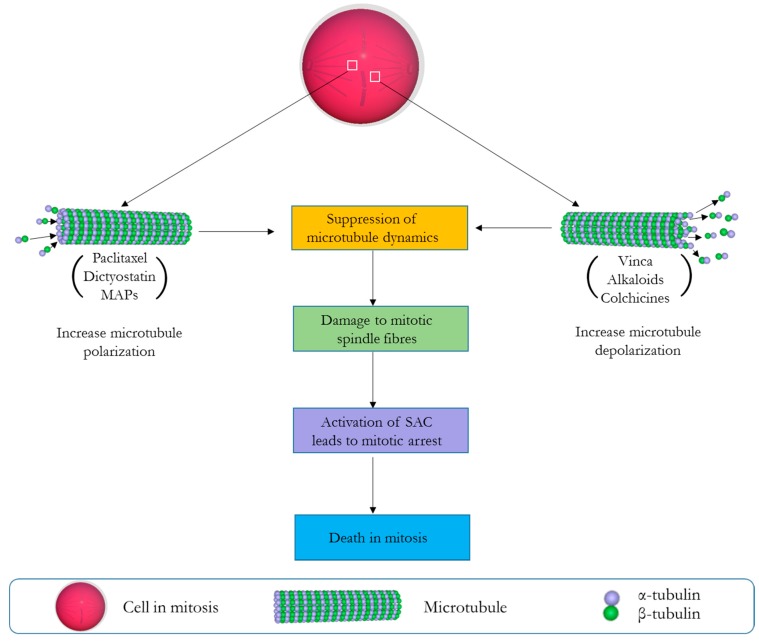
Some of the most promising small molecule toxins used to generate antibody drug conjugates (ADCs) include anti-mitotic agents (e.g., auristatin and its derivatives) which are designed to attack cancerous cells at their most vulnerable state during mitosis. We were interested in identifying a human cystostatic protein eventually showing comparable activities and allowing the generation of corresponding targeted fully human cytolytic fusion proteins. Recently, we identified the human microtubule associated protein tau (MAP tau), which binds specifically to tubulin and modulates the stability of microtubules, thereby blocking mitosis and presumably vesicular transport. By binding and stabilizing polymerized microtubule filaments, MAP tau-based fusion proteins skew microtubule dynamics towards cell cycle arrest and apoptosis. This biological activity makes rapidly proliferating cells (e.g., cancer and inflammatory cells) an excellent target for MAP tau-based targeted treatments. Their superior selectivity for proliferating cells confers additional selectivity towards upregulated tumor-associated antigens at their surface, thereby preventing off-target related toxicity against normal cells bearing tumor-associated antigens at physiologically normal to low levels. In this review, we highlight recent findings on MAP tau-based targeted cytolytic fusion proteins reported in preclinical immunotherapeutic studies.
Keywords: cancer; human cytolytic fusion proteins; immunotherapy; inflammatory diseases; microtubule associated protein tau (MAP).
Conflict of interest statement
Dmitrij Hristodorov, Radoslav Mladenov, and Stefan Barth are inventors on a European Patent Application on MAP based targeted human cytolytic fusion proteins assigned to Fraunhofer. No potential conflicts of interest are disclosed by the other authors.
Figures

References
-
- Prendergast G.C., Jaffee E.M. Cancer Immunotherapy: Immune Suppression and Tumor Growth. Academic Press; Cambridge, MA, USA: 2013.
-
- Fanale D., Bronte G., Passiglia F., Calò V., Castiglia M., di Piazza F., Barraco N., Cangemi A., Catarella M.T., Insalaco L. Stabilizing versus destabilizing the microtubules: A double-edge sword for an effective cancer treatment option? Anal. Cell Pathol. 2015;2015:690916. doi: 10.1155/2015/690916. - DOI - PMC - PubMed
Publication types
LinkOut - more resources
Full Text Sources
Other Literature Sources
