


Polygenic risk has an impact on the structural plasticity of hippocampal subfields during aerobic exercise combined with cognitive remediation in multi-episode schizophrenia
- PMID: 28654095
- PMCID: PMC5537649
- DOI: 10.1038/tp.2017.131
Polygenic risk has an impact on the structural plasticity of hippocampal subfields during aerobic exercise combined with cognitive remediation in multi-episode schizophrenia
Abstract
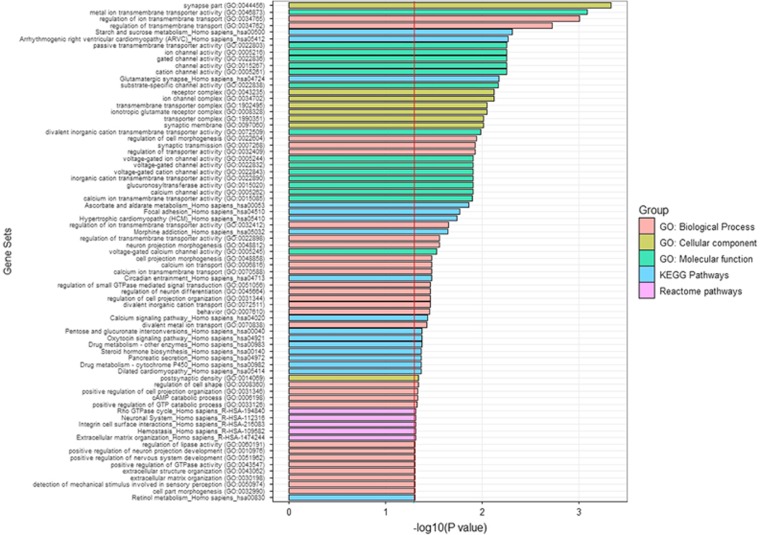
Preliminary studies suggest that, besides improving cognition, aerobic exercise might increase hippocampal volume in schizophrenia patients; however, results are not consistent. Individual mechanisms of volume changes are unknown but might be connected to the load of risk genes. Genome-wide association studies have uncovered the polygenic architecture of schizophrenia. The secondary analysis presented here aimed to determine the modulatory role of schizophrenia polygenic risk scores (PRSs) on volume changes in the total hippocampus and cornu ammonis (CA) 1, CA2/3, CA4/dentate gyrus (DG) and subiculum over time. We studied 20 multi-episode schizophrenia patients and 23 healthy controls who performed aerobic exercise (endurance training) combined with cognitive remediation for 3 months and 21 multi-episode schizophrenia patients allocated to a control intervention (table soccer) combined with cognitive remediation. Magnetic resonance imaging-based assessments were performed at baseline and after 3 months with FreeSurfer. No effects of PRSs were found on total hippocampal volume change. Subfield analyses showed that the volume changes between baseline and 3 months in the left CA4/DG were significantly influenced by PRSs in schizophrenia patients performing aerobic exercise. A larger genetic risk burden was associated with a less pronounced volume increase or a decrease in volume over the course of the exercise intervention. Results of exploratory enrichment analyses reinforced the notion of genetic risk factors modulating biological processes tightly related to synaptic ion channel activity, calcium signaling, glutamate signaling and regulation of cell morphogenesis. We hypothesize that a high polygenic risk may negatively influence neuroplasticity in CA4/DG during aerobic exercise in schizophrenia.
Conflict of interest statement
A Hasan has been invited to scientific meetings by Lundbeck, Janssen-Cilag and Pfizer, received a paid speakership from Desitin, Otsuka and Lundbeck, and was a member of a Roche advisory board. P Falkai has been an honorary speaker for AstraZeneca, Bristol Myers Squibb, Eli Lilly, Essex, GE Healthcare, GlaxoSmithKline, Janssen-Cilag, Lundbeck, Otsuka, Pfizer, Servier and Takeda, and during the past 5 years, but not presently, has been a member of the advisory boards of Janssen-Cilag, AstraZeneca, Eli Lilly and Lundbeck. A Schmitt has been an honorary speaker for TAD Pharma and Roche, and a member of advisory boards for Roche. The remaining authors declare no conflict of interest.
Figures

References
-
- Adriano F, Caltagirone C, Spalletta G. Hippocampal volume reduction in first-episode and chronic schizophrenia: a review and meta-analysis. Neurosci Rev J 2012; 18: 180–200. - PubMed
-
- Hasan A, Wobrock T, Falkai P, Schneider-Axmann T, Guse B, Backens M et al. Hippocampal integrity and neurocognition in first-episode schizophrenia: a multidimensional study. World J Biol Psychiatry 2014; 15: 188–199. - PubMed
Publication types
MeSH terms
LinkOut - more resources
Full Text Sources
Other Literature Sources
Medical
Miscellaneous
