Comparison of analgesic efficacy of caudal dexmedetomidine versus caudal tramadol with ropivacaine in paediatric infraumbilical surgeries: A prospective, randomised, double-blinded clinical study
- PMID: 28655957
- PMCID: PMC5474920
- DOI: 10.4103/ija.IJA_712_16
Comparison of analgesic efficacy of caudal dexmedetomidine versus caudal tramadol with ropivacaine in paediatric infraumbilical surgeries: A prospective, randomised, double-blinded clinical study
Abstract
Background and aims: Caudal epidural analgesia is commonly practised regional block technique in children undergoing infraumbilical surgeries but has a short duration of action after single shot local anaesthetic injection. The aim of this study was to compare ropivacaine 0.25% with dexmedetomidine and tramadol in caudal anaesthesia in paediatric infraumbilical surgeries.
Methods: In a randomised, prospective, double-blinded study, sixty children (1-8 years) belonging to American Society of Anesthesiologists' physical status I or II scheduled for infraumbilical surgeries were included. They were randomly assigned into two groups: Group ropivacaine with tramadol (RT) (n = 30) received 0.25% ropivacaine 1 mL/kg with 2 mg/kg of tramadol, and Group ropivacaine with dexmedetomidine (RD) (n = 30) received 0.25% ropivacaine 1 mL/kg with dexmedetomidine 2 μg/kg. The primary outcome variable was the duration of analgesia, and the secondary outcome variables included motor block, sedation score, time from caudal block to skin incision, emergence time and adverse effects.
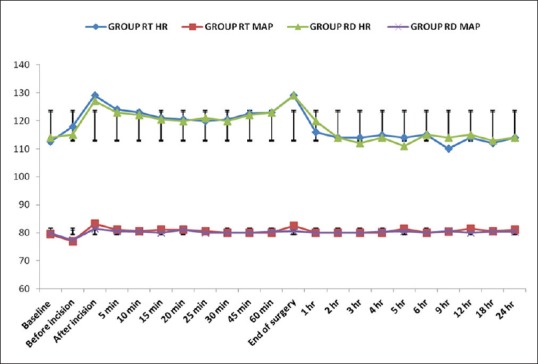
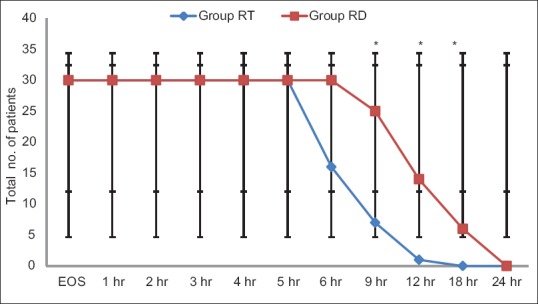
Results: The mean duration of analgesia was 654.20 ± 78.38 min in Group RT, while in Group RD, it was 780.29 ± 71.21 min (P = 0.0001). The difference between the mean sedation score and mean emergence time between the two groups were statistically significant (P = 0.0001 and 0.0411, respectively). No significant difference was observed in the incidence of haemodynamic changes or side effects.
Conclusion: Caudal dexmedetomidine with ropivacaine prolongs post-operative analgesia compared to caudal tramadol with ropivacaine.
Keywords: Anaesthesia; analgesia; caudal block; dexmedetomidine; emergence agitation; ropivacaine; tramadol.
Conflict of interest statement
There are no conflicts of interest.
Figures
References
-
- Dobereiner EF, Cox RG, Ewen A, Lardner DR. Evidence-based clinical update: Which local anesthetic drug for pediatric caudal block provides optimal efficacy with the fewest side effects? Can J Anaesth. 2010;57:1102–10. - PubMed
-
- Yildiz TS, Ozdamar D, Bagus F, Solak M, Toker K. Levobupivacaine-tramadol combination for caudal block in children: A randomized, double-blinded, prospective study. Paediatr Anaesth. 2010;20:524–9. - PubMed
LinkOut - more resources
Full Text Sources
Other Literature Sources
Miscellaneous