


Iatrogenic bleeding during flexible bronchoscopy: risk factors, prophylactic measures and management
- PMID: 28656131
- PMCID: PMC5478796
- DOI: 10.1183/23120541.00084-2016
Iatrogenic bleeding during flexible bronchoscopy: risk factors, prophylactic measures and management
Abstract
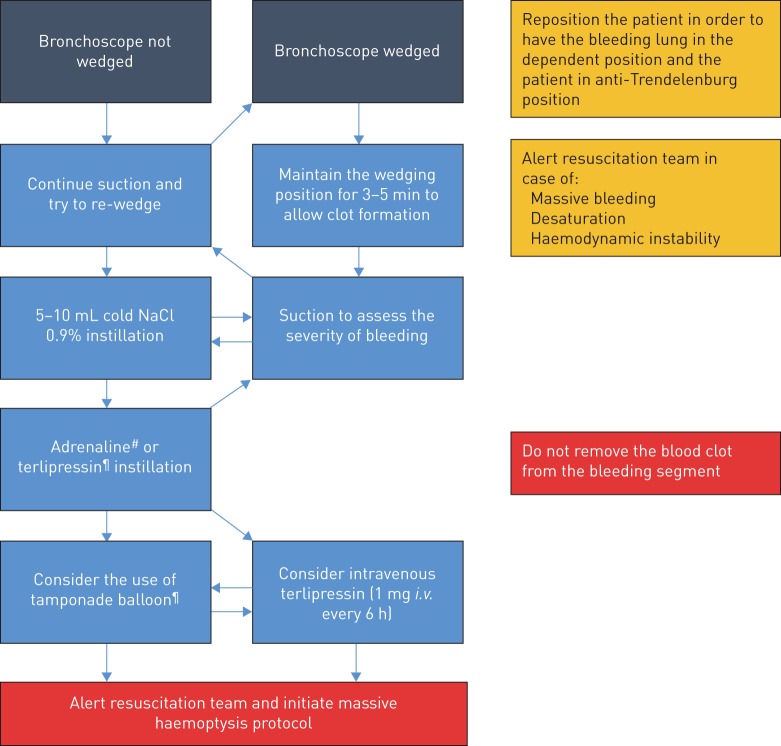
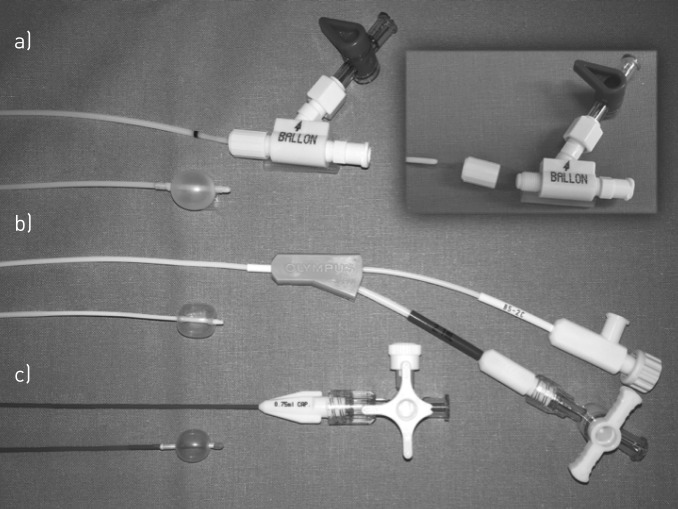
Significant iatrogenic bleeding during flexible bronchoscopy is fortunately rare and usually self-limiting. Life-threatening bleeding, however, can occur, especially after conventional or cryoprobe-assisted transbronchial biopsy. The aim of this review is to provide the practising pulmonologist with a concise overview of the incidence, severity and risk factors for bleeding, to provide sensible advice on prophylactic measures and to suggest a plan of action in the case of significant bleeding. Bronchoscopy units should have a standardised approach and plan of action in the case of life-threatening haemorrhage. Wedging the bronchoscope in the bleeding segment, turning the patient in an anti-Trendelenburg position and onto the side in order for the bleeding lung to be in the dependent position, installing vasoconstrictors and using a tamponade balloon early are the recommended first-line strategies. Involving a resuscitation team should be considered early in the case of massive bleeding, desaturation and haemodynamic instability.
Conflict of interest statement
Conflict of interest: None declared.
Figures
References
-
- Cordasco EM, Mehta AC, Ahmad M. Bronchoscopically induced bleeding. A summary of nine years’ Cleveland clinic experience and review of the literature. Chest 1991; 100: 1141–1147. - PubMed
-
- Chinsky K. Bleeding risk and bronchoscopy: in search of the evidence in evidence-based medicine. Chest 2005; 127: 1875–1877. - PubMed
-
- Zhou G-W, Zhang W, Dong Y-C, et al. Flexible bronchoscopy-induced massive bleeding: a 12-year multicentre retrospective cohort study. Respirology 2016; 21: 927–931. - PubMed
-
- Flick MR, Wasson K, Dunn LJ, et al. Fatal pulmonary hemorrhage after transbronchial lung biopsy through the fiberoptic bronchoscope. Am Rev Respir Dis 1975; 111: 853–856. - PubMed
-
- Du Rand IA, Blaikley J, Booton R, et al. British Thoracic Society guideline for diagnostic flexible bronchoscopy in adults: accredited by NICE. Thorax 2013; 68: Suppl. 1, i1–i44. - PubMed
Publication types
LinkOut - more resources
Full Text Sources
Other Literature Sources