


Management of metaphyseal bone loss in revision knee arthroplasty
- PMID: 28657571
- PMCID: PMC6178990
- DOI: 10.23750/abm.v88i2-S.6520
Management of metaphyseal bone loss in revision knee arthroplasty
Abstract
Background and aim of the work: Revision total knee arthroplasty (TKA) is usually made more complex by the presence of bone defects, which may be caused by periprosthethic infection, polyethylene wear, implant loosening or fractures. The main aim of the present work is to review the available literature to understand the current options to manage with the bone loss during knee revisions.
Methods: Available English literature for bone defects in revision TKAs has been evaluated looking at treatment options and their results in terms of clinical and radiological outcomes and failure rates.
Results: Anderson Orthopaedic Research Institute (AORI) classification is the most frequently used because it helps in the choice of the most suitable treatment. Several options are available in the management of metaphyseal bone loss in revision knee arthroplasty. For small and contained defects (AORI type 1) cement with or without screws and auto- or allograft morcellized bone are available. In uncontained but mild defects (AORI type 2A) metal augments should be use while large and uncontained defects (AORI type 2B and 3) are best addressed with structural allograft or metal filling devices (cones and sleeves). Stemmed components, either cemented or cementless, are recommended to reduce the strain at the interface implant-host.
Conclusions: The treatment of bone defects in revision TKAs has evolved during the last years providing different options with good results at a short/medium term follow up. With the increasing revision burden, further scientific evidence is requested to identify the best approach for each patient. Long-term clinical outcome as well as implant survival after revision TKA are still sub-optimal and depend upon many factors including cause for revision, surgical approach, type of implants used and various patient factors.
Keywords: revision knee arthroplasty, metaphyseal bone loss, treatment options, cone, sleeve, allograft, stem.
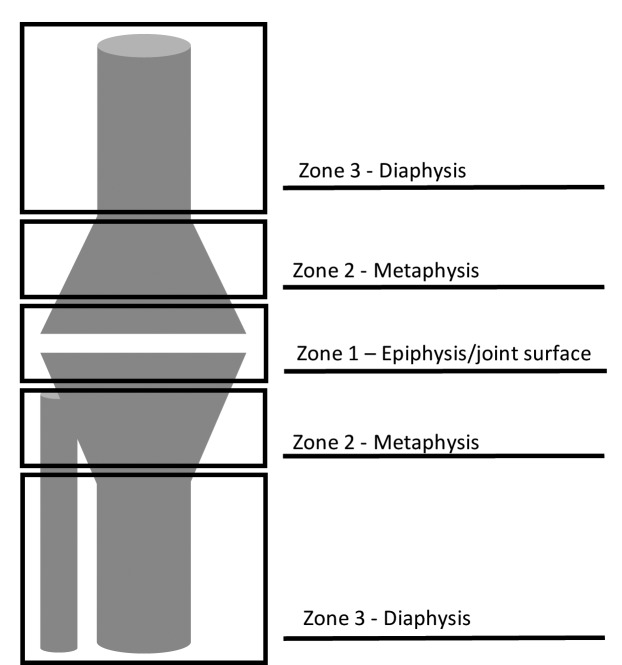
References
-
- Kurtz SM, Ong KL, Schmier J, Zhao K, Mowat F, Lau E. Primary and revision arthroplasty surgery caseloads in the United States from 1990 to 2004. J Arthro. 2009;24:195–203. - PubMed
-
- Causero A, Benedetto P, Beltrame A, Gisonni R, Cainero V, Pagano M. Design evolution in total knee replacement: which is the future? Acta Biomed. 2014;85(Suppl 2):5–19. - PubMed
-
- Morgan-Jones R, Oussedik SI, Graichen H, Haddad FS. Zonal fixation in revision total knee arthroplasty. Bone Joint J. 2015;97-B:147–9. - PubMed
Publication types
MeSH terms
LinkOut - more resources
Full Text Sources
Medical
Research Materials