


Varus-valgus constrained implants in total knee arthroplasty: indications and technique
- PMID: 28657572
- PMCID: PMC6178999
- DOI: 10.23750/abm.v88i2-S.6521
Varus-valgus constrained implants in total knee arthroplasty: indications and technique
Abstract
Total knee arthroplasty is a successful operation that significantly improves patient's quality of life. However, studies demonstrated as only 82% to 89% of patients are satisfied with their surgery, being the other disappointed with regard to their expectations. Two to 5.7% of total knee arthroplasties (TKAs) require revision within 5 years. Both complex primary cases and revision TKA often necessitate for a higher degree of constrain than cruciate retaining or postero-stabilized implant design. In the 1970s varus-valgus constrained (VVC) or semi-constrained implants have been developed by Insall and associates from the PS design, which provide varus-valgus stability preserving a fair amount of host bone. VVC TKAs allows for a small amount of movement in the coronal, antero-posterior and axial planes. In this paper, the authors give an overview of the indications, outcomes and technique for varus-valgus constrained implants, both in the setting of primary and revision knee arthroplasty.
Keywords: TKA; constrained non-linked; semi-constrained; varus-valgus constrained.
Figures
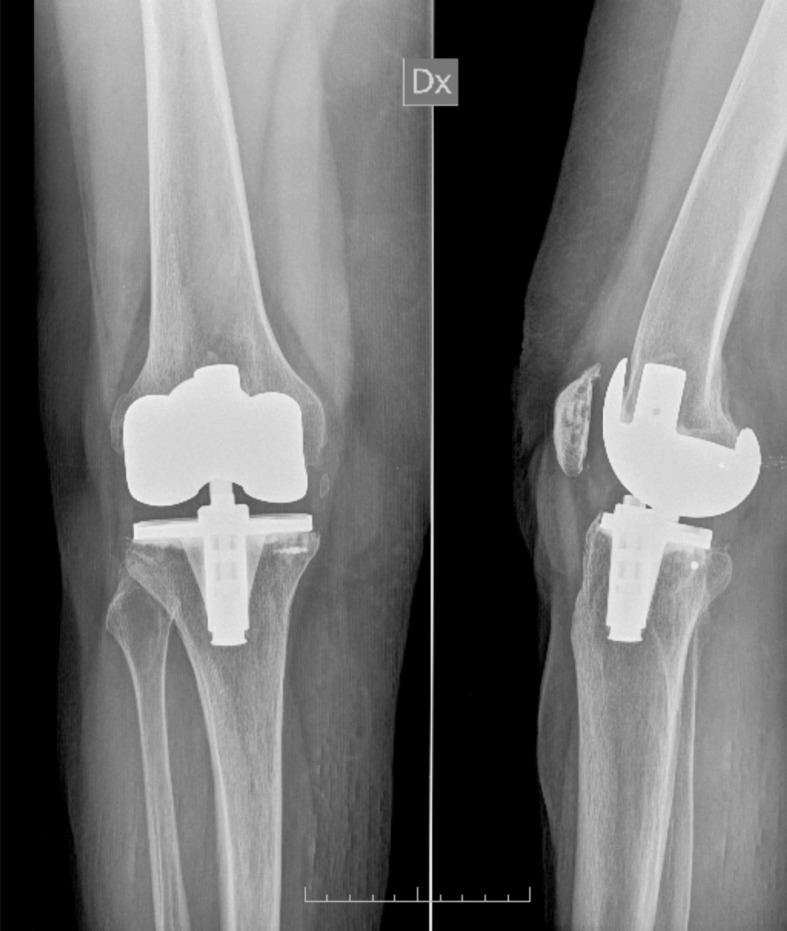
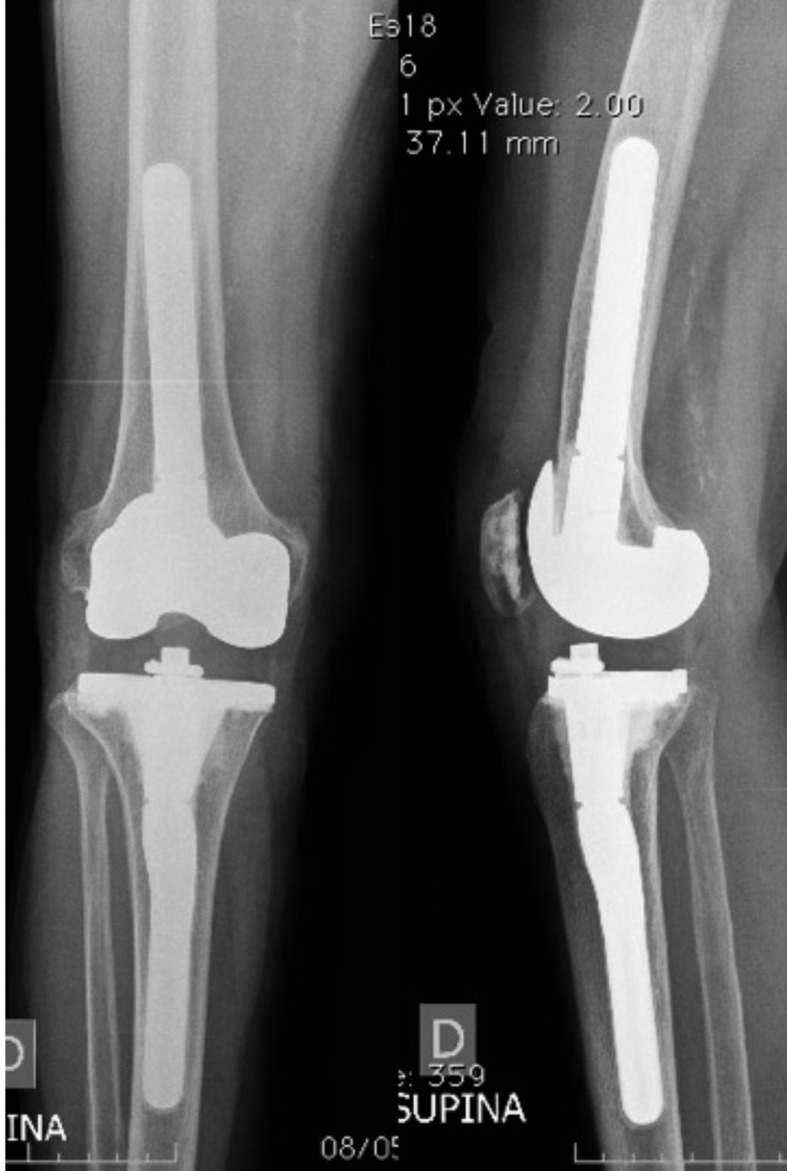
References
-
- Abdel MP, Pulido L, Severson EP, Hanssen AD. Stepwise surgical correction of instability in flexion after total knee replacement. The bone & joint journal. 2014;96-B(12):1644–8. doi:10.1302/0301-620X.96B12.34821. - PubMed
-
- Anderson JA, Baldini A, MacDonald JH, Pellicci PM, Sculco TP. Primary constrained condylar knee arthroplasty without stem extensions for the valgus knee. Clinical orthopaedics and related research. 2006;442:199–203. - PubMed
-
- Anderson JA, Baldini A, MacDonald JH, Tomek I, Pellicci PM, Sculco TP. Constrained condylar knee without stem extensions for difficult primary total knee arthroplasty. The journal of knee surgery. 2007;20(3):195–8. - PubMed
-
- Barrack RL. Rise of the rotating hinge in revision total knee arthroplasty. Orthopedics. 2002;25(10):1020, 1058. - PubMed
-
- Bass AR, McHugh K, Fields K, Goto R, Parks ML, Goodman SM. Higher Total Knee Arthroplasty Revision Rates Among United States Blacks Than Whites: A Systematic Literature Review and Meta-Analysis. The Journal of bone and joint surgery American volume. 2016;98(24):2103–8. doi:10.2106/JBJS.15.00976. - PubMed
Publication types
MeSH terms
LinkOut - more resources
Full Text Sources
Medical