


Evolutionary divergence of the vertebrate TNFAIP8 gene family: Applying the spotted gar orthology bridge to understand ohnolog loss in teleosts
- PMID: 28658311
- PMCID: PMC5489176
- DOI: 10.1371/journal.pone.0179517
Evolutionary divergence of the vertebrate TNFAIP8 gene family: Applying the spotted gar orthology bridge to understand ohnolog loss in teleosts
Abstract
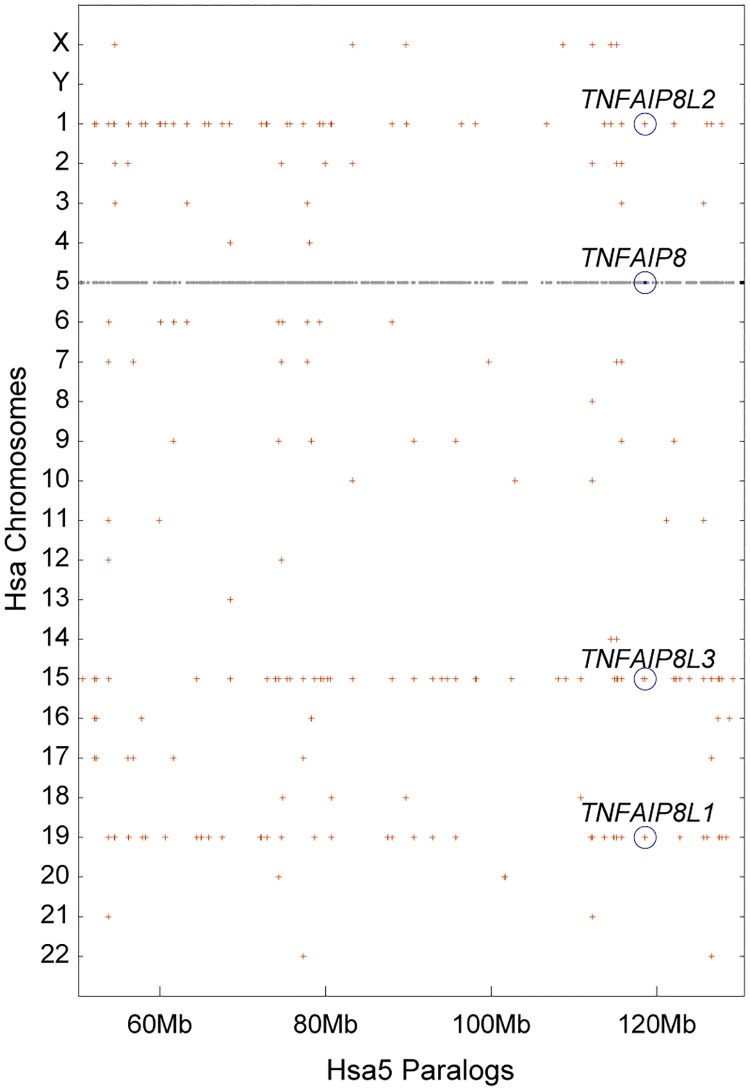
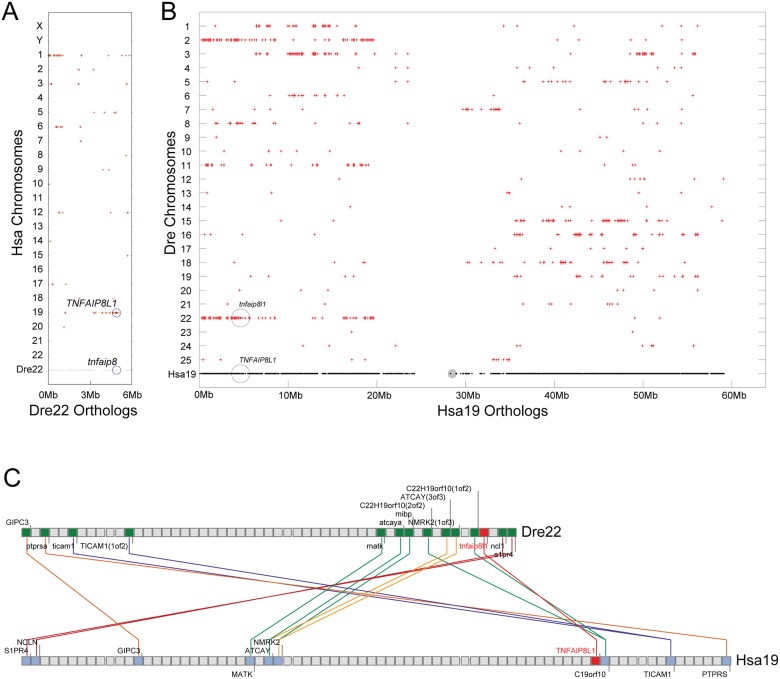
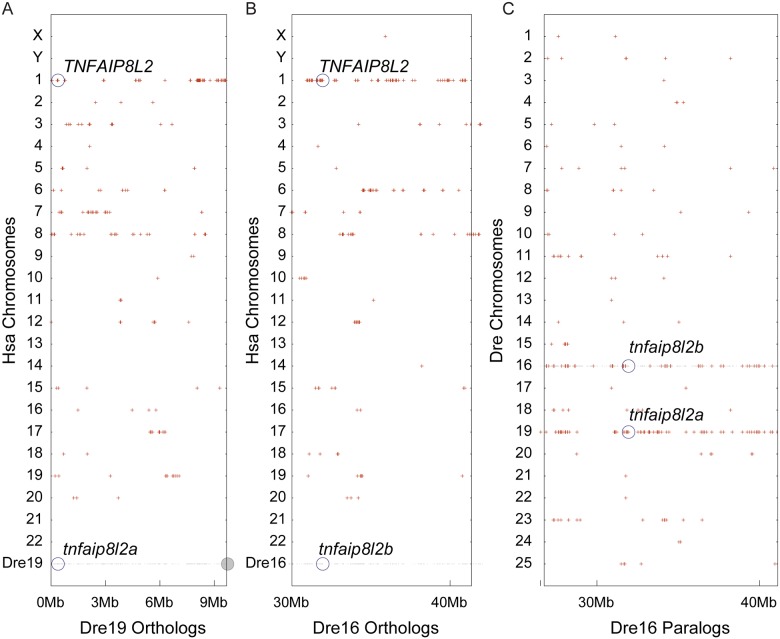
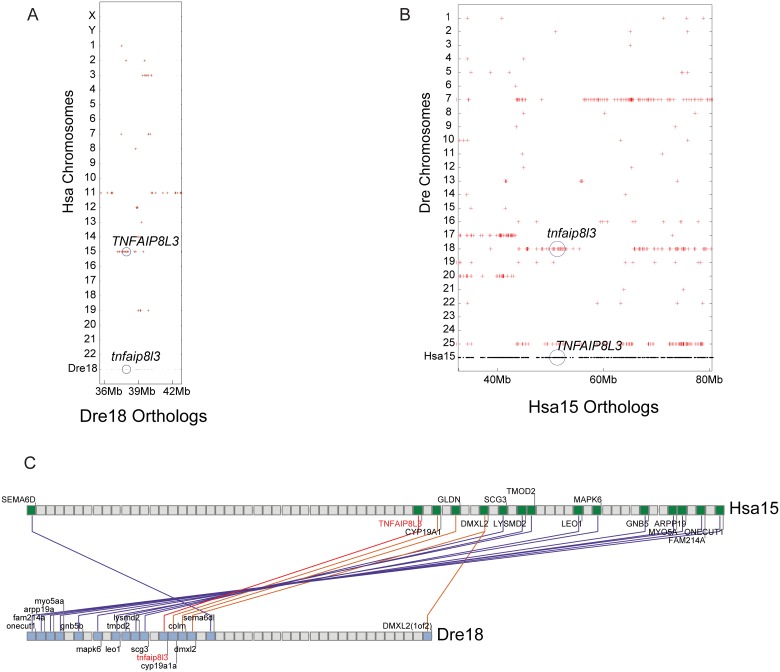
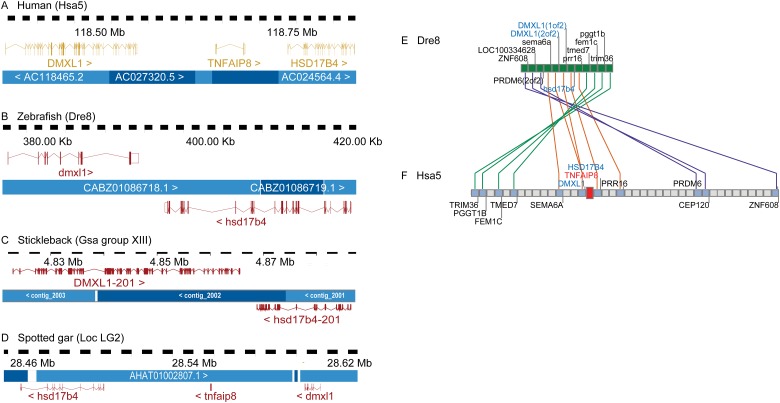
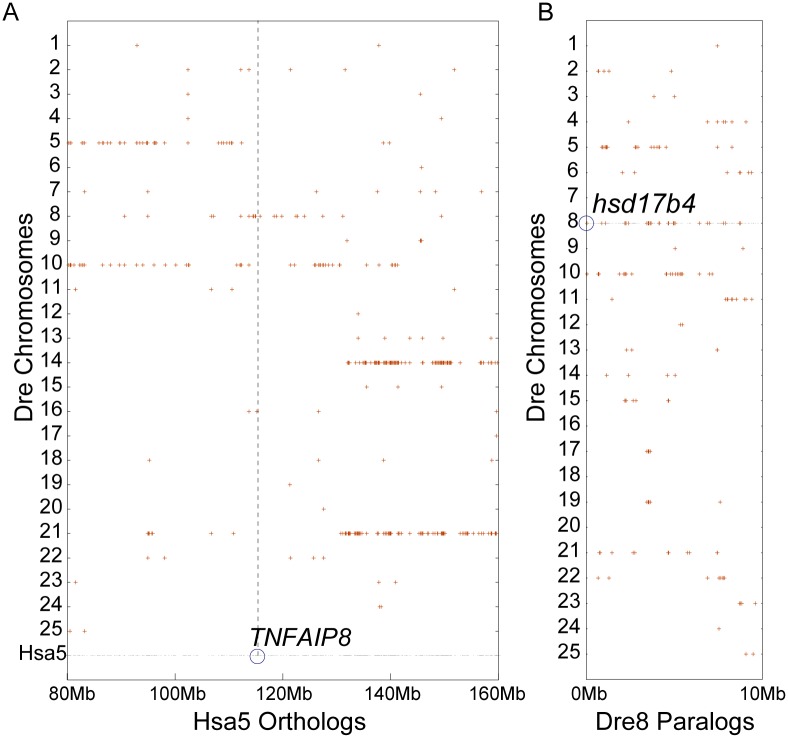
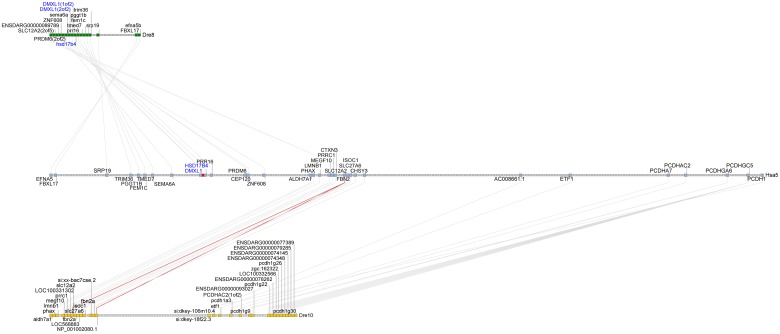
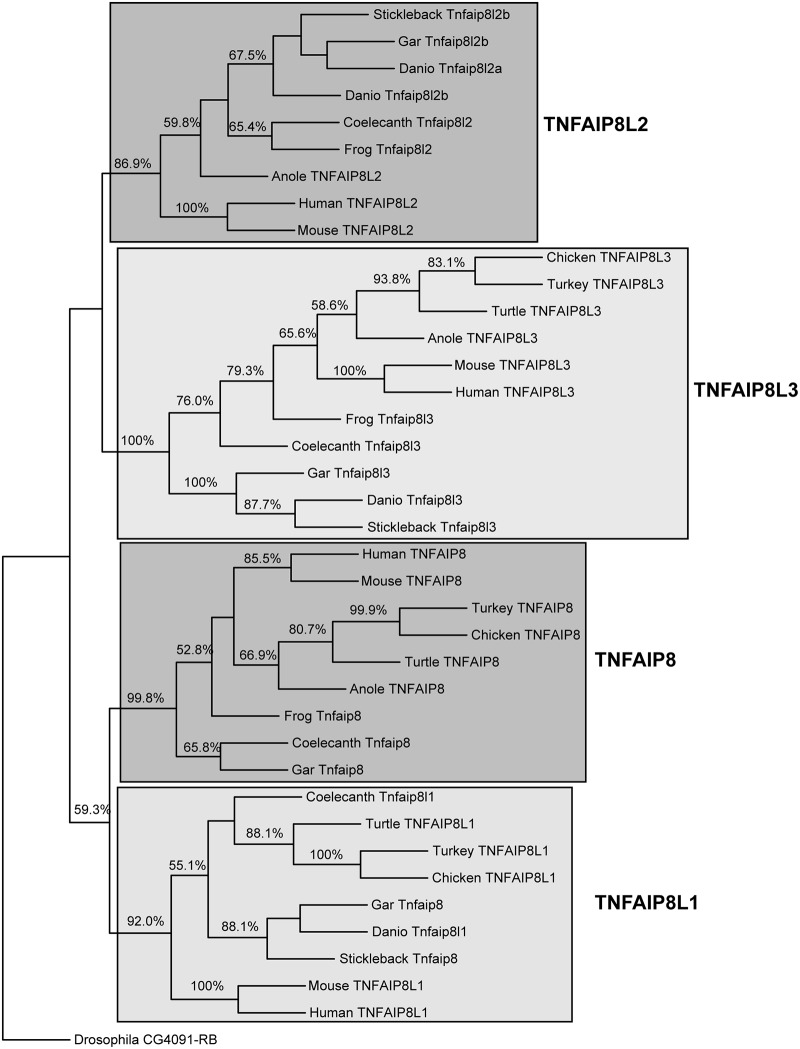
Comparative functional genomic studies require the proper identification of gene orthologs to properly exploit animal biomedical research models. To identify gene orthologs, comprehensive, conserved gene synteny analyses are necessary to unwind gene histories that are convoluted by two rounds of early vertebrate genome duplication, and in the case of the teleosts, a third round, the teleost genome duplication (TGD). Recently, the genome of the spotted gar, a holostean outgroup to the teleosts that did not undergo this third genome duplication, was sequenced and applied as an orthology bridge to facilitate the identification of teleost orthologs to human genes and to enhance the power of teleosts as biomedical models. In this study, we apply the spotted gar orthology bridge to help describe the gene history of the vertebrate TNFAIP8 family. Members of the TNFAIP8 gene family have been linked to regulation of immune function and homeostasis and the development of multiple cancer types. Through a conserved gene synteny analysis, we identified zebrafish orthologs to human TNFAIP8L1 and TNFAIP8L3 genes and two co-orthologs to human TNFAIP8L2, but failed to identify an ortholog to human TNFAIP8. Through the application of the orthology bridge, we determined that teleost orthologs to human TNFAIP8 genes were likely lost in a genome inversion event after their divergence from their common ancestor with spotted gar. These findings demonstrate the value of this enhanced approach to gene history analysis and support the development of teleost models to study complex questions related to an array of biomedical issues, including immunity and cancer.
Conflict of interest statement
Figures
References
-
- Lou Y, Liu S. The TIPE (TNFAIP8) family in inflammation, immunity, and cancer. Mol Immunol. 2011;49(1–2):4–7. Epub 2011/09/20. doi: 10.1016/j.molimm.2011.08.006 . - DOI - PubMed
-
- Patel S, Wang FH, Whiteside TL, Kasid U. Identification of seven differentially displayed transcripts in human primary and matched metastatic head and neck squamous cell carcinoma cell lines: implications in metastasis and/or radiation response. Oral Oncol. 1997;33(3):197–203. Epub 1997/05/01. . - PubMed
-
- Horrevoets AJ, Fontijn RD, van Zonneveld AJ, de Vries CJ, ten Cate JW, Pannekoek H. Vascular endothelial genes that are responsive to tumor necrosis factor-alpha in vitro are expressed in atherosclerotic lesions, including inhibitor of apoptosis protein-1, stannin, and two novel genes. Blood. 1999;93(10):3418–31. Epub 1999/05/11. . - PubMed
-
- Kumar D, Whiteside TL, Kasid U. Identification of a Novel Tumor Necrosis Factor-α-inducible Gene, SCC-S2, Containing the Consensus Sequence of a Death Effector Domain of Fas-associated Death Domain-like Interleukin- 1β-converting Enzyme-inhibitory Protein. Journal of Biological Chemistry. 2000;275(4):2973–8. - PubMed
-
- Freundt EC, Bidere N, Lenardo MJ. A different TIPE of immune homeostasis. Cell. 2008;133(3):401–2. Epub 2008/05/06. doi: 10.1016/j.cell.2008.04.017 ; - DOI - PMC - PubMed
MeSH terms
Substances
Grants and funding
LinkOut - more resources
Full Text Sources
Other Literature Sources
Molecular Biology Databases
